Home Manufacturing Viability Checker
Assess the legal and operational risks of your proposed home manufacturing business based on niche type and zoning classification.
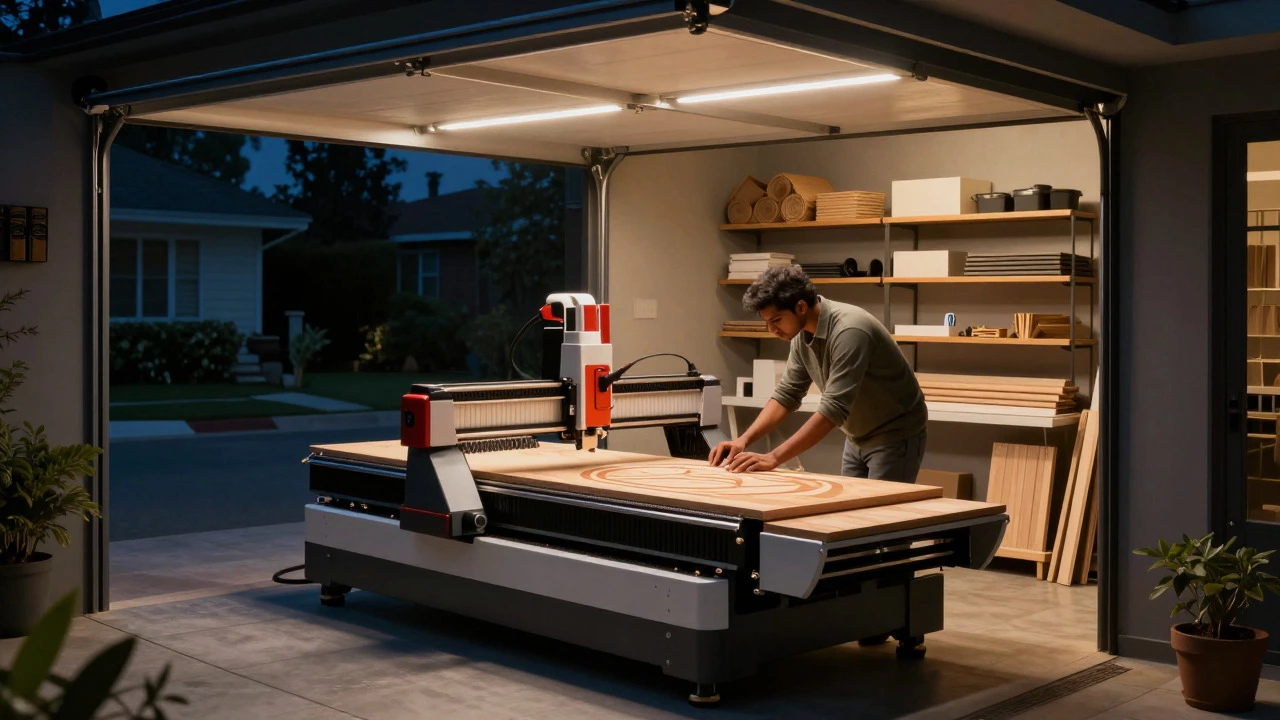
Picture this: it’s 2 AM, the house is quiet, but your garage hums with the sound of a CNC router cutting custom phone cases. Or maybe you’re in your kitchen, sealing jars of artisanal hot sauce for an online order. For years, "manufacturing" conjured images of sprawling factories, assembly lines, and heavy industrial zoning. But the landscape has shifted dramatically. With digital fabrication tools becoming affordable and e-commerce platforms removing geographical barriers, running a manufacturing business from home is no longer a pipe dream-it’s a viable economic reality for thousands of entrepreneurs.
However, "can you" is not just a question of capability; it’s a question of legality, logistics, and livability. Before you buy that laser cutter or set up a bottling line in your basement, you need to navigate a maze of local bylaws, health codes, and insurance requirements. This guide breaks down exactly how to turn your home into a micro-factory without getting shut down by the city or overwhelmed by operational chaos.
The Legal Landscape: Zoning, Permits, and Bylaws
The biggest hurdle isn’t usually finding customers; it’s keeping the authorities happy. In most jurisdictions, including Toronto where I’ve seen many makers struggle with this, residential zones are strictly regulated. The core issue revolves around what planners call "nuisance factors."
You need to check three specific things before signing any lease or buying equipment:
- Zoning Classifications: Look up your property’s zoning code. Most cities have a category for "Home Occupations" or "Accessory Uses." These typically allow low-impact activities but prohibit those that generate significant traffic, noise, or pollution. If your zone is strictly R1 (single-family residential), your options are severely limited compared to an RM (multi-residential) or mixed-use zone.
- Nuisance Factors: Local bylaws often explicitly ban home businesses that produce odors, excessive noise, or visible fumes. If you’re making candles, the scent might be pleasant to you but a violation if it drifts to neighbors. If you’re welding, the smoke and sparks are immediate red flags for fire marshals.
- Parking and Traffic: Many permits require that you do not increase on-street parking demand. If your customers or suppliers are coming to your house regularly, you’ll likely violate this clause. Delivery-only models fare much better here.
In Canada, for instance, the Ontario Building Code and municipal bylaws dictate that any change of use requires approval. A simple way to test your idea is to ask your local planning department: "Is [specific activity] permitted as a home occupation in my zone?" Get the answer in writing. Verbal assurances from neighbors don’t hold up in court when a complaint is filed.
Safety First: Fire Codes and Insurance Nightmares
Once you clear the legal hurdles, you face the physical risks. Manufacturing involves energy-heat, electricity, pressure-and that brings danger. Your homeowner’s insurance policy likely excludes "commercial activities" unless you add a rider or switch to a specialized policy.
Consider the fire load. Storing raw materials like cardboard, plastics, or chemicals increases the combustibility of your home. Fire departments inspect based on occupancy type. A residential dwelling is rated differently than a light industrial space. If you install a commercial-grade exhaust system for a woodworking shop, you may need a permit from the fire marshal to ensure it vents outside safely and doesn’t create a backdraft risk.
Key safety checks include:
- Ventilation: Any process releasing VOCs (Volatile Organic Compounds) needs active ventilation. Passive windows aren’t enough for painting or solvent-based cleaning.
- Electrical Load: Industrial machines draw high amperage. Running a welder or large compressor on a standard residential circuit can trip breakers or, worse, cause wiring fires. Have an electrician assess your panel capacity.
- Liability Coverage: General liability insurance is non-negotiable. If a product you made causes injury, your personal assets are at risk without proper coverage. Look for policies that specifically cover "product liability" and "premises liability" for home-based operations.

Choosing the Right Niche: What Actually Works at Home?
Not all manufacturing is created equal. Some industries are inherently suited for home environments due to their low footprint, minimal regulatory burden, and high value-to-weight ratio. Others are nearly impossible to manage legally and safely from a residence.
| Niche Category | Examples | Regulatory Burden | Space Requirement | Viability Rating |
|---|---|---|---|---|
| Cottage Food & Beverage | Jams, pickles, dry spices, baked goods | Medium (Health Dept) | Kitchen/Basement | High |
| Digital Fabrication | 3D printed parts, laser-cut wood/acrylic | Low-Medium (Ventilation) | Garage/Workshop | Very High |
| Textiles & Apparel | Sewing, embroidery, knitting | Low | Spare Room | High |
| Metalworking | Welding, casting, machining | High (Fire/Zoning) | Large Garage/Shed | Low-Medium |
| Chemical Processing | Soap making, cosmetics, cleaners | Very High (Safety/Storage) | Detached Structure | Medium |
Cottage Food Laws are regulations that allow certain low-risk foods to be prepared in home kitchens for direct sale to consumers. In many Canadian provinces and US states, these laws have expanded significantly. You can often sell jams, jellies, breads, and candies directly to the public or at farmers' markets without needing a commercial kitchen license. However, high-risk items like dairy, meat, or acidified foods usually require a licensed facility.
On the other hand, Digital Fabrication, which includes 3D printing and laser cutting, is arguably the best fit for modern home manufacturers. The equipment is compact, the processes are clean (mostly), and the products can be highly customized. The main constraint is material off-gassing, which requires good airflow, but it rarely violates noise or odor ordinances if managed properly.
Operational Logistics: Separating Work from Life
Running a factory in your living room sounds efficient until you realize you never leave work. Physical separation is critical for mental health and operational efficiency. Ideally, your manufacturing space should be a detached structure-a garage, shed, or backyard studio. This isolates noise, dust, and temperature changes from your family’s living area.
If you must operate inside the house, consider these spatial strategies:
- Dedicated Zones: Use airlocks or sealed doors to contain dust and debris. A negative pressure room with a HEPA filter can keep sawdust out of the rest of the house.
- Workflow Layout: Design your space for flow. Raw materials should enter one side, processing happens in the middle, and finished goods exit another. Avoid crossing paths with household traffic.
- Storage Solutions: Vertical storage is your friend. Wall-mounted racks for tools and shelves for inventory maximize floor space. Keep hazardous materials in locked, ventilated cabinets away from children and pets.
Logistics also extend to shipping. If you’re producing heavy or bulky items, your home address becomes a distribution center. You’ll need a reliable postal pickup service and adequate packaging supplies stored discreetly. Consider using a freight forwarder or a virtual warehouse if volume scales up, to avoid turning your driveway into a loading dock.

Financial Realities: Costs, Taxes, and Scaling
The allure of home manufacturing is low overhead. No rent for a commercial unit, no utility bills for a separate facility. But hidden costs creep in. Depreciation of equipment, higher home insurance premiums, and potential property tax reassessments can eat into margins.
Tax-wise, you may be eligible for a home office deduction or similar credits, depending on your country’s tax code. In Canada, the Canada Revenue Agency allows deductions for expenses related to the portion of your home used exclusively for business. However, claiming these deductions can affect capital gains exemptions when you eventually sell your home. Consult a tax professional who understands small-scale manufacturing.
Scaling is the ultimate challenge. At some point, your home will become too small, too noisy, or too risky. Plan your exit strategy early. Identify nearby industrial parks or shared maker spaces where you can move production once revenue hits a certain threshold. Many successful brands start in garages but transition to leased facilities within two to three years to accommodate growth and comply with evolving regulations.
Building a Brand from the Basement
Your home-based status can actually be a marketing asset. Consumers increasingly value transparency, craftsmanship, and sustainability. Storytelling about your "garage startup" journey creates an emotional connection that large factories can’t replicate. Highlight the handmade nature of your products, show behind-the-scenes videos of your process, and emphasize the reduced carbon footprint of local production.
Leverage social media platforms like Instagram and TikTok to showcase your workflow. Time-lapses of 3D prints or laser cuts are visually engaging and demonstrate expertise. Collaborate with local influencers or participate in community markets to build trust. Your proximity to customers allows for rapid iteration and personalized service, which are competitive advantages in niche markets.
Remember, authenticity sells. Don’t hide the fact that you’re working from home; celebrate it. It signals dedication, resourcefulness, and a personal touch that resonates with today’s conscious consumers.
Do I need a business license to manufacture at home?
Yes, in almost all cases. Even if you’re operating solely from home, you typically need a general business license from your city or municipality. Additionally, depending on your product, you may need specific permits such as a food handler’s certificate, a resale certificate for buying materials tax-free, or environmental permits for waste disposal. Always check with your local government offices.
What are the most profitable home manufacturing ideas?
Profitability depends on margin and scalability. High-margin niches include custom jewelry, specialized 3D printed prototypes, artisanal skincare, and premium pet accessories. These products have low material costs relative to their selling price and can be shipped easily. Digital fabrication services, such as offering on-demand printing for other businesses, also offer strong recurring revenue potential.
How do I handle inventory storage at home?
Use vertical space with shelving units and label everything clearly. Implement a First-In-First-Out (FIFO) system to prevent materials from expiring or degrading. Keep raw materials in climate-controlled areas if they are sensitive to humidity or temperature. For larger inventories, consider renting a small storage unit to keep your home uncluttered and safe.
Can I hire employees for a home-based manufacturing business?
It depends on local labor laws and zoning regulations. Many residential zones restrict the number of non-residents entering the property for work purposes. Hiring even one employee may trigger stricter safety inspections and require additional parking provisions. It’s often easier to start as a solo operator or contract freelancers who come only occasionally.
What insurance do I need for a home workshop?
You need more than standard homeowner’s insurance. Seek a policy that includes Commercial General Liability (CGL) to protect against customer injuries or product defects. Also, consider Inland Marine insurance to cover equipment and inventory while in transit. Inform your insurer about your business activities to avoid claim denials.