Curtain Height Calculator
Room Dimensions
Floor Type
Recommended Curtain Height
For your room, curtains should extend 0.0 ft from ceiling to floor.
Mount rod 0.0 ft above the window frame.
Ever stood in front of your window, staring at curtains that end halfway up the wall, and felt like something’s just… off? You’re not imagining it. The height of your curtains doesn’t just affect how they look-it changes how big your room feels, how much light you get, and even how expensive your space seems. The truth? curtains to ceiling almost always win. But why? And when does going just above the window make sense?
Why Ceiling-Mounted Curtains Make Rooms Feel Bigger
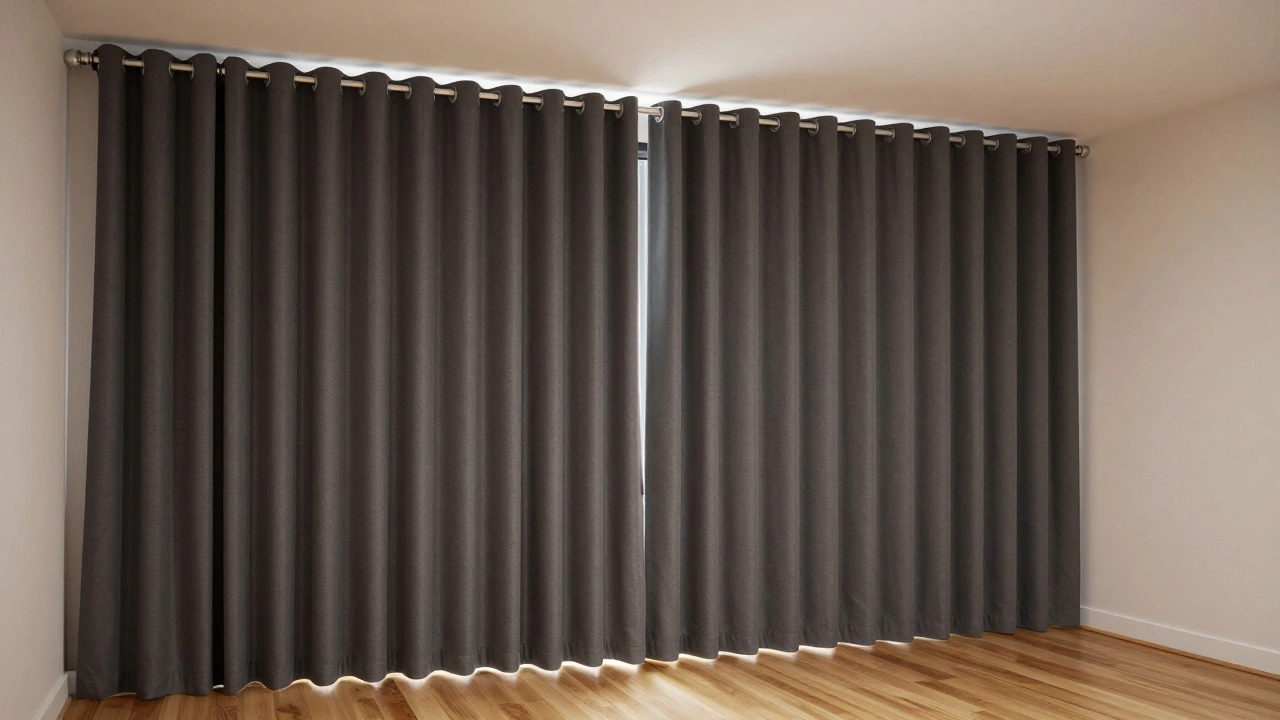
Most people install curtains right above the window frame. It’s easy. It’s what the hardware stores show you. But that’s the wrong starting point. When you hang curtains at ceiling level, you’re tricking your brain. Your eyes follow the line from the ceiling down to the floor, and your mind assumes the wall is taller than it really is. It’s optical illusion 101.In Toronto apartments, where 8-foot ceilings are the norm, this trick makes a huge difference. A 9-foot ceiling with floor-to-ceiling curtains looks like a high-end loft. A 9-foot ceiling with curtains ending 6 inches above the window? It looks cramped. The gap above the window becomes a dead space your eye latches onto-and suddenly, the room feels smaller, not bigger.
Studies in interior design psychology show that vertical lines create the illusion of height. Curtains running from ceiling to floor are the most powerful vertical element in a room. Even if your curtains are sheer or light-colored, the continuous line pulls the eye upward. That’s why luxury hotels and high-end showrooms always go ceiling to floor. It’s not about cost-it’s about perception.
What Happens When Curtains End at the Window
There’s a reason people do this. They think it looks "neat." They worry about curtains pooling on the floor. They’re afraid of buying too much fabric. But here’s the problem: curtains that stop at the window frame create a visual cutoff. It’s like cutting a photo in half and leaving a blank space where the rest should be.You’re not just losing height-you’re losing balance. The window becomes a standalone object, not part of the room’s flow. The wall above the window looks unfinished. The curtain rod sticks out like an afterthought. And if you have a radiator or a window seat underneath? That gap becomes a dust trap you didn’t plan for.
In older homes with decorative crown molding, stopping curtains at the window clashes hard. The molding draws attention upward, but the curtains don’t follow. It creates visual dissonance. In modern homes with flat ceilings? It just looks cheap.
How Far Below the Window Should Curtains Reach?
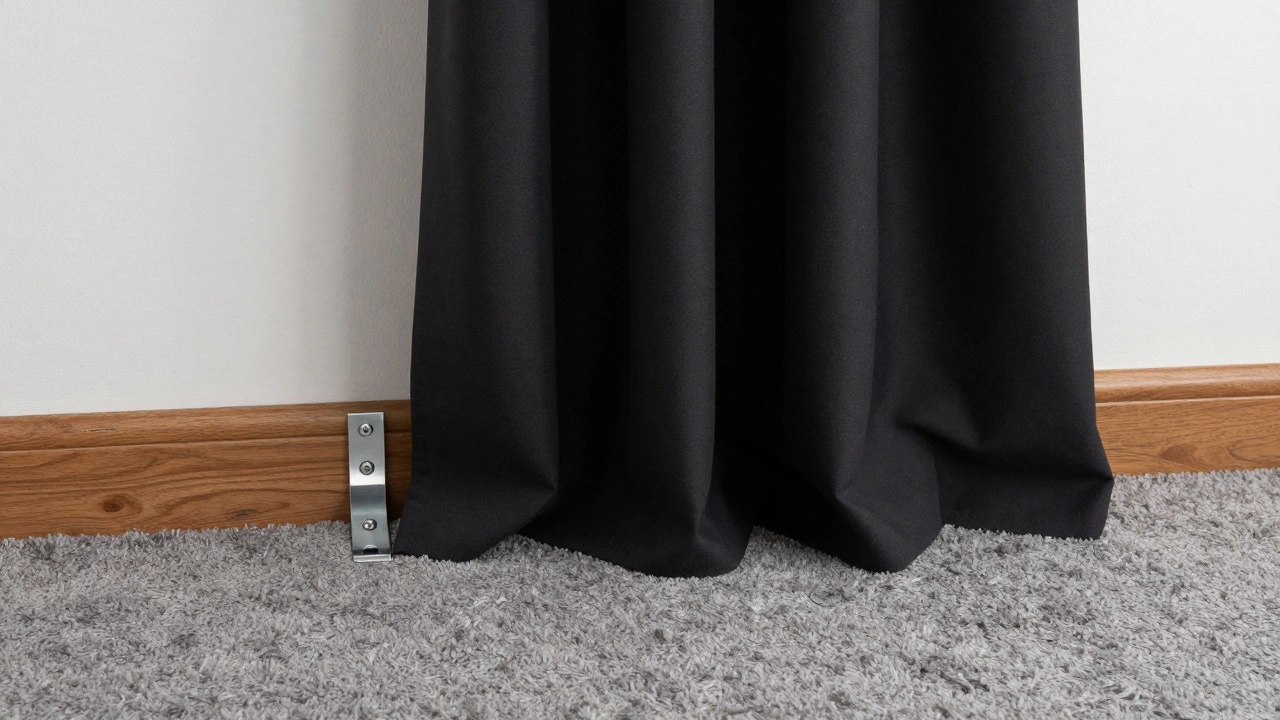
If you’re hanging curtains from the ceiling, they should touch the floor-or almost. No more than half an inch above the floor. Why? Because a slight break creates a clean, intentional line. Curtains that hover an inch or two above the floor look like they’re "waiting" to be lowered. Curtains that drag? They collect dust, get stepped on, and look messy.But here’s the secret: the length matters more than you think. In rooms with hardwood or tile, curtains that just kiss the floor look polished. In rooms with thick carpet, let them sink in by 1 to 1.5 inches. That’s called "puddling," and it’s not just for drama-it’s about hiding the gap between the curtain and the floor. If you’re unsure, buy 10% extra fabric. It’s cheaper than redoing the whole thing.
And don’t forget: the curtain rod placement is just as important as the length. Mount it 4 to 6 inches above the window frame, even if you’re going ceiling-to-floor. That gives you room to open the curtains fully without blocking the top of the window. It also lets light pour in from above, making the room brighter during the day.
When You Might Skip Ceiling-to-Floor Curtains
There are exceptions. But they’re rare.First: if your window is right above a radiator or a heat vent. In that case, hanging curtains too low can block airflow and cause condensation. You’ll need to stop them 1 to 2 inches above the radiator. But even then, mount the rod as high as you can-just above the radiator, not at the window frame. You’re still creating that vertical line.
Second: if you have very short windows, like in a kitchen or bathroom. In those cases, curtains that go from the ceiling to just below the sill can work. But only if the window is small and the room is low-ceilinged. In a bathroom, you might pair it with a sheer valance above the window to keep the vertical flow going.
Third: if you’re working with a historic home where original window trim is part of the charm. In those cases, you might choose to keep curtains at the window level-but only if you’re using full-length drapes that extend below the sill and you’ve matched the color and texture of the trim. It’s a high-risk, high-reward move. Most people shouldn’t try it.
The Hardware Matters More Than You Think
You can’t just buy any curtain rod and call it a day. A weak, flimsy rod will sag under the weight of heavy curtains, especially if you’re going ceiling-to-floor. You need a rod that can handle the load. Look for ones made of solid metal, not hollow plastic or thin aluminum. The diameter should be at least 1.25 inches for medium to heavy fabrics.And the brackets? They need to go into wall studs. Not drywall anchors. Not toggle bolts. Real wood studs. If you’re renting and can’t drill into the wall, use tension rods that span the full width and mount them as high as possible. It’s not ideal, but it’s better than low-hanging curtains.
Also, make sure your rod extends 6 to 12 inches beyond the window on each side. That way, when you pull the curtains open, they don’t block the light. People forget this. They hang rods right over the window, then wonder why their room stays dark even with the curtains open.
What About Pattern, Color, and Fabric?
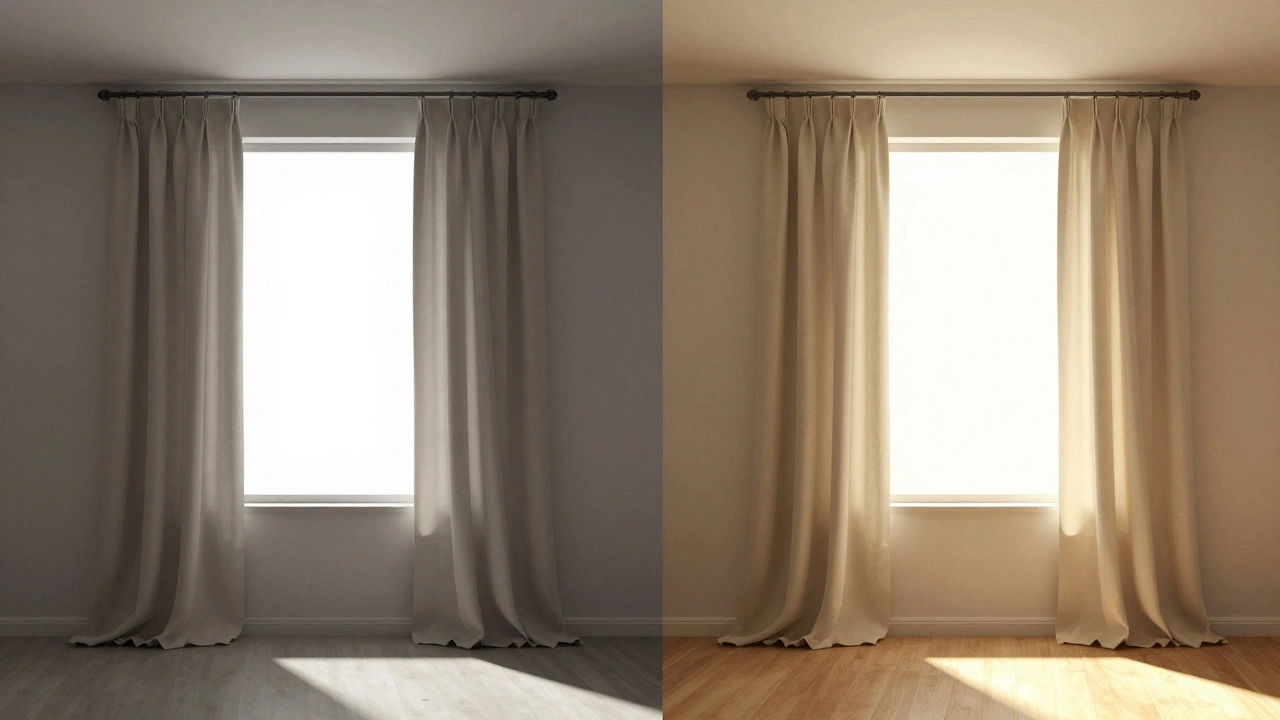
The height isn’t the only thing that matters. The fabric and color affect how the illusion works.Dark, heavy fabrics like velvet or linen in deep tones make ceilings feel lower if they’re not hung high enough. But if you hang them from the ceiling, they add richness and depth. Light, sheer fabrics like voile or cotton can make a room feel airy-but only if they run from ceiling to floor. If they stop mid-wall, they look like cheap shower curtains.
Color matching is key. If your walls are white and your curtains are white, the line disappears. That’s good-it creates a seamless flow. If your curtains are a contrasting color, the vertical line becomes a design feature. Either way, avoid patterns that break the vertical line. Busy florals or horizontal stripes can make the ceiling feel lower.
Pro tip: if you’re on a budget, buy one pair of floor-to-ceiling curtains in a neutral color and use them in your main living space. Then, use matching sheers or roman shades in other rooms. Consistency in height creates rhythm across your home.
Real-Life Example: Toronto Apartment Makeover
Last spring, a client in downtown Toronto had a 700-square-foot one-bedroom with 8-foot ceilings. The living room had curtains that ended 4 inches above the window. The room felt small, dark, and dated. We moved the rod to the ceiling, installed a 1.5-inch solid metal rod that extended 10 inches beyond the window on each side, and hung floor-length blackout curtains in charcoal gray. The result? The room looked 20% larger. Natural light came in from above. The window became part of the wall, not a hole in it. The client said it felt like they’d moved to a new apartment-for under $400.That’s the power of getting the height right.
Quick Checklist: Ceiling or Window?
- ✅ Hang curtains from the ceiling, not above the window
- ✅ Let curtains touch or nearly touch the floor (no more than 0.5 inches gap)
- ✅ Extend the rod 6-12 inches beyond the window on each side
- ✅ Use a sturdy rod that mounts into wall studs
- ✅ Match curtain color to wall or use contrast intentionally
- ✅ Avoid curtains that end mid-wall unless you have a specific reason
- ✅ In small rooms, use light fabrics to enhance the illusion of height
Frequently Asked Questions
Do curtains have to touch the floor?
Not exactly, but they should come very close-within half an inch. Curtains that hover above the floor look unfinished. Curtains that drag on the floor collect dirt and look sloppy. The sweet spot is just barely brushing the floor, especially on hard surfaces. On thick carpet, let them sink in 1 to 1.5 inches for a clean, intentional look.
Can I hang curtains from the ceiling in a rental?
Yes, but you’ll need to use tension rods or adhesive ceiling mounts designed for curtains. Avoid drilling holes. Look for tension rods rated for heavy fabrics and wide windows. Mount them as high as possible, even if it’s just above the window frame. It’s not ideal, but it’s better than low-hanging curtains.
What if my window is very small?
Even small windows benefit from ceiling-to-floor curtains. It creates a sense of scale. In kitchens or bathrooms, you can stop the curtains just below the sill-but still mount the rod at ceiling level. This keeps the vertical line intact. Pair it with a simple valance above the window if you want to hide the rod.
Do ceiling-mounted curtains make a room look taller?
Yes, absolutely. The human eye follows vertical lines, and curtains running from ceiling to floor create the strongest vertical line in a room. Even in rooms with 8-foot ceilings, this trick can make the space feel 10-20% taller. It’s why designers use it in luxury homes and hotels.
Should I use the same curtain height in every room?
Yes, for a cohesive look. If your living room curtains go ceiling to floor, your bedroom and dining room should too. Mixing heights creates visual chaos. Even if the rooms are different sizes, consistency in height makes your home feel intentional and well-designed.
Next Steps
If you’re ready to upgrade your curtains, start by measuring. Use a tape measure to go from the ceiling to the floor. Add 2 inches for hemming. Then measure the width of your window and add 12 inches total (6 on each side). Buy your rod and curtains based on those numbers. Don’t guess. Don’t buy off the shelf without measuring. And if you’re unsure, take a photo of your window and hold a piece of string from ceiling to floor. See how it looks. That’s your preview.It’s not about being fancy. It’s about being intentional. The right curtain height turns a basic window into a design feature. And in a home, that’s where the real value lies.



Jun 22 2025