Authentic Indian Fabric Checker
Check Fabric Authenticity
This tool helps you determine if your Indian fabric is authentic handloom or machine-made based on key characteristics described in the article.
Authenticity Result
Why this matters: Authentic handloom fabrics have unique characteristics like subtle irregularities in the weave, natural feel, GI certification, specific origin information, and appropriate pricing. These features are the result of skilled craftsmanship passed down through generations.
When you think of Indian fabric, you don’t just think of cloth-you think of history, craft, and color woven into everyday life. But if you’re trying to figure out which state in India is most famous for fabric, the answer isn’t one place. It’s a handful of states, each with its own signature weave, technique, and legacy. Some make the softest cotton. Others spin silk so fine it looks like mist. And a few still use handlooms passed down for generations.
West Bengal: The Heart of Handloom Cotton
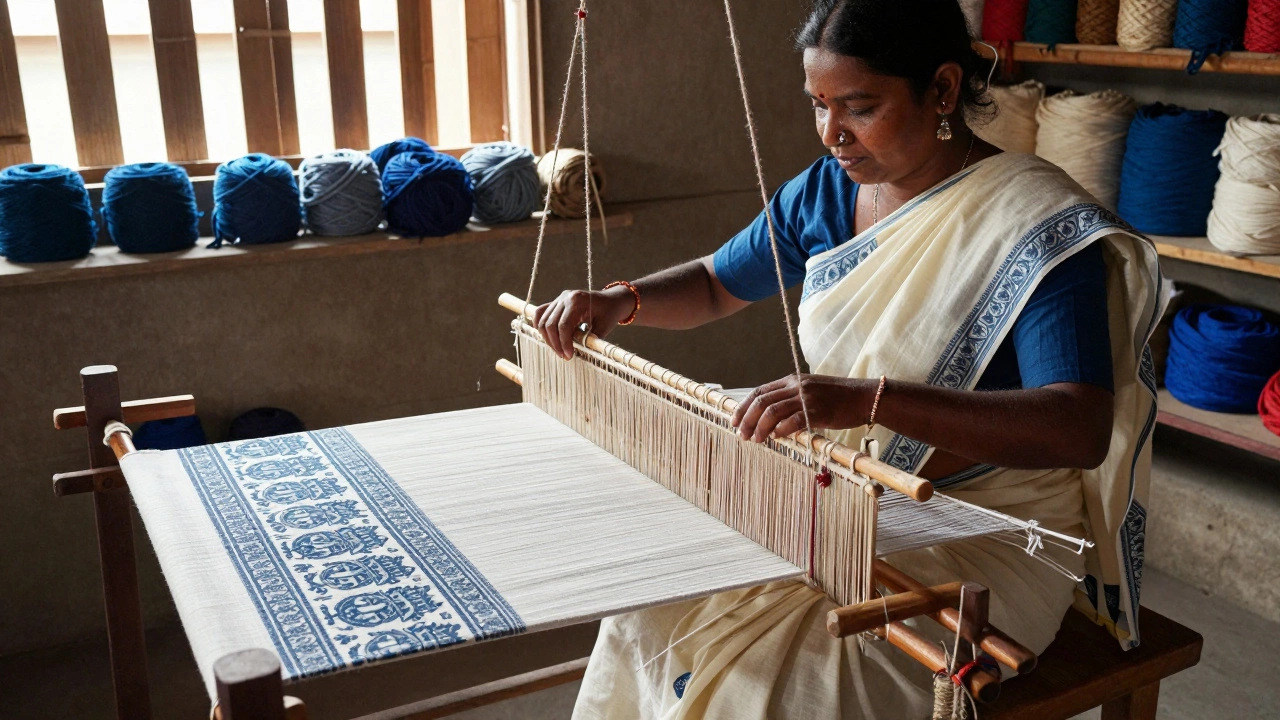
West Bengal, especially the districts of Murshidabad and Birbhum, is home to some of India’s most revered handloom cotton. The state produces over 30% of the country’s handloom output, according to the Handloom Census of 2024. You’ll find the famous Baluchari and Shantipuri saris here-lightweight, breathable, and often decorated with intricate mythological scenes woven into the border. Unlike machine-made fabrics, these take days to complete. A single sari can involve up to 200 hours of labor. That’s why they’re not cheap, but they’re not meant to be. They’re heirlooms.
Tamil Nadu: The Powerhouse of Powerloom and Silk
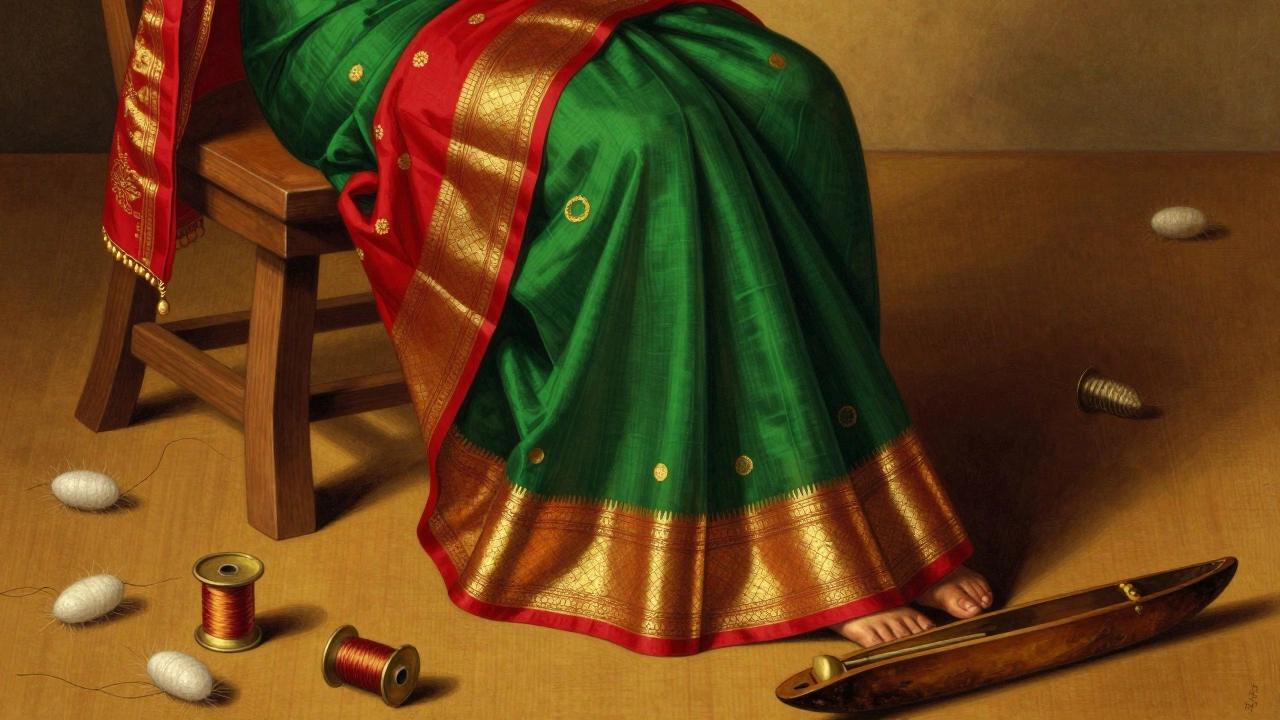
If you’ve ever worn a Kanjivaram sari, you’ve felt Tamil Nadu’s textile legacy. Kanchipuram, a small city south of Chennai, is where the finest mulberry silk in India is spun. These saris use pure silk threads and real gold zari (metallic thread), making them heavy, shiny, and durable. A single Kanjivaram can cost upwards of ₹25,000, but it’s not just luxury-it’s tradition. The weave is so tight that these saris can last a lifetime, often passed from mother to daughter. Tamil Nadu also leads in powerloom production, supplying cotton fabrics to retailers across India and even exporting to Southeast Asia.
Uttar Pradesh: Banarasi Silk and the Art of Gold Weaving
Varanasi, also called Banaras, doesn’t just make silk-it turns silk into art. Banarasi saris are known for their dense gold and silver brocade work, often depicting floral vines, peacocks, or Mughal motifs. The city has over 50,000 weavers working in small family units, many using traditional jacquard looms. In 2023, the Geographical Indication (GI) tag for Banarasi silk protected the name from fake imports. Today, genuine Banarasi silk still uses hand-spun silk from Karnataka and Mysore, then woven in Varanasi. The result? A fabric so rich it’s worn at weddings, festivals, and even by Indian royalty.
Gujarat: Bandhani, Patola, and the Art of Tie-Dye
Gujarat is where color meets craft. The state is famous for two standout fabrics: Bandhani and Patola. Bandhani, or tie-dye, is made by tying tiny knots in fabric before dyeing it. The patterns-dots, waves, diamonds-are all done by hand. You’ll find Bandhani in bright reds, yellows, and greens, especially in women’s dupattas and lehengas. Then there’s Patola, a double ikat weave from Patan. It takes months to make one sari because both the warp and weft threads are tie-dyed before weaving. Only about 50 families still know how to do this. A single Patola sari can cost ₹1 lakh or more. It’s not just fabric-it’s a cultural artifact.
Andhra Pradesh and Telangana: Kalamkari and Cotton Excellence
Don’t overlook the southern states. Andhra Pradesh’s Machilipatnam and Telangana’s Srikalahasti are known for Kalamkari, a centuries-old technique where fabric is hand-painted or block-printed using natural dyes. The designs? Hindu epics, temple motifs, and floral patterns-all done without synthetic inks. The cotton used here is locally grown, fine and strong, perfect for printing. In 2024, the government launched a new initiative to revive Kalamkari by training 10,000 new artisans. These fabrics are now being used in home decor, curtains, and even modern fashion lines abroad.
Madhya Pradesh: Maheshwari and the Quiet Luxury of Cotton
Madhya Pradesh might not be the first name that comes to mind, but Maheshwar, a town on the Narmada River, produces one of India’s most elegant cotton weaves: Maheshwari. These saris are lightweight, with subtle stripes and checks, often featuring temple borders. The weave is unique-thin silk threads are mixed with cotton to create a soft sheen. Unlike heavy silks, Maheshwari saris are worn daily in rural and urban homes alike. They’re cool in summer, warm in winter, and easy to drape. The state government has set up 200 handloom clusters to support weavers, ensuring this fabric survives beyond tourism brochures.
Why These States Dominate India’s Fabric Scene
It’s not just about tradition. These states have ecosystems built around fabric: raw material supply chains, skilled labor, government support, and export networks. For example, Tamil Nadu gets its silk from Karnataka, dyes from Gujarat, and zari from Surat. West Bengal’s cotton comes from Odisha and Bihar. The infrastructure-small workshops, cooperatives, and state-run emporiums-keeps these crafts alive.
Also, unlike mass-produced textiles, these fabrics have traceability. You can often tell where a sari was made by its weave, color, or border design. That’s why global designers-from India’s Sabyasachi to France’s Chanel-source directly from these regions. They’re not buying fabric. They’re buying stories.
What You Should Know Before Buying
If you’re looking to buy authentic Indian fabric, here’s what matters:
- Check the weave: Handloom fabrics have slight irregularities. Machine-made ones are perfectly uniform.
- Look for GI tags: Banarasi, Kanchipuram, Patola, and Maheshwari all have official Geographical Indication certification.
- Feel the weight: Real silk feels cool to the touch and has a subtle rustle. Synthetic silk feels plastic-y and silent.
- Ask about the source: Reputable sellers will tell you the village or cluster where the fabric was made.
Avoid markets that sell "Banarasi silk" for under ₹2,000. That’s not silk-it’s polyester with metallic thread. Real Banarasi starts at ₹8,000 and goes up from there.
How These Fabrics Are Used Today
These aren’t just for saris anymore. Designers are using Kalamkari for upholstery, Maheshwari cotton for linen shirts, and Bandhani for tote bags. Even international brands like Zara and H&M have launched limited collections inspired by Indian handlooms. In India, young brides are choosing lighter Kanjivarams for morning ceremonies and pairing them with crop tops. The fabric isn’t fading-it’s evolving.
What’s clear is that India’s fabric identity isn’t tied to one state. It’s a tapestry of regions, each with its own rhythm, skill, and soul. To say one state is "the most famous" misses the point. The real story is in the hands that weave it.
Which Indian state produces the most cotton fabric?
Gujarat and Maharashtra together produce over 50% of India’s cotton fabric, thanks to large powerloom clusters in Surat, Ahmedabad, and Nagpur. But when it comes to handloom cotton, West Bengal leads, especially in traditional weaves like Shantipuri and Baluchari.
Is Banarasi silk only from Uttar Pradesh?
Yes, authentic Banarasi silk comes only from Varanasi in Uttar Pradesh. The GI tag protects this name, meaning any silk labeled "Banarasi" must be woven there using traditional methods. Other states may make similar-looking fabrics, but they can’t legally call them Banarasi.
What makes Kanchipuram silk different from other silks?
Kanchipuram silk uses pure mulberry silk and real gold or silver zari, woven in a dense, tight pattern that makes it heavy and durable. Unlike other silks that may be blended or machine-made, Kanchipuram saris are handwoven on traditional looms and take 3 to 15 days to complete. They’re designed to last decades.
Are handloom fabrics more expensive than machine-made ones?
Yes, significantly. A handloom sari can cost 5 to 10 times more than a machine-made one because of the time, skill, and labor involved. But the quality, uniqueness, and cultural value make them worth it. Many buyers choose handloom not just for beauty, but to support artisan communities.
Can I buy authentic Indian fabric online?
Yes, but be careful. Stick to trusted platforms like India Handloom Board’s e-portal, Craftsvilla, or direct cooperatives like Dastkar or Sutra. Avoid Amazon or eBay sellers who don’t specify the origin. Real handloom fabrics come with a tag or certificate showing the weaver’s name and village.
Where to Go Next
If you want to explore further, look into the history of Jamdani weaving in Bangladesh (which shares roots with West Bengal’s weavers), or how Chanderi fabric from Madhya Pradesh is being revived by sustainable fashion brands. Or dive into how the Indian government’s Handloom Mark scheme helps authenticate genuine products. The world of Indian fabric is vast-and still growing.