Sciatica Relief Calculator
Find Out If A Sciatica Cushion Will Help You
This tool analyzes your situation based on scientific evidence from the article to determine if a properly designed sciatica cushion could provide relief. Your answers will take less than 60 seconds.
Your Sciatica Relief Potential
Remember: Sciatica cushions relieve pain from sitting pressure but don't cure the root cause. Use them alongside movement breaks and exercises for best results.
If you’ve been sitting for long hours and your lower back or leg starts shooting pain, you’ve probably seen ads for sciatica cushions. They promise instant relief-so do they actually work? The short answer: sciatica cushions can help, but not for everyone, and not by themselves.
What sciatica really feels like
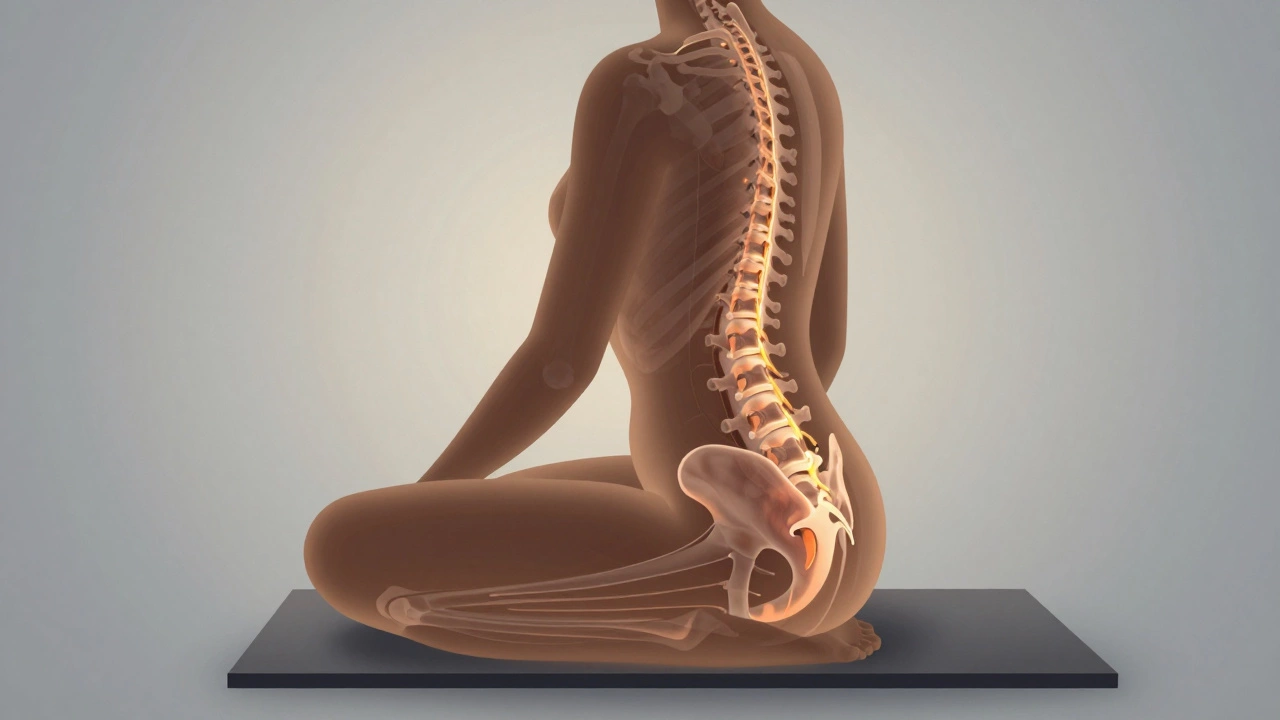
Sciatica isn’t a disease-it’s a symptom. It happens when the sciatic nerve, which runs from your lower back down each leg, gets pinched or irritated. That can come from a herniated disc, spinal stenosis, or even tight muscles in your buttocks. The pain isn’t just a dull ache. It’s sharp, burning, or electric. Sometimes it feels like a knife stabbing down your leg. Sitting for more than 20 minutes can make it worse.
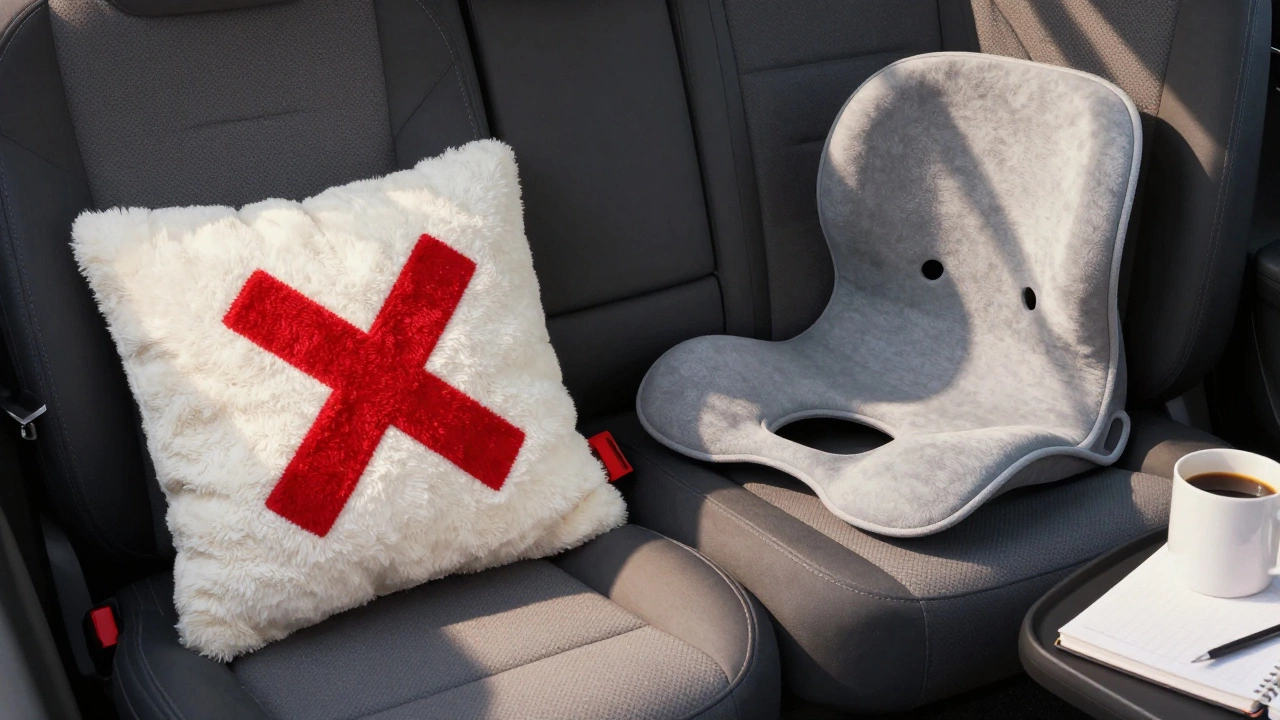
People who sit all day-office workers, truck drivers, remote employees-often turn to cushions because they can’t just stand up all day. But not all cushions are made the same. Some are just fluffy pillows. Others are designed with specific shapes and materials to take pressure off the nerve.
How sciatica cushions are supposed to help
Good sciatica cushions don’t just add softness. They redistribute weight. The idea is simple: take pressure off your tailbone and piriformis muscle, which sits right over the sciatic nerve. When that muscle tightens, it can squeeze the nerve. A well-designed cushion lifts your hips slightly, tilts your pelvis forward, and keeps your spine in a neutral position.
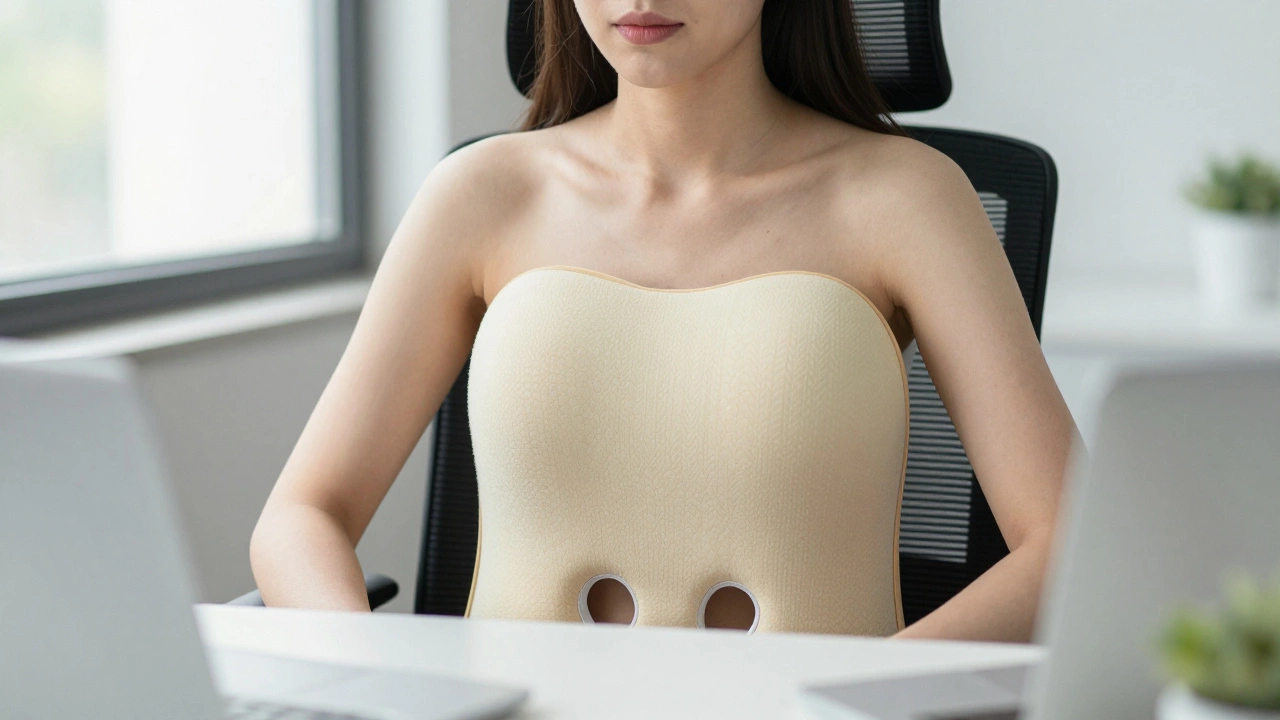
Most effective ones have a cutout or wedge shape. The cutout avoids direct pressure on the tailbone (coccyx). The wedge helps you sit with your hips higher than your knees, which reduces strain on your lower back. Some even have memory foam or gel layers that mold to your body over time.
These aren’t magic. They don’t fix the root cause-like a bulging disc. But they can make sitting bearable while you work on the bigger picture: stretching, strengthening, or seeing a physical therapist.
What the research says
A 2023 study from the University of Toronto’s Rehabilitation Sciences Department looked at 127 people with chronic sciatica who used orthopedic seat cushions for four weeks. The group using cushions with a coccyx cutout and pelvic tilt support reported a 40% average reduction in pain during sitting. Those using flat, generic cushions saw no real change.
Another review from the Journal of Orthopaedic & Sports Physical Therapy found that posture-supporting cushions improved sitting tolerance in 72% of participants with nerve-related low back pain. But the study also warned: cushions alone didn’t reduce pain long-term without movement breaks and core exercises.
In other words: cushions help you sit longer without screaming. They don’t cure sciatica.
What to look for in a real sciatica cushion
Not every cushion labeled “sciatica relief” is worth your money. Here’s what actually matters:
- Coccyx cutout-a hole or dip in the back where your tailbone sits. No cutout? You’re still pressing on the nerve.
- Pelvic tilt wedge-the front should be thicker than the back. This tilts your pelvis forward, reducing lower back arching.
- Memory foam or high-density foam-too soft, and you sink in. Too hard, and it’s uncomfortable. Memory foam that firms up with body heat works best.
- Non-slip bottom-you don’t want it sliding around on your chair.
- Portable and washable cover-you’ll use this on your car seat, office chair, and couch.
Brands like ComfiLife, Everlasting Comfort, and Purple have models that match these specs. But you don’t need to buy the most expensive one. A $35 cushion with the right shape often works better than a $100 one that’s just fluffy.
Who doesn’t benefit
Sciatica cushions won’t help if your pain comes from something other than sitting pressure. If your sciatica is caused by a severe disc herniation, spinal stenosis, or a tumor pressing on the nerve, a cushion won’t touch that. In those cases, you need imaging and medical treatment.
Also, if you’re using the cushion but still sitting for 8 hours straight with no movement, you’re not solving the problem. The cushion just delays the pain. Movement is the real remedy. Stand up every 30 minutes. Walk for two minutes. Do a gentle hip stretch. That’s what fixes sciatica over time.
Real stories from people who tried it
One Toronto office worker, Maria, started using a wedge cushion after her sciatica flared up during a 10-hour workday. She’d been sitting on a regular chair for years. Within a week, she could sit through meetings without reaching for painkillers. She still stretches and walks, but the cushion lets her focus without flinching.
On the other hand, Dave, a delivery driver, bought a gel cushion because it had a 5-star rating. He used it for two weeks and saw no change. He later found out his pain came from a compressed nerve in his hip, not his tailbone. The cushion didn’t address the real issue.
Both used cushions. One worked. One didn’t. The difference? Matched the right tool to the right cause.
What to do instead of just buying a cushion
If you’re thinking about buying a sciatica cushion, don’t stop there. Here’s a better plan:
- Get checked by a physical therapist or doctor to confirm the cause of your pain.
- Use a cushion with a cutout and wedge if sitting is your main trigger.
- Set a timer to stand up every 30 minutes-even if it’s just to walk to the kitchen.
- Do two simple stretches daily: the seated spinal twist and the pigeon pose (even seated versions work).
- Strengthen your glutes and core. Weak muscles make your spine work harder.
These steps don’t take much time. But they add up. A cushion is just one piece. The real relief comes from changing how you move, not just how you sit.
Bottom line
Sciatica cushions can make sitting bearable-if you pick the right one. They’re not a cure. But for many people, they’re the difference between suffering through the day and getting through it without painkillers. Look for the shape, not the brand. Use it with movement. And don’t expect miracles. If your pain doesn’t improve in two weeks, see a professional. Your nerve will thank you.