Sofa Durability Checker
How to Use This Tool
Enter your sofa's specifications to see if it meets the durability standards outlined in the article. Each required element must be checked for a passing score.
Sofa Specifications
Most people buy a sofa once every 10 to 15 years - if they’re lucky. Too often, the couch you bought last spring starts sagging by year three, the cushions flatten like pancakes, and the fabric pills into a fuzzy mess. It doesn’t have to be this way. Choosing a sofa that lasts isn’t about spending the most money - it’s about knowing what to look for. Here’s how to pick one that’ll still be comfortable and solid a decade from now.
Start with the Frame
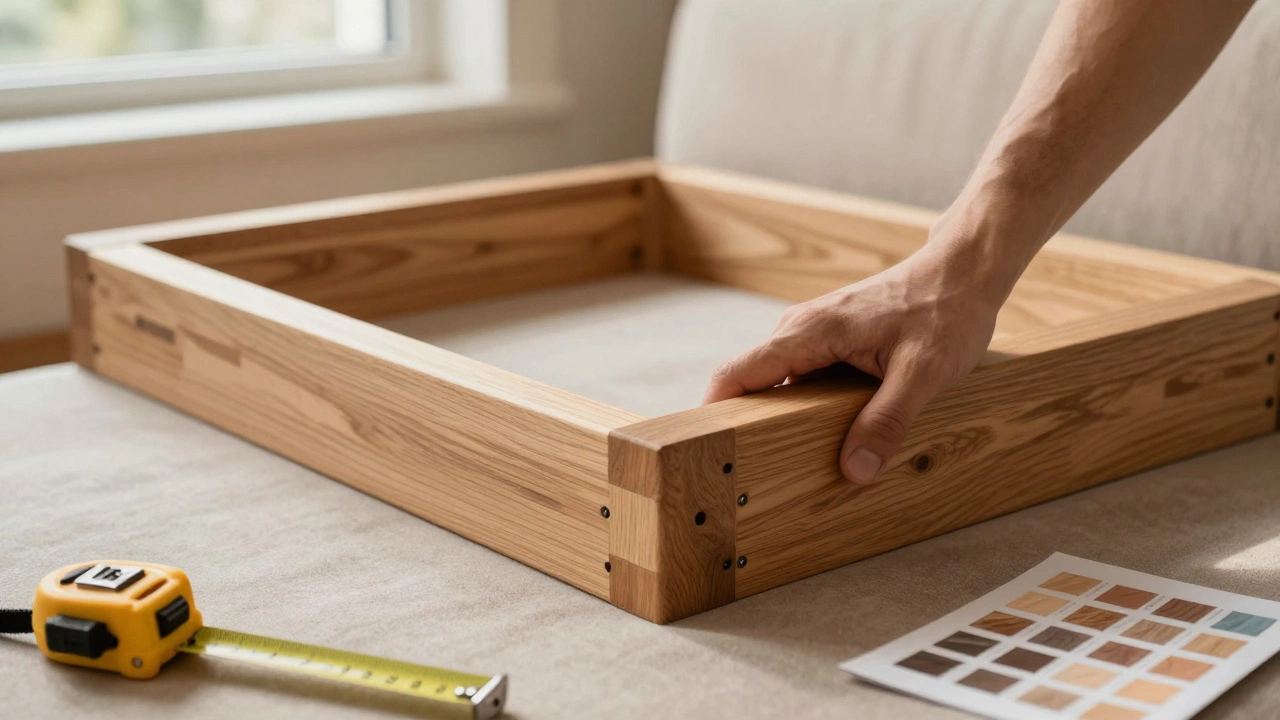
The frame is the skeleton of your sofa. If it’s weak, nothing else matters. Look for hardwood frames made from solid kiln-dried hardwood like oak, maple, or beech. These woods don’t warp easily and hold up under constant weight. Avoid frames made from particleboard, plywood, or softwoods like pine - they break down fast. A good frame will feel heavy when you lift one corner. If it feels light or hollow, walk away.
Check how the joints are connected. The best sofas use mortise and tenon joints, where a protruding piece of wood fits tightly into a hole. These are glued and sometimes pinned. You’ll also see corner blocks - triangular pieces of wood glued and screwed into the frame at stress points. If the joints are just stapled or nailed, that’s a red flag. Staples can pull out over time. Screws and glue? That’s built to last.
Look at the Suspension System
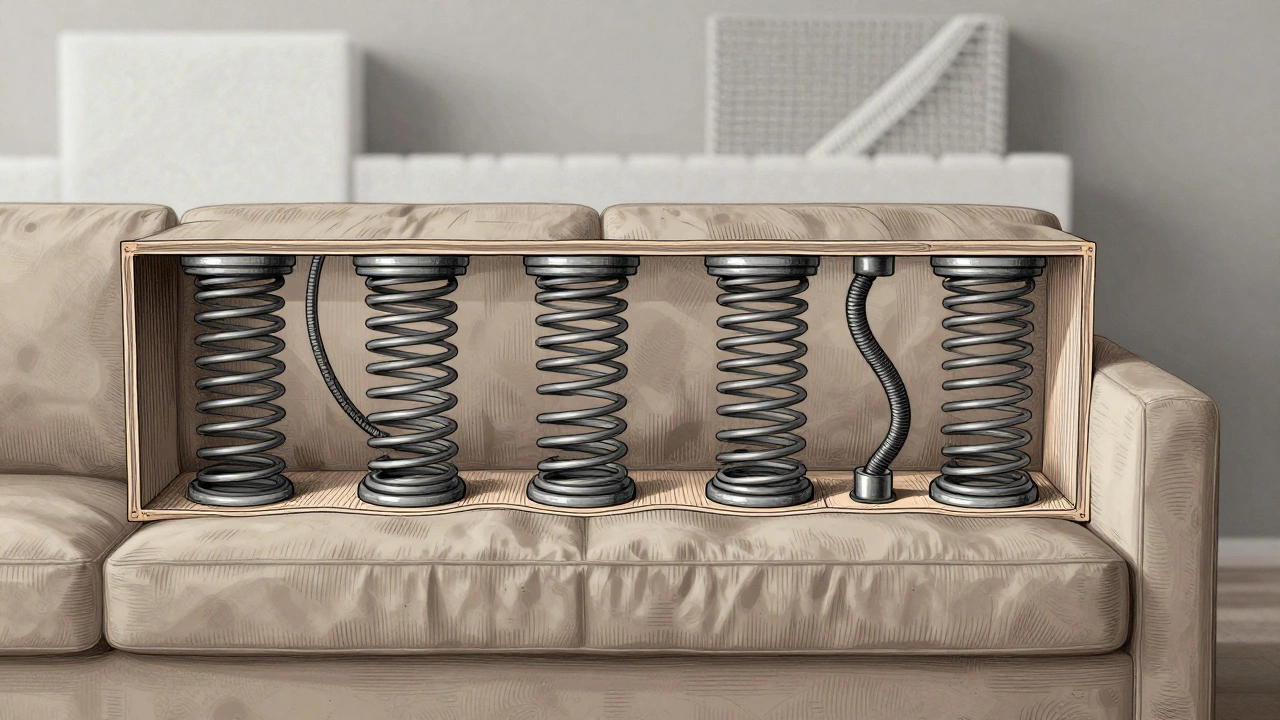
What holds up your butt? It’s not the cushion - it’s the suspension underneath. The two best systems are eight-way hand-tied springs and sinuous S-springs. Eight-way hand-tied springs are the gold standard. Each spring is individually tied with twine in eight directions, creating a responsive, durable support system. You’ll find these in high-end sofas, and they can last 20+ years.
If you’re on a budget, sinuous S-springs (those wavy metal wires running front to back) are a solid second choice. They’re strong, affordable, and used by reputable brands. Avoid foam-only suspension - it collapses quickly. Some sofas use elastic webbing. It’s okay for light use, but not for daily sitting or heavier people. Ask the salesperson: “Is the suspension made of springs or just webbing?” If they hesitate, it’s probably webbing.
Choose the Right Cushion Fill
Cushions are where most sofas fail. You want something that feels good today and still looks good in five years. The best combo is a high-density foam core wrapped in down or feather. High-density foam (2.5 lbs per cubic foot or higher) holds its shape. Lower density foam (1.8 lbs or less) compresses into a flat pancake in under a year.
The down or feather wrap adds softness and lets you sink in without feeling like you’re sitting on a brick. It also helps the cushion bounce back. Some brands use synthetic fibers instead of down - that’s fine too, as long as the foam underneath is dense. Avoid cushions that are 100% down or 100% foam. Pure down sinks too much. Pure foam feels stiff and doesn’t recover well.
Test it. Sit on the sofa and press into the cushion. It should give slightly, then push back. If it stays indented for more than a few seconds, skip it. Flip the cushion over - if the bottom layer feels thin or flimsy, the sofa won’t last.
Upholstery Matters More Than You Think
The fabric is your first line of defense against wear. For daily use, choose performance fabrics with a rub count of 30,000 or higher. That’s the industry standard for durability. You’ll see this number listed as “Martindale” or “Wyzenbeek” on spec sheets. A 15,000 rub count is okay for occasional use. Below 10,000? That’s decorative, not functional.
Leather is tough - but not all leather is equal. Full-grain and top-grain leather last decades. Bonded leather? That’s just scraps glued together. It cracks in 2-3 years. If you’re considering leather, ask: “Is this full-grain or top-grain?” If they say “genuine leather,” run. That term means nothing - it could be the lowest grade.
For fabric, look for tightly woven synthetics like microfiber, solution-dyed acrylic, or polyester blends. These resist stains, fading, and pilling. Avoid loose weaves like linen or velvet unless you’re okay with constant maintenance. A dark color or pattern hides dirt better than light solid tones. And always check the cleaning code. An “X” means dry clean only - that’s a hassle. “W” or “WS” means you can spot-clean with water.
Check the Legs and Construction Details
It’s easy to overlook the legs, but they’re part of the structure. Solid wood or metal legs are best. Plastic or hollow metal legs can snap or bend. If the legs are attached with screws, that’s better than glue. Some sofas have removable legs - that’s a plus. You can replace them if they wear out or change the style later.
Look at the back of the sofa. If the fabric is neatly tacked or stapled with no visible glue, that’s a sign of care. If you see raw foam sticking out, uneven stitching, or glue oozing through, that’s a red flag. A well-made sofa has clean lines, even seams, and no loose threads.
Brand Reputation and Warranty
You don’t need to buy from a luxury brand, but you do need to buy from someone who stands behind their product. Look for warranties that cover the frame and springs for at least 5-10 years. Cushion warranties should be 3-5 years. If a company only offers a 1-year warranty, they don’t expect it to last.
Read reviews from people who’ve owned the sofa for 3+ years. Look for comments like “still looks new” or “cushions haven’t flattened.” Avoid products with dozens of reviews saying “sagged after six months.” Brands like Stickley, La-Z-Boy (higher-end lines), and independents like Floyd or Burrow have strong reputations for durability. Don’t just trust big-name retailers - check who actually makes the sofa.
What to Skip
- Sofas with removable covers labeled “dry clean only” - they’re hard to maintain
- Overstuffed designs with no structure - they collapse under weight
- Low-end sectional sofas with plastic connectors - they break easily
- Anything marketed as “modern minimalist” with thin cushions - they’re not built for comfort
- Price tags under $500 for a three-seater - if it’s too cheap, it’s not built to last
Final Checklist Before You Buy
- Frame: Solid hardwood with mortise-and-tenon joints and corner blocks
- Suspension: Eight-way hand-tied springs or sinuous S-springs
- Cushions: High-density foam (2.5+ lb) wrapped in down or synthetic fiber
- Upholstery: 30,000+ rub count fabric or full-grain leather
- Legs: Solid wood or metal, attached with screws
- Warranty: At least 5 years on frame and springs
- Reviews: Real long-term feedback from owners, not just five-star ratings
If you follow this, you won’t just get a sofa. You’ll get one that outlasts trends, roommates, and even your kids’ high school years. A good sofa isn’t a luxury - it’s an investment in daily comfort. Spend a little more now, and you’ll never have to shop for another one again.




Feb 15 2025