Prayer Rug Identifier Tool
Check These Features
Select the features present in the rug you are examining.
Analysis Result
Awaiting Input
Check the features on the left to identify the rug type.
Ever walked into a shop or browsed online and wondered if that beautiful woven piece is just a decorative runner or something with deeper meaning? It’s a common question. Rugs are everywhere now, but prayer rugs are specialized textiles designed for Islamic worship, featuring specific symbols and orientations. They aren’t just floor coverings; they’re tools for ritual. Knowing the difference helps you respect their purpose, buy the right one for your home, or simply appreciate the artistry behind them.
You don’t need to be an expert in Islamic theology to spot the signs. There are clear visual cues woven into the fabric itself. If you’ve ever felt unsure about whether a rug is meant for prayer or just for style, this guide breaks down exactly what to look for. We’ll walk through the shapes, the symbols, and the materials so you can identify a true sajjada (the Arabic word for prayer mat) with confidence.
The Mihrab Arch: The Most Obvious Sign
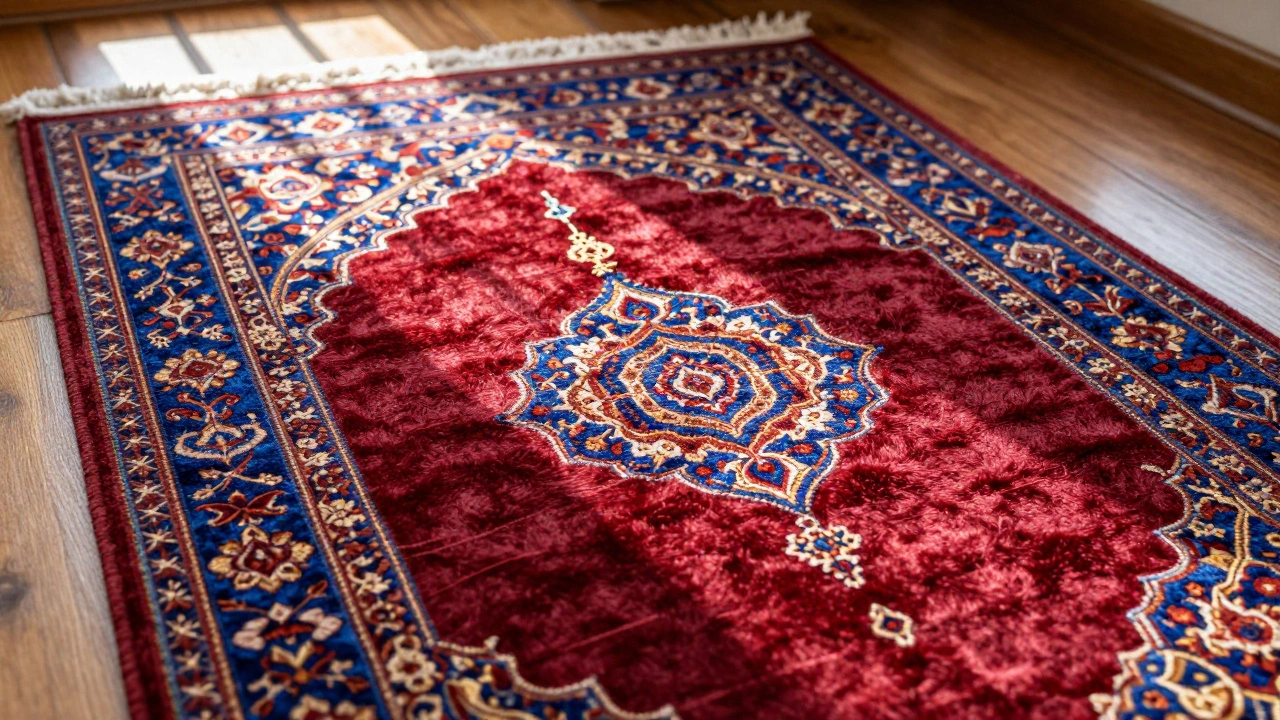
If there’s one thing that screams "prayer rug," it’s the arch. Look at the top of the rug. Do you see a semi-circular shape that looks like a doorway or a niche? That’s called a mihrab, which is an architectural niche in a mosque wall that indicates the direction of Mecca.
In a mosque, the mihrab shows worshippers where to face during Salah (daily prayers). On a rug, this symbol serves the same purpose. It acts as a visual guide, helping the person praying align their body toward the Kaaba in Mecca. When you see this arch, especially if it’s centered near one end of the rug, you’re almost certainly looking at a prayer rug. Sometimes, inside the arch, you’ll find a small lamp motif, representing the light of faith, or intricate floral patterns that mimic the ornate tile work found in historic mosques across Turkey, Iran, and Morocco.
Not all prayer rugs have a huge, obvious arch. Some feature a subtle curve or even a stylized version that blends into the border. But if you see that distinct "doorway" shape at the head of the rug, it’s a dead giveaway. This isn’t just decoration; it’s functional symbolism baked into the design.
Orientation and the Headrest Niche
Prayer involves specific physical movements: standing, bowing, prostrating, and sitting. A prayer rug is designed to accommodate these motions. One key feature is the space at the top of the rug, near the mihrab arch. This area is often slightly wider or has a distinct pattern because it’s where the worshipper places their forehead and hands when prostrating (sujud).
This section is sometimes referred to as the "headrest" area. In traditional designs, you might notice a small, recessed-looking patch or a different color block right under the arch. This provides a clean, soft spot for the forehead. Regular decorative runners don’t usually have this intentional zoning. They’re meant to be looked at, not knelt on. If you’re examining a rug and notice a clear "top" and "bottom" based on the pattern layout, rather than a repeating all-over print, it’s likely intended for prayer.
Symbols of Faith: Lamps, Trees, and Hands
Beyond the mihrab, other symbols frequently appear on prayer rugs. These motifs carry spiritual significance and help distinguish them from generic ethnic rugs.
- The Lamp (Fanous): Often placed within the mihrab arch, a hanging lamp symbolizes divine light and guidance. It’s a classic element in Turkish and Persian prayer rugs.
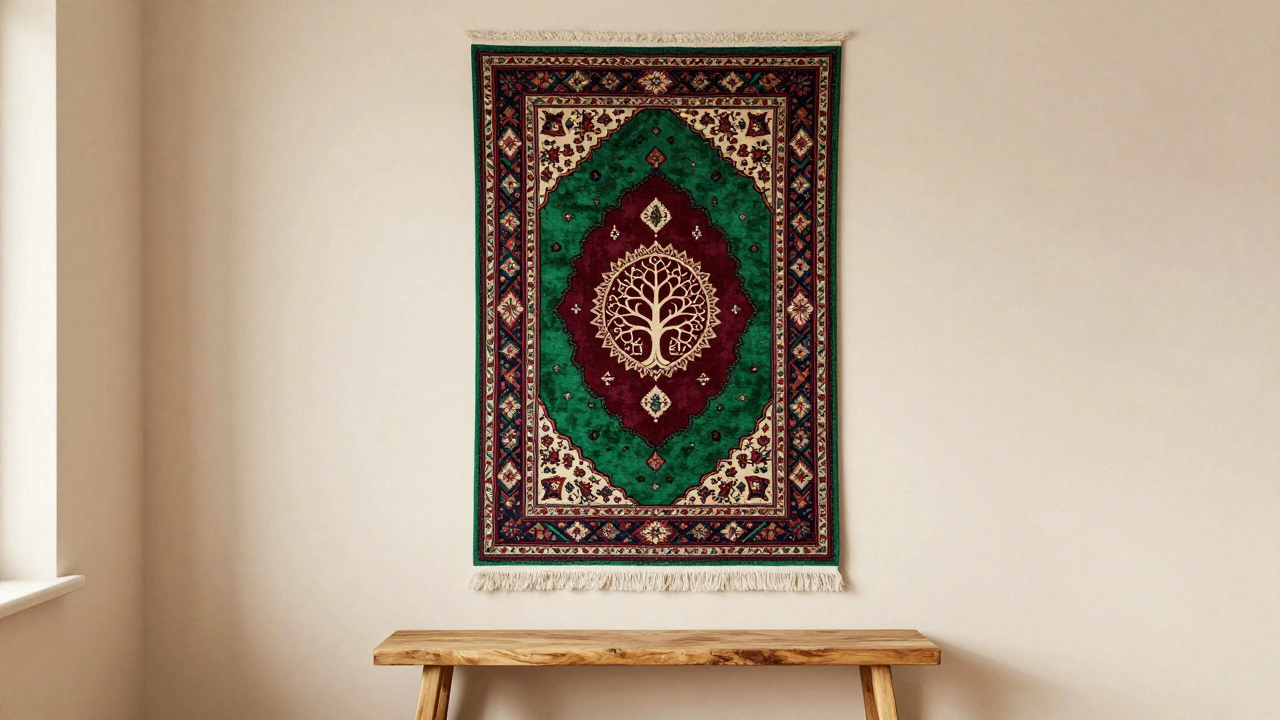
- The Tree of Life: A central tree motif represents growth, paradise, and connection to the divine. You’ll see this often in Central Asian and Caucasian styles.
- The Hand of Fatima: While more common in amulets, variations of hand motifs or protective symbols can appear on prayer mats, signifying protection and blessing.
- Geometric Patterns: Unlike abstract modern art, geometric patterns on prayer rugs are often symmetrical and precise, reflecting the order and discipline of prayer.
If you see a combination of these elements-especially the lamp and the arch-you can be pretty sure you’re looking at a prayer rug. Even if the design is minimalist, the presence of any single religious symbol usually confirms its intent.
Material Matters: Cleanliness and Comfort
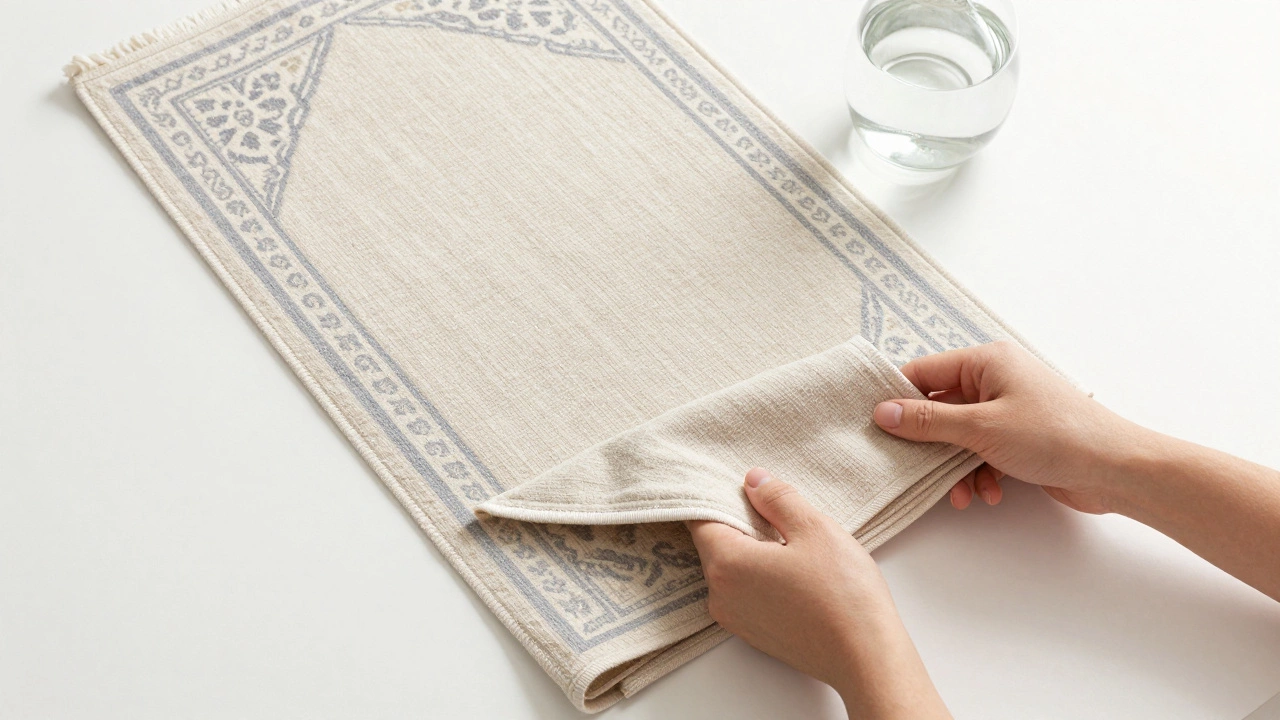
Functionality drives the choice of materials. Since prayer requires direct contact with the ground, cleanliness is paramount. Many Muslims perform ablution (wudu) before praying, washing their hands, arms, face, and feet. The rug needs to be easy to clean and quick-drying.
Cotton is a popular material for prayer rugs due to its breathability and ease of cleaning. You’ll find many affordable, everyday prayer rugs made from cotton or synthetic blends like polyester. These are lightweight, machine-washable, and perfect for daily use. They often come with a non-slip backing so they don’t slide around on hardwood or tile floors during movement.
For special occasions or collectors, you might encounter wool or silk rugs. Wool is durable and luxurious, while silk adds a shimmering quality. High-end Persian prayer rugs are hand-knotted wool or silk textiles known for intricate designs and high value. These are often treated as heirlooms. If you pick up a rug and it feels thin, flat, and utilitarian, it’s probably a daily-use cotton mat. If it’s thick, heavy, and incredibly detailed, it’s likely a premium piece meant for Friday prayers or display.
Size and Portability: The Travel Factor
Think about how people pray. It happens five times a day, wherever they are-at home, at work, in a park, or while traveling. This necessity has shaped the size of prayer rugs. They tend to be smaller than standard living room runners.
A typical individual prayer rug measures around 20x30 inches to 24x36 inches (50x80 cm to 60x90 cm). This is just enough space for one person to stand, bow, and prostrate comfortably. You’ll rarely see a prayer rug that’s 8 feet long unless it’s a large family-sized mat or a multi-person design. Another clue? Portability. Many prayer rugs come with a carrying strap, a rolled-up sleeve, or a compact fold. If the rug looks like it’s designed to fit in a backpack or a car glove compartment, it’s almost certainly a prayer rug. Decorative runners are rarely built for travel.
Color Palettes: Tradition vs. Modernity
Traditionally, prayer rugs featured deep reds, blues, greens, and golds. These colors were derived from natural dyes and reflected the rich palettes of Persian and Ottoman art. Red symbolized vitality and protection, blue represented spirituality and heaven, and green was associated with paradise.
Today, however, the market has expanded. You can find prayer rugs in neutral tones-beiges, grays, and whites-to match modern interior decor. Some designers even create "minimalist" prayer rugs with simple lines and muted colors. Despite the shift in aesthetics, the core symbols (like the mihrab) remain. So, don’t rule out a beige rug just because it lacks bold colors. Check for the arch and the orientation. The function hasn’t changed, even if the fashion has.
| Feature | Prayer Rug (Sajjada) | Decorative Runner |
|---|---|---|
| Primary Symbol | Mihrab arch, lamp, tree of life | Abstract, floral, geometric repeats |
| Orientation | Clear top (head) and bottom (feet) | Often reversible or all-over pattern |
| Size | Small (approx. 20x30 to 24x36 inches) | Varies (often longer, e.g., 2x7 feet) |
| Material Focus | Cleanliness, grip, comfort for kneeling | Aesthetics, durability for foot traffic |
| Portability | Lightweight, often includes strap/fold | Heavier, not designed for travel |
Common Misconceptions: What Isn’t a Prayer Rug?
It’s easy to get confused because some ethnic rugs share similar patterns. For example, a Caucasian Kazakh rug might have geometric diamonds that look vaguely like an arch, but without the clear mihrab structure and lamp motif, it’s primarily a decorative piece. Similarly, a yoga mat might be used for prayer by someone who doesn’t own a dedicated rug, but it lacks the cultural symbols and specific orientation markers.
Also, not every rug sold in an "Islamic store" is a prayer rug. Some shops sell general Persian carpets that happen to be popular in Muslim households. Always look at the design, not just the label. If it doesn’t have the directional cues or the symbolic arch, it’s just a nice carpet.
Why It Matters to Know the Difference
Identifying a prayer rug isn’t just about trivia. It’s about respect. If you’re buying one as a gift, knowing the features ensures you’re giving something appropriate. If you’re decorating a home, understanding the orientation helps you place it correctly-usually with the mihrab facing the Qibla (direction of Mecca), though in secular settings, people often hang them as wall art or lay them in hallways regardless of direction.
Moreover, recognizing these rugs allows you to appreciate the craftsmanship. Many are handmade by artisans who pass down techniques through generations. From the hand-knotted wool of Kashan to the flat-weave cotton of Egypt, each rug tells a story of devotion and skill. Next time you see a rug with that distinctive arch, you’ll know it’s not just a pattern-it’s a portal for prayer.
Can I use a prayer rug as a regular floor rug?
Yes, you can, but consider the wear and tear. Prayer rugs are designed for kneeling and prostration, so the material is often softer and less dense than high-traffic hallway runners. If you place it in a high-traffic area, it may wear out faster. Also, remember its cultural significance; using it purely as decor is fine, but placing it in a respectful location is appreciated.
What does the arch on a prayer rug represent?
The arch represents the mihrab, the niche in a mosque wall that points toward Mecca. On the rug, it helps the worshipper orient themselves correctly during prayer, ensuring they face the right direction (Qibla).
Are prayer rugs always small?
Most individual prayer rugs are small (around 20x30 inches) for portability and personal use. However, larger family-sized prayer rugs exist, measuring up to 4x6 feet or more, allowing multiple people to pray side-by-side. These still feature the mihrab design, often repeated or enlarged.
How do I clean a prayer rug?
Cleaning depends on the material. Cotton and synthetic prayer rugs are often machine-washable on a gentle cycle. Wool and silk rugs require dry cleaning or hand-washing with mild detergent to avoid shrinking or damage. Always check the care label. Regular vacuuming is recommended to keep dust and dirt out of the fibers.
Can I hang a prayer rug on the wall?
Absolutely. Many people hang prayer rugs as wall art, especially those with beautiful, intricate designs. It’s a great way to display cultural heritage and artistic craftsmanship. Just ensure you use proper mounting hardware to support the weight, especially for heavier wool rugs.