Sodium Hydroxide Consumption Calculator
Sodium Hydroxide Usage Calculator
Estimate sodium hydroxide requirements for Indian industrial production based on the latest industry data from the article.
Estimated Sodium Hydroxide Requirement
Enter production volume to see calculation
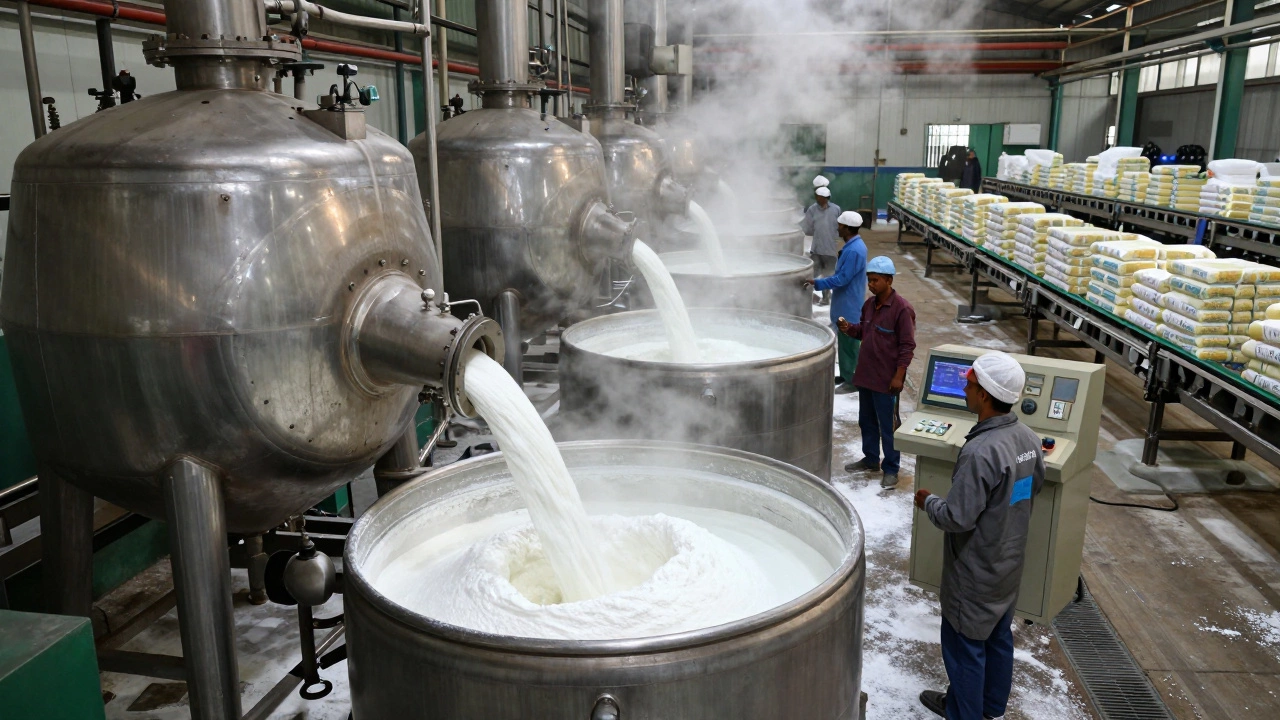
India doesn’t just use chemicals-it runs on them. From the soap you wash with to the fertilizer that grows your food, from the textiles in your clothes to the medicines in your cabinet, chemicals are the hidden backbone of daily life. But if you had to pick just one chemical that’s in the highest demand across the country, it’s not something exotic or high-tech. It’s sodium hydroxide, also known as caustic soda.
Why Sodium Hydroxide Leads the Pack
Sodium hydroxide is used everywhere in India’s industrial ecosystem. In 2024, India consumed over 4.2 million metric tons of it, according to data from the Indian Chemical Council. That’s more than any other industrial chemical in the country. Why? Because it’s cheap, versatile, and essential.
In soap and detergent manufacturing alone, sodium hydroxide makes up nearly 70% of the raw material. India produces over 12 million tons of detergents annually, and every kilogram needs about 150 grams of caustic soda. That’s already over 1.8 million tons just for cleaning products.
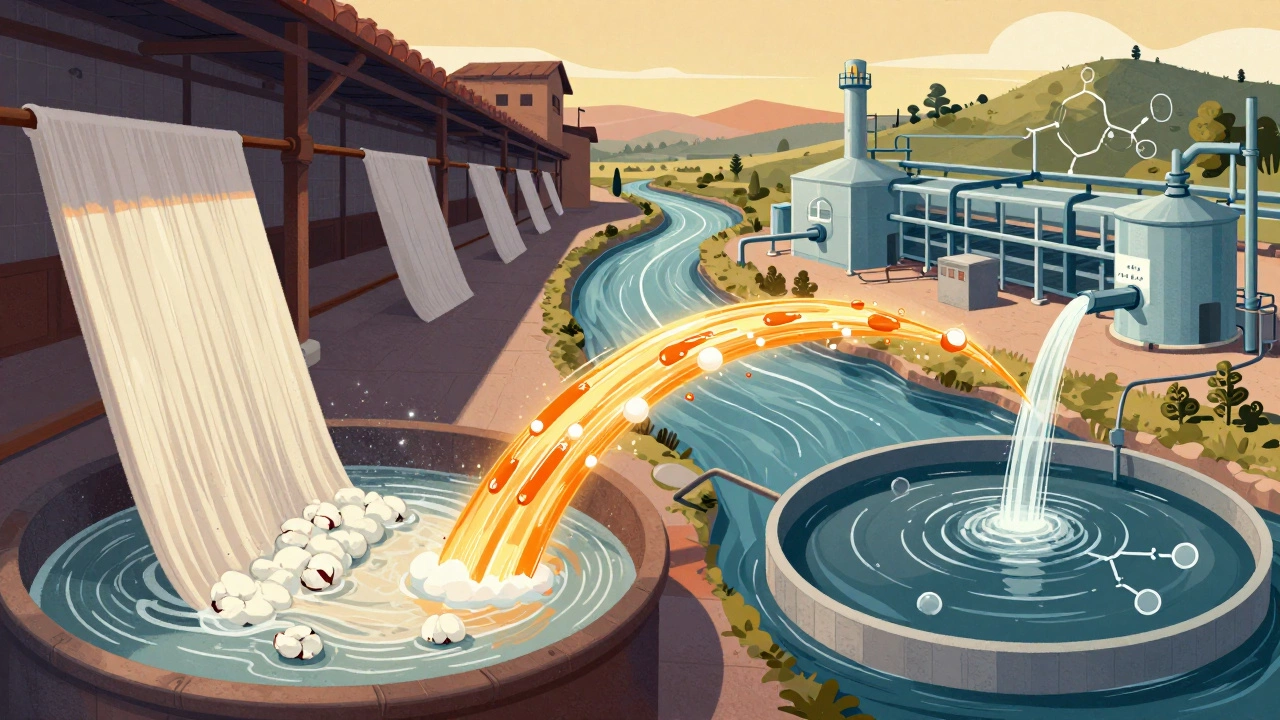
Then there’s the textile industry. Cotton processing, dyeing, and finishing all rely on sodium hydroxide to remove impurities and improve fabric quality. India is the second-largest cotton producer in the world, and its textile mills use caustic soda in massive quantities-another 1.1 million tons a year.
Aluminum production? That’s another big user. Bauxite ore must be refined into alumina before it can be turned into aluminum. The Bayer process, used by every major plant in India, needs sodium hydroxide to dissolve the ore. With India’s aluminum output hitting 4.8 million tons in 2024, the demand from this sector alone adds another 600,000 tons.
Even paper mills use it to break down wood pulp. Water treatment plants use it to adjust pH levels. And in food processing, it’s used to peel fruits and vegetables-like tomatoes and potatoes-on an industrial scale. No other chemical touches so many industries in such direct, unavoidable ways.
How It Compares to Other Top Chemicals
People often think of sulfuric acid or hydrochloric acid as the heavyweights. And yes, they’re big. Sulfuric acid, used in fertilizers like phosphates and in battery production, hit around 3.8 million tons in 2024. Hydrochloric acid, used in steel cleaning and PVC production, was at 1.9 million tons. But neither matches sodium hydroxide’s breadth.
Ammonia, used mostly in urea fertilizer, saw demand jump to 2.7 million tons in 2024 thanks to India’s push for self-reliance in agriculture. Still, it’s focused mostly on one sector: farming. Sodium hydroxide? It’s in 12 major industries.
Even chlorine, which is used to make PVC, disinfect water, and produce bleach, doesn’t come close in total tonnage. While chlorine gas is produced in huge volumes, much of it is consumed on-site in chemical plants to make other compounds. Sodium hydroxide is sold, shipped, and used directly by end users.
Who Makes It in India?
India has over 80 commercial producers of sodium hydroxide. The biggest players are Tata Chemicals, Reliance Industries, and Gujarat Alkalies & Chemicals Limited (GACL). Together, they account for more than 60% of domestic production.
Tata Chemicals runs one of the largest caustic soda plants in Asia at Mithapur, Gujarat. It produces over 1 million tons a year-not just for the Indian market, but also for export to Southeast Asia and Africa. Reliance’s Jamnagar complex, tied to its petrochemical operations, supplies high-purity sodium hydroxide to pharmaceutical and specialty chemical users.
Smaller regional players like SRF Limited and Indo Gulf Fertilizers fill niche markets, especially in the south and east. Many of these plants are integrated with chlor-alkali units, meaning they produce chlorine and sodium hydroxide together from salt brine. This keeps costs low and supply steady.
India is now the 5th largest producer of sodium hydroxide in the world. Domestic production covers about 85% of demand. The rest comes from imports, mostly from China and Saudi Arabia, used to cover seasonal spikes or when local plants go offline for maintenance.
Why Demand Keeps Rising
India’s sodium hydroxide demand has grown at 6.8% annually over the last five years. That’s faster than GDP growth. Why? Three reasons.
First, urbanization. More people living in cities means more laundry, more cleaning, more hygiene products-all of which need detergent. The middle class expanded by 150 million people between 2019 and 2024. That’s 150 million new consumers buying soap and detergent every year.
Second, government programs like Swachh Bharat and Jal Jeevan Mission have pushed local governments to invest in water treatment and sanitation infrastructure. Sodium hydroxide is critical in treating sewage and making drinking water safe.
Third, the push for ‘Make in India’ has boosted domestic manufacturing. More factories mean more textiles, more aluminum, more paper, more pharmaceuticals-all of which use caustic soda. Even electric vehicle battery recycling is starting to use sodium hydroxide to recover lithium and cobalt.
Challenges in Supply and Safety
Despite high demand, there are risks. Sodium hydroxide is highly corrosive. It can cause severe burns, and improper storage leads to accidents. In 2023, over 200 industrial incidents in India were linked to chemical handling, with sodium hydroxide involved in nearly 30% of them.
Logistics are another issue. It’s often transported as a 50% liquid solution in special tankers. In rural areas, where roads are poor and storage facilities are outdated, leaks and spills still happen. The government has tightened regulations under the Chemicals (Management and Safety) Rules, 2023, requiring all users to have safety training and emergency plans.
Energy costs also affect production. Chlor-alkali plants use a lot of electricity. With power prices rising, some smaller plants have cut back on output. That’s led to temporary shortages in places like Odisha and West Bengal, where demand is high but production is low.
What’s Next?
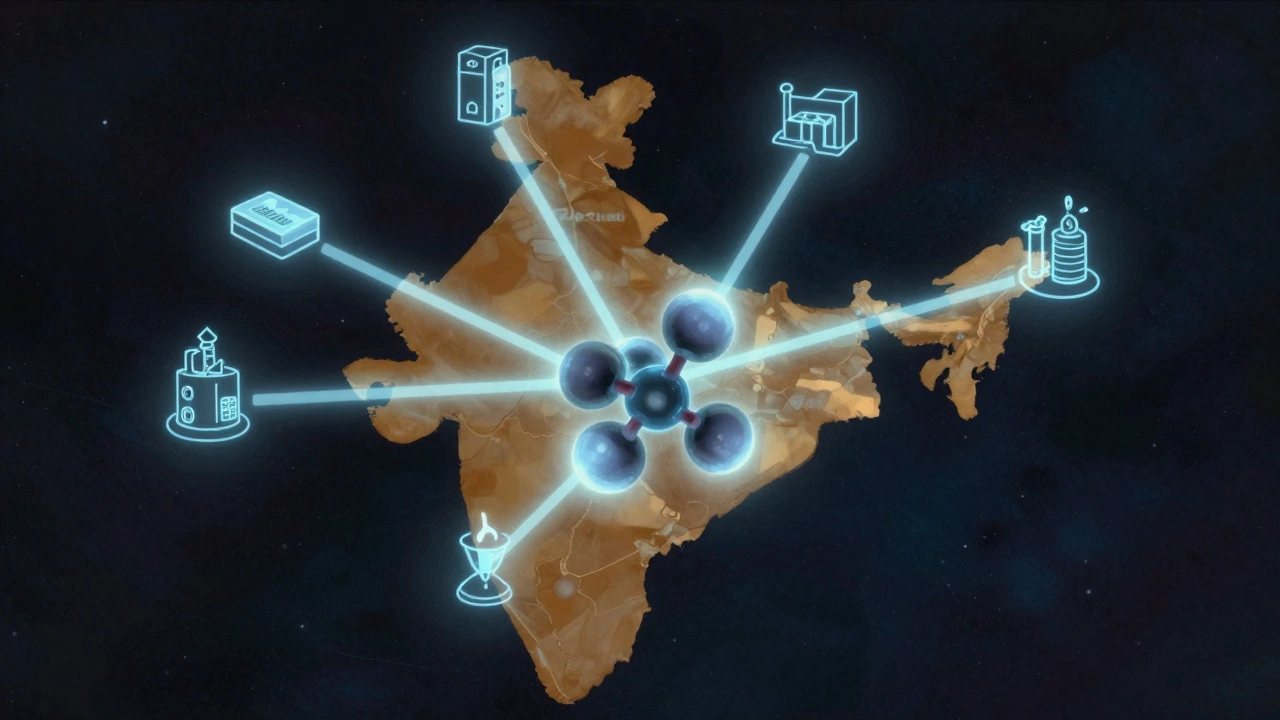
The future of sodium hydroxide in India isn’t just about more of the same. New applications are emerging. In green hydrogen projects, sodium hydroxide is used in electrolyzers to split water. In battery recycling, it helps recover valuable metals. Even in the production of biodegradable plastics, it’s used as a catalyst.
Companies are investing in more efficient production methods. Some are switching to membrane cell technology, which uses 30% less electricity than older mercury or diaphragm cells. Others are building recycling loops-capturing and reusing caustic soda from wastewater streams.
India’s chemical industry is no longer just a supplier to the world. It’s becoming a driver of innovation. Sodium hydroxide may be a simple compound, but its role in India’s growth story is anything but.
Is sodium hydroxide the same as lye?
Yes, sodium hydroxide is commonly called lye, especially in soap-making and household cleaning. The terms are interchangeable in industrial and consumer contexts. Lye can also refer to potassium hydroxide, but in India, when people say "lye," they almost always mean sodium hydroxide.
Can I buy sodium hydroxide online in India?
Yes, but only for industrial or commercial use. Online platforms like IndiaMART and Udaan sell sodium hydroxide to registered businesses with proper documentation. Selling it to individuals without a valid industrial license is illegal under India’s chemical safety rules. Always check the seller’s credentials and ensure you have the right permits.
Which state in India consumes the most sodium hydroxide?
Gujarat leads in consumption, followed by Maharashtra and Tamil Nadu. Gujarat has the highest concentration of chemical plants, textile mills, and aluminum refineries. Maharashtra’s pharmaceutical and detergent industries drive high demand, while Tamil Nadu’s textile and paper sectors use large volumes.
Is sodium hydroxide dangerous to handle?
Extremely. Sodium hydroxide can cause severe chemical burns on skin and eyes. Inhaling its dust or fumes can damage the respiratory tract. Always wear gloves, goggles, and protective clothing. Store it in sealed containers away from acids and moisture. If spilled, neutralize with vinegar or citric acid before cleaning. Never mix it with aluminum-it produces flammable hydrogen gas.
What are the alternatives to sodium hydroxide in cleaning products?
For household cleaners, potassium hydroxide is sometimes used, but it’s more expensive. In eco-friendly detergents, enzymes and surfactants replace caustic soda, but they’re less effective on heavy grease. In industrial settings, there’s no true substitute yet. Sodium hydroxide remains the most cost-effective and efficient option for degreasing and saponification.
How does India’s sodium hydroxide demand compare to China’s?
China consumes about 14 million tons of sodium hydroxide annually-more than three times India’s volume. But India’s growth rate is higher. While China’s market is mature and growing slowly, India’s is still expanding rapidly due to industrialization, urbanization, and government infrastructure pushes. In another 5-7 years, India could reach 7 million tons annually.
What Should You Do If You’re in the Chemical Business?
If you’re a manufacturer, distributor, or buyer of chemicals in India, sodium hydroxide isn’t just another product-it’s a lifeline. Keep an eye on regional supply chains. Gujarat and Maharashtra have the most reliable sources. Avoid small, unregistered suppliers-quality varies, and safety risks are real.
For startups, consider partnering with established producers for bulk supply. Many large plants offer volume discounts and long-term contracts. Also, explore recycling options. Some textile mills now recover and reuse caustic soda from their wastewater, cutting costs by up to 40%.
If you’re looking to enter the market, don’t just chase price. Focus on purity levels. Pharmaceutical and food-grade sodium hydroxide has stricter standards than industrial-grade. Getting certified under ISO 9001 and the Bureau of Indian Standards (BIS) can open doors to premium buyers.
And always, always train your team on handling. One accident can shut down a plant for months. The cost of safety isn’t an expense-it’s the price of staying in business.



Mar 19 2025