Donut Cushion: What It Is and Why It Matters for Comfort and Health
When you sit for long hours—whether at a desk, in a car, or on a hard chair—the pressure on your tailbone can turn into real pain. That’s where a donut cushion, a ring-shaped seat pad designed to take pressure off the coccyx. Also known as a coccyx cushion, it’s not just a gimmick—it’s a simple tool millions use daily to avoid discomfort and recover from injuries. Unlike flat cushions, it leaves a hole right where your tailbone sits, so weight spreads evenly across your sit bones. No more aching after a long meeting or a car ride.
People with tailbone injuries, post-surgery recovery needs, or chronic conditions like coccydynia swear by these cushions. But they’re not just for medical use. Office workers, drivers, pregnant women, and even gamers use them to stay comfortable. The best ones are made from memory foam or high-density gel, not cheap inflatable plastic that flattens in a week. Look for breathable covers, non-slip bottoms, and enough thickness to actually lift you off the seat. A good donut cushion doesn’t just sit under you—it changes how your body feels all day.
It’s not magic, but it’s science. Studies show reduced pressure on the sacrococcygeal joint when using properly designed cushions. And while you won’t find one in every hospital, you’ll find them in physiotherapists’ offices, chiropractors’ waiting rooms, and home offices across India. The real question isn’t whether they work—it’s why more people don’t use them.
Below, you’ll find real posts from people who’ve tried these cushions, tested different materials, and figured out what actually helps. Some share their recovery stories. Others compare brands. A few even explain how to make one yourself. No fluff. Just what works.
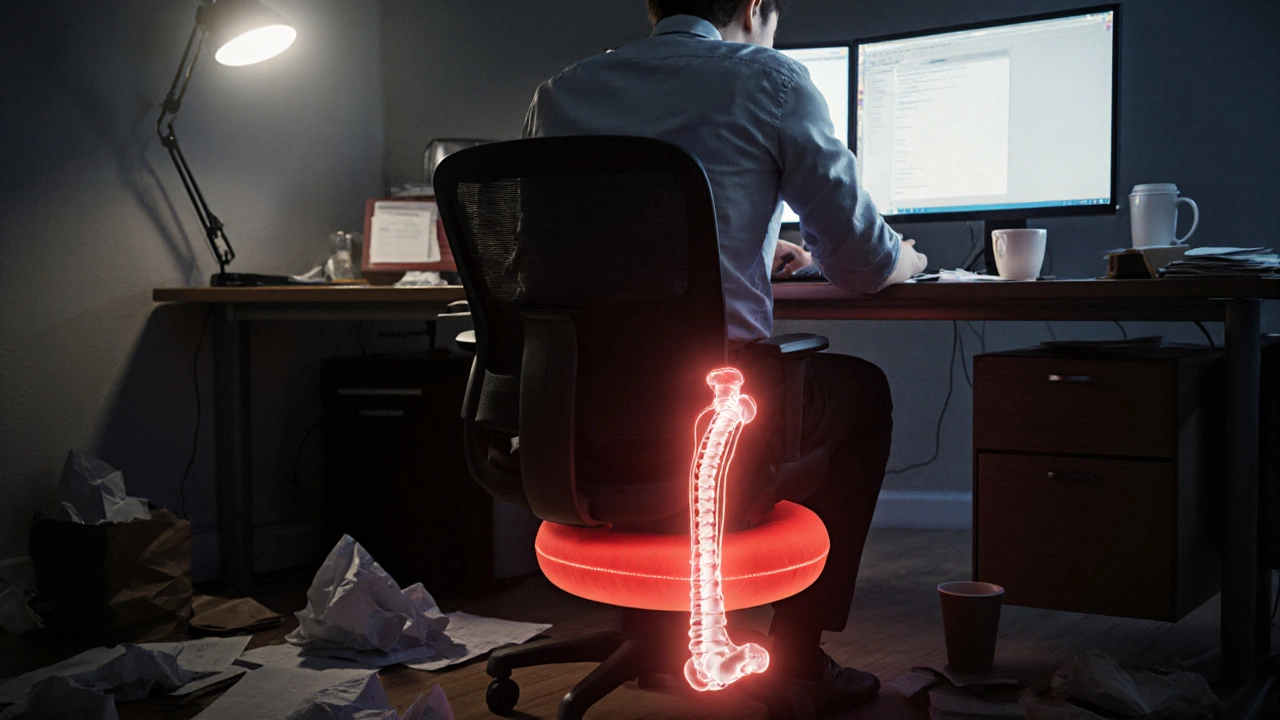
Will Sitting on a Donut Cushion Help Sciatica?
Donut cushions won't relieve sciatica - they might even make it worse. Learn what actually works for sciatica pain when sitting, and which cushions to choose instead.
View More