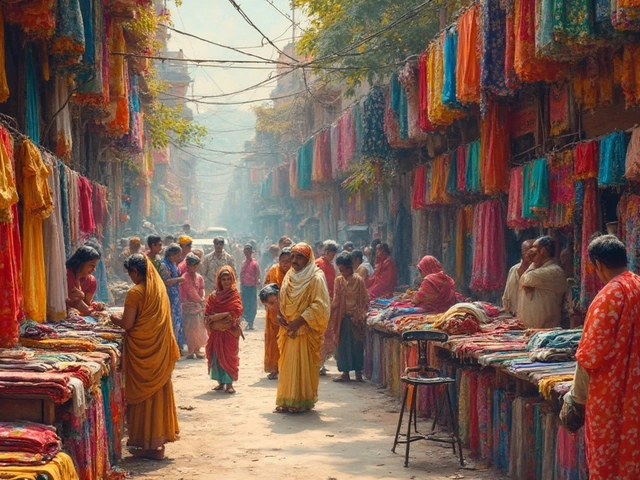
Patola Silk: Indian Weaving Tradition, Patterns, and Where to Find It
When you think of Patola silk, a double ikat woven textile from Gujarat, India, famous for its intricate geometric patterns and vibrant, colorfast dyes. Also known as Patola weave, it’s one of the most labor-intensive fabrics in the world, taking months to make a single sari. This isn’t just cloth—it’s heritage stitched thread by thread.
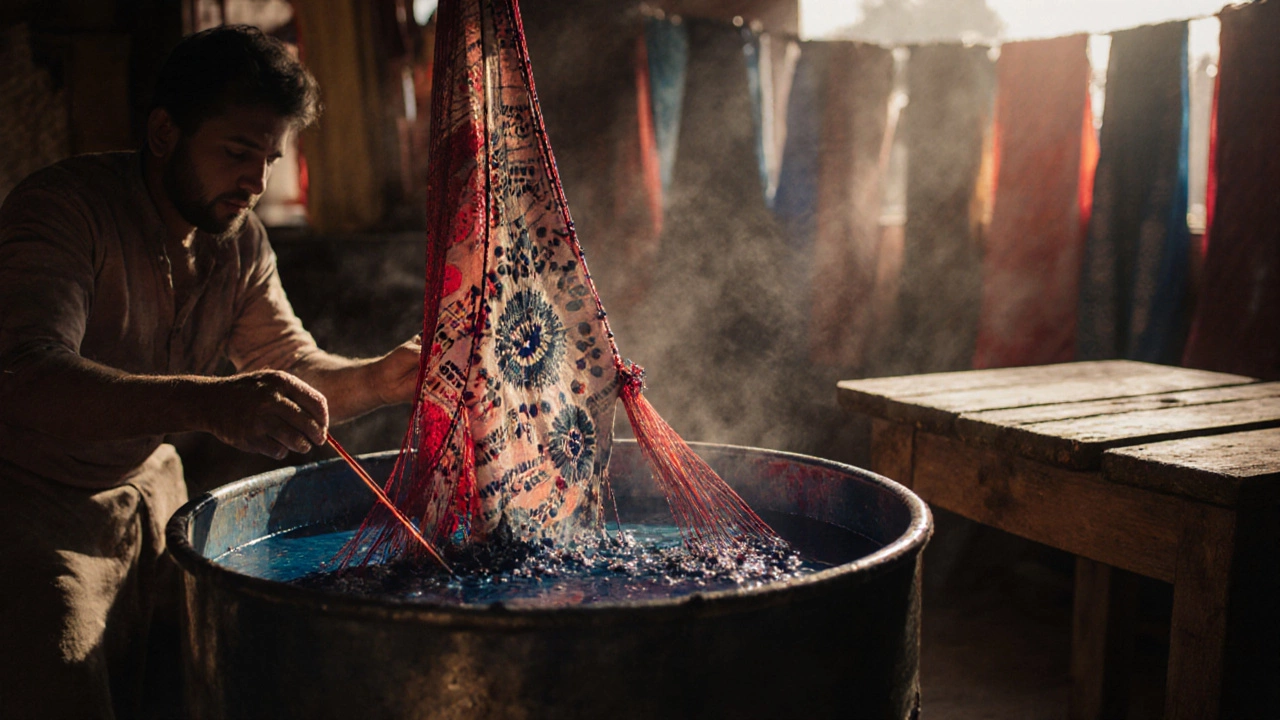
What makes Patola silk different from other silks? It’s the double ikat, a dyeing technique where both the warp and weft threads are tie-dyed before weaving. This means the pattern only appears when the threads are perfectly aligned on the loom. One mistake, and the whole design is ruined. That’s why real Patola silk is rare and expensive. You won’t find it in fast fashion stores. It’s made by master weavers in Patan, Gujarat, a town that’s been the heart of this craft for over 800 years. Families pass down the skills from generation to generation, and each piece carries the signature of the weaver who made it.
People don’t just buy Patola silk for looks. It’s worn at weddings, religious ceremonies, and by those who value craftsmanship over mass production. The colors? Natural dyes from indigo, pomegranate, and lac. The patterns? Often inspired by temple architecture, peacocks, and floral motifs that mean something in local culture. Even today, you’ll see brides in Rajasthan and Gujarat wearing Patola saris as a symbol of status and tradition.
But here’s the truth: most silk labeled "Patola" online isn’t real. It’s machine-printed imitation. True Patola silk has slight imperfections—tiny misalignments, uneven dye spots—that prove it was handwoven. If it looks too perfect, it’s not Patola. Look for the signature of the weaver or the cooperative that made it. Ask where it’s from. If they can’t say "Patan," walk away.
There’s a quiet revolution happening in Indian textiles. Young designers are teaming up with Patola weavers to create modern bags, scarves, and home decor using the same ancient techniques. These aren’t just products—they’re lifelines for a dying craft. Supporting real Patola silk means supporting families who’ve spent their lives keeping this art alive.
Below, you’ll find articles that touch on Indian fabrics, textile traditions, and how handmade goods fit into today’s world. From Mumbai’s bustling markets to the quiet looms of Gujarat, these stories help you understand what makes Patola silk more than just fabric—it’s a story woven in color, time, and skill.
What Is Gujarat Famous Cloth? Top Traditional Textiles from India's Weaving Heartland
Gujarat is famous for its handwoven textiles like Bandhani, Patola silk, and Kutch embroidery. These fabrics are made using centuries-old techniques, with each piece reflecting deep cultural roots and artisan skill.
View More

Apr 16 2025