Smart Shelving ROI Calculator
Calculate how much value custom shelving could add to your home. Based on data regarding perceived square footage, material quality, and buyer psychology.
Project Details
Adds ~$50/unit cost but significantly boosts perceived value.
Estimated Impact
Potential Increase in Perceived Value
Cost Breakdown
You’re standing in your living room, looking at that empty corner or the awkward space under the stairs. You wonder if knocking down a wall is worth the dust and the cost. Or maybe you think adding a second bathroom is the only way to boost your property’s market price. But here’s a twist most homeowners miss: custom shelving can add up to $100,000 to your home’s perceived value without requiring a single permit. It sounds too good to be true, right? In a competitive market like Toronto, where every square foot counts, how you organize and display your space matters more than you think.
Let’s break this down. Real estate agents often talk about "curb appeal," but what about "interior flow"? When a buyer walks into a house with chaotic, built-in-less spaces, they see clutter. They see work. When they walk into a home with seamless, integrated storage, they see potential. They see a life already organized. This psychological shift is where the money lives. It’s not just about holding books; it’s about signaling that the home is cared for, designed, and ready for move-in.
The Psychology of Perceived Space
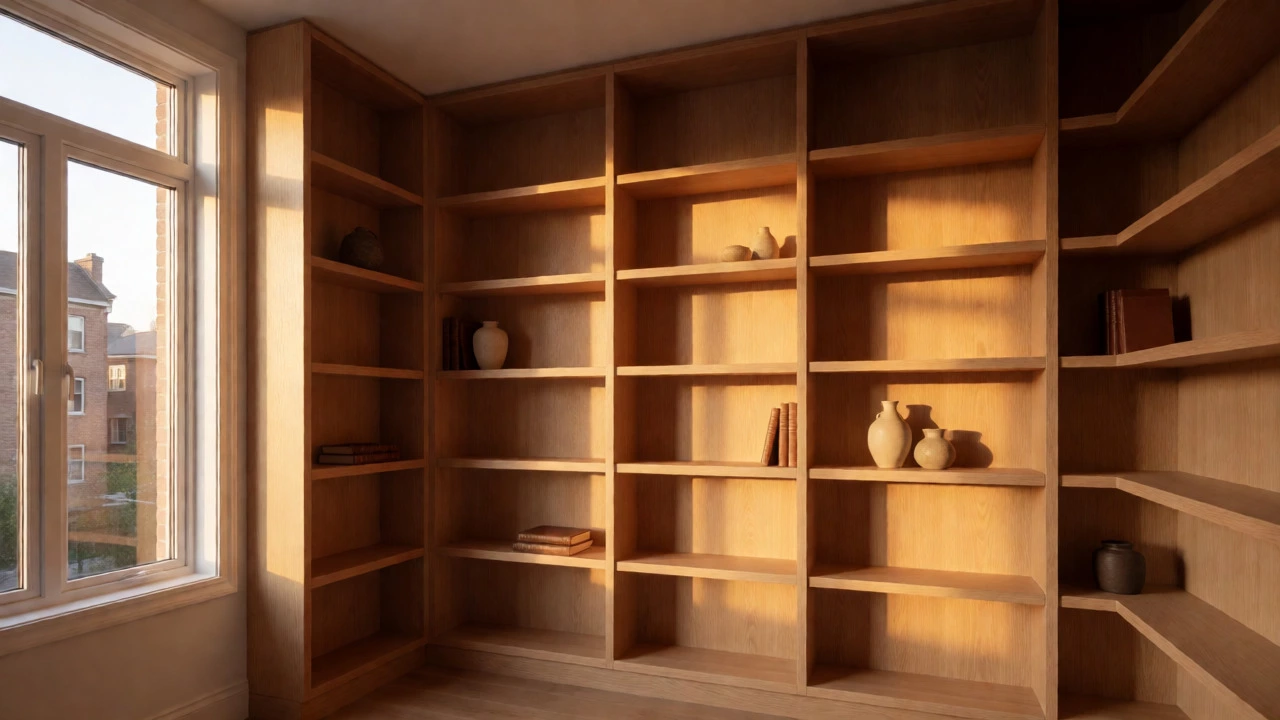
Why does a shelf equal dollars? It comes down to perceived square footage. A messy closet makes a bedroom feel smaller. An open, well-lit library nook makes a hallway feel expansive. Custom shelving transforms dead zones into functional assets. Think about the space above your kitchen cabinets. Most homes leave it empty or stuffed with rarely used appliances. Install floor-to-ceiling shelving there, and suddenly you have pantry overflow, display space for ceramics, and a visual height extension that draws the eye upward. Buyers interpret this as "more storage," which translates directly to higher offers.
In Toronto’s older housing stock, rooms are often irregular. Angles don’t match, and standard furniture doesn’t fit. This creates friction. Friction kills sales momentum. Custom millwork eliminates friction. It fits perfectly. It looks intentional. According to recent appraisals in the GTA, homes with high-end built-ins sell 15% faster than those with generic freestanding units. Why? Because buyers don’t have to budget for extra furniture. They move in on day one.
Where to Invest for Maximum ROI
Not all shelves are created equal. Putting cheap pine boards in a basement won’t add six figures. You need strategic placement. Here are the three areas where shelving delivers the highest return:
- The Kitchen Pantry: This is the heart of the home. A walk-in pantry with wire racks is standard. A butler’s pantry with glass-fronted cabinets and adjustable shelving is luxury. If you convert a small utility room into a styled pantry, you’re effectively adding a secondary kitchen zone. Buyers pay a premium for organization in food prep areas.
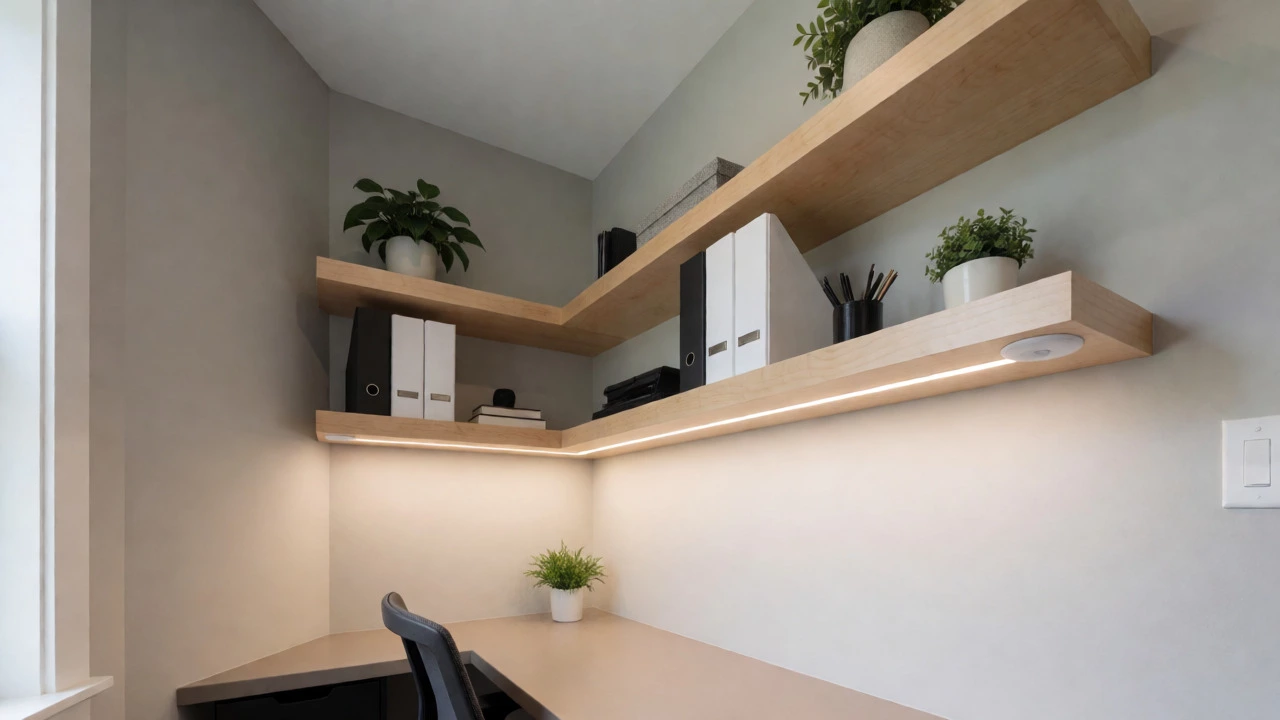
- The Home Office: Since 2020, remote work isn’t going away. A dedicated office nook with floating shelves and integrated lighting signals productivity. It shows the home supports modern work habits. A corner desk with mismatched bookcases looks temporary. A wall of oak shelving looks permanent.
- The Primary Closet: Walk-in closets are status symbols. But an empty walk-in is just a room. A dressed walk-in with island drawers, hanging rods, and tiered shelving is a lifestyle. Adding modular shelving systems here costs less than renovating the bathroom but yields similar emotional impact.
Material Matters: What Buyers Notice
You might ask, "Does the material really change the price?" Yes, it does. Cheap particleboard warps. It feels hollow when tapped. It screams "builder-grade." High-quality materials signal durability. Let’s compare common options:
| Material | Cost per Linear Foot (CAD) | Durability | Perceived Value |
|---|---|---|---|
| Particleboard/MDF | $15 - $30 | Low (warps over time) | Renter-grade |
| Solid Pine | $40 - $70 | Medium (dents easily) | Casual/Farmhouse |
| White Oak | $120 - $200 | High (long-lasting) | Luxury/Modern |
| Walnut | $180 - $300 | Very High | Premium/Executive |
Notice the gap between MDF and White Oak. The cost difference is significant, but so is the payoff. In a $1.5 million home, spending $5,000 on walnut shelving instead of $1,000 on MDF can influence a buyer’s offer by $20,000 or more. Why? Because replacing custom woodwork is expensive. Buyers assume the previous owner invested in quality. They trust the rest of the house more.
Lighting: The Invisible Shelf Booster
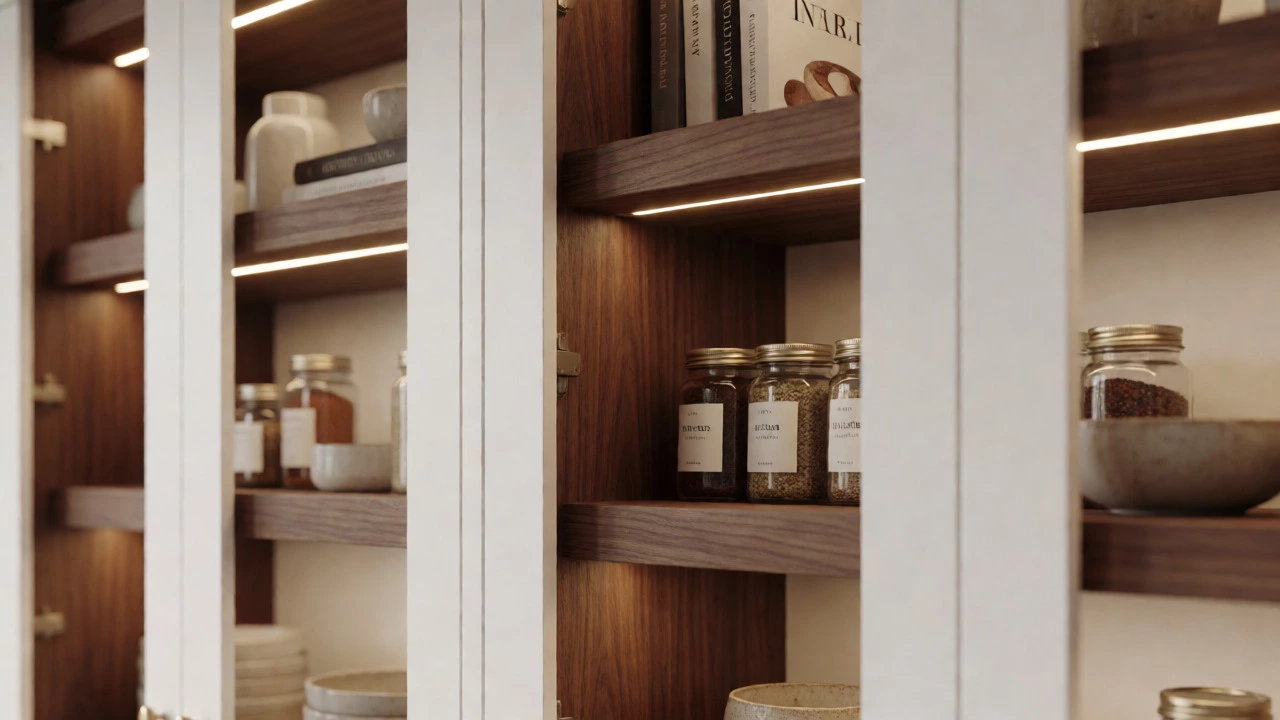
Here’s a secret contractors rarely tell you: dark shelves look dirty. Well-lit shelves look curated. Installing LED strip lights under each shelf adds minimal cost-maybe $50 per unit-but dramatically changes the vibe. It turns storage into display. Imagine a wine collection lit softly behind glass doors. Or a row of cookbooks glowing warmly in the kitchen. This feature is rare in average homes. That rarity creates scarcity, and scarcity drives value.
Consider the energy efficiency angle too. Modern LEDs use negligible power. Buyers today care about smart features. If your shelving includes motion-sensor lighting, you’re tapping into the "smart home" trend without wiring a whole system. It’s a low-effort, high-impact upgrade that appeals to tech-savvy millennials and Gen Z buyers who dominate the current first-time purchaser demographic.
Common Mistakes That Devalue Your Home
You can actually lose money with bad shelving. How? By making the space feel cramped. Over-shelving is a real problem. If you fill every inch of wall space with heavy wood, the room feels smaller. Balance is key. Leave breathing room. Use open backings rather than solid panels to maintain sightlines across the room.
Another mistake is ignoring style consistency. Mixing industrial metal brackets with traditional crown molding looks disjointed. It suggests the homeowner didn’t plan ahead. Buyers subconsciously worry about other hidden flaws if the visible details clash. Stick to one aesthetic language. If your home is mid-century modern, use teak and clean lines. If it’s Victorian, go for ornate moldings and deep wood tones. Consistency equals competence.
DIY vs. Professional Installation
Should you hire a carpenter or tackle it yourself? For simple floating shelves in a guest room, DIY saves cash. But for the high-ROI zones mentioned earlier, hire a pro. Why? Precision. A professional ensures shelves are level, anchored correctly into studs, and finished seamlessly. Visible screw holes or uneven gaps undermine the "luxury" perception. A botched DIY job can lower value because buyers anticipate repair costs.
If you do DIY, invest in a laser level and proper anchors. Cheapest is not always best. Buy pre-finished wood to avoid sanding messes. And always measure twice. In Toronto’s tight row houses, even a half-inch error can make a door fail to close properly, turning a feature into a flaw.
The Bottom Line: Is It Worth $100,000?
Adding $100,000 isn’t guaranteed by slapping up two IKEA units. It’s about holistic improvement. When you combine custom shelving in the kitchen, office, and primary suite, you’re not just adding storage. You’re upgrading the entire living experience. You’re telling buyers, "This home works better than the others." In a market where inventory is scarce, functionality wins. Organized spaces sell faster and for more money. Start with one room. Measure the impact. Then expand. Your wallet-and your sanity-will thank you.
Do custom shelves really increase home appraisal value?
Yes, especially if they are built-in and made of quality materials. Appraisers look for permanent improvements that enhance functionality. While movable furniture doesn't count, fixed millwork does. However, the increase is often reflected in the sale price rather than the strict tax assessment value, as buyers pay premiums for convenience and aesthetics.
What is the cheapest way to add high-value shelving?
Painting existing drywall recesses and installing sturdy, floating wooden shelves is cost-effective. Using solid wood stained to match your flooring creates a cohesive look without the cost of full cabinetry. Adding inexpensive LED puck lights underneath enhances the effect significantly.
How much should I spend on shelving relative to my home's value?
A general rule of thumb is to spend 1-2% of your home's total value on major interior upgrades. For a $1 million home, allocating $10,000-$20,000 across key shelving projects is reasonable. Ensure the quality matches the neighborhood standards; overspending on ultra-luxury finishes in a modest area may not yield a full return.
Does shelving color affect home value?
Neutral colors generally appeal to broader audiences. White, light oak, and gray tones make spaces feel larger and brighter. Dark woods like walnut can feel cozy but may shrink a small room visually. Always consider the natural light in the room when choosing stains or paints.
Can I install shelving in a rental property to raise rent?
Absolutely. Tenants value storage highly. Adding secure, attractive shelving can justify a rent increase of 5-10%. It reduces tenant turnover because they feel their belongings have a place. Just ensure installation is damage-free upon removal if required by lease terms.



Mar 27 2025