Cushion Color Matcher
Select your sofa color and preferred style to get instant cushion recommendations based on professional interior design rules.
Pro Tip from the Article:
Texture is key! Even if you stick to a simple color palette, mix materials like velvet, linen, and wool to add depth without visual chaos. Remember: Odd numbers of cushions often look more dynamic than even numbers.
You’ve just bought a new sofa. It’s beautiful, comfortable, and probably cost a small fortune. But it looks... flat. Lifeless. The culprit? Your cushion color combinations. Getting this right is the difference between a room that feels staged and one that feels like you actually live there. And let’s be honest, most of us are terrified of messing it up.
Why does this matter so much? Because your eyes naturally drift to color before shape or texture. If your cushions clash, the whole seating area falls apart visually. If they harmonize, even a cheap sofa can look designer. So, how do you pick colors that don’t fight each other? Do you need a degree in art history? Nope. You just need a few simple rules and a bit of confidence.
The Golden Rule: Start With Your Sofa
Before you buy a single pillow, look at what you’re putting them on. Your sofa is the anchor. Everything else plays off it. If you have a neutral sofa-think beige, grey, white, or black-you have total freedom. This is the easiest scenario. You can go bold, subtle, monochromatic, or eclectic. The sofa won’t compete with you.
But if your sofa is already colorful-maybe it’s a deep emerald green velvet or a bright mustard yellow linen-things get trickier. Here, the rule is restraint. Don’t try to match the exact shade of the sofa with your cushions; it often looks cheap. Instead, pull a secondary color from the sofa’s pattern (if it has one) or choose a color that sits opposite it on the color wheel for contrast. For a solid colored sofa, stick to neutrals or metallics to let the sofa shine.
Decoding Color Theory Without the Boring Parts
You don’t need to memorize the entire color wheel, but knowing three basic schemes will save you hours of stress.
Monochromatic: This is playing it safe but stylish. Pick one color family-say, blue-and mix different shades and tints. Light sky blue, navy, teal, slate. Add varying textures (velvet, cotton, wool) to keep it interesting. This creates a calm, cohesive look that’s perfect for bedrooms or minimalist living rooms.
Analogous: These are neighbors on the color wheel. Think blue and green, or red and orange. They sit next to each other, so they feel natural together. This scheme is warm and inviting. Try pairing a terracotta cushion with a burnt orange one, and maybe a cream accent to break it up.
Complementary: Opposites attract. Blue and orange, purple and yellow, red and green. This creates high energy and visual pop. Use this sparingly. Maybe one orange cushion on a blue sofa, surrounded by neutrals. Too many complementary colors can make a room feel chaotic, like a clown car.
The Magic Number: How Many Cushions?
This is where most people fail. They buy six identical cushions and line them up like soldiers. Boring. Or they buy ten random ones and create a mess. The sweet spot depends on your sofa size.
| Sofa Type | Number of Cushions | Styling Tip |
|---|---|---|
| Two-Seater | 2-3 | One large square, one smaller rectangular. Keep it simple. |
| Three-Seater | 4-5 | Mix sizes. Two large squares, two medium lumbar pillows, one small round or textured accent. |
| L-Shaped/Sectional | 6-8+ | Use larger cushions in corners to fill space. Vary heights along the backrest. |
Notice I didn’t say "even numbers." Odd numbers often look more dynamic and less formal. Try grouping cushions in threes rather than fours. It tricks the eye into seeing movement rather than static symmetry.
Texture Is Your Secret Weapon
Here’s a pro tip that changes everything: when in doubt about color, switch up the texture. If you’re nervous about mixing patterns or bold hues, stick to a limited palette but vary the materials. A smooth silk cushion next to a rough boucle pillow next to a sleek leather one creates depth without chaos.
Think about seasons too. In winter, lean into heavy fabrics like velvet, wool, and faux fur. These absorb light and feel cozy. Colors tend to run deeper-burgundy, forest green, charcoal. In summer, swap to lighter materials like linen, cotton, and rattan. Pastels, whites, and soft blues reflect light and feel airy. Rotating your cushions seasonally keeps your home feeling fresh without buying new furniture.
Mixing Patterns: The Proportional Rule
Patterns scare people because they think every print must match perfectly. Wrong. They just need to share a common element-a color, a scale, or a style.
Use the "Big, Medium, Small" rule. Pair a large-scale floral print with a medium-sized geometric stripe and a small-scale dot or herringbone. Why? Because similar-sized patterns compete for attention. Different scales allow your eye to rest on one at a time. Also, ensure all patterns share at least one color. If your floral has hints of sage green, include a solid sage cushion or a striped one with sage threads. This ties the look together invisibly.
Common Mistakes That Ruin Good Decor
Avoid these traps if you want your setup to look intentional:
- Matching everything exactly: Buying a pre-made set of four identical cushions looks like a hotel lobby. Mix it up.
- Ignoring the rug: Your cushions shouldn’t exist in a vacuum. Pull one color from your rug into your cushions to connect the floor to the seat.
- Overusing black: Black cushions can add weight, but too many make a room feel heavy and dated. Use them as accents, not the base.
- Forgetting the throw blanket: A draped blanket adds another layer of color and texture. Coordinate it with your smallest cushion for a polished finish.
Real-Life Examples That Work
Let’s make this concrete. Imagine you have a light grey fabric sofa. What do you do?
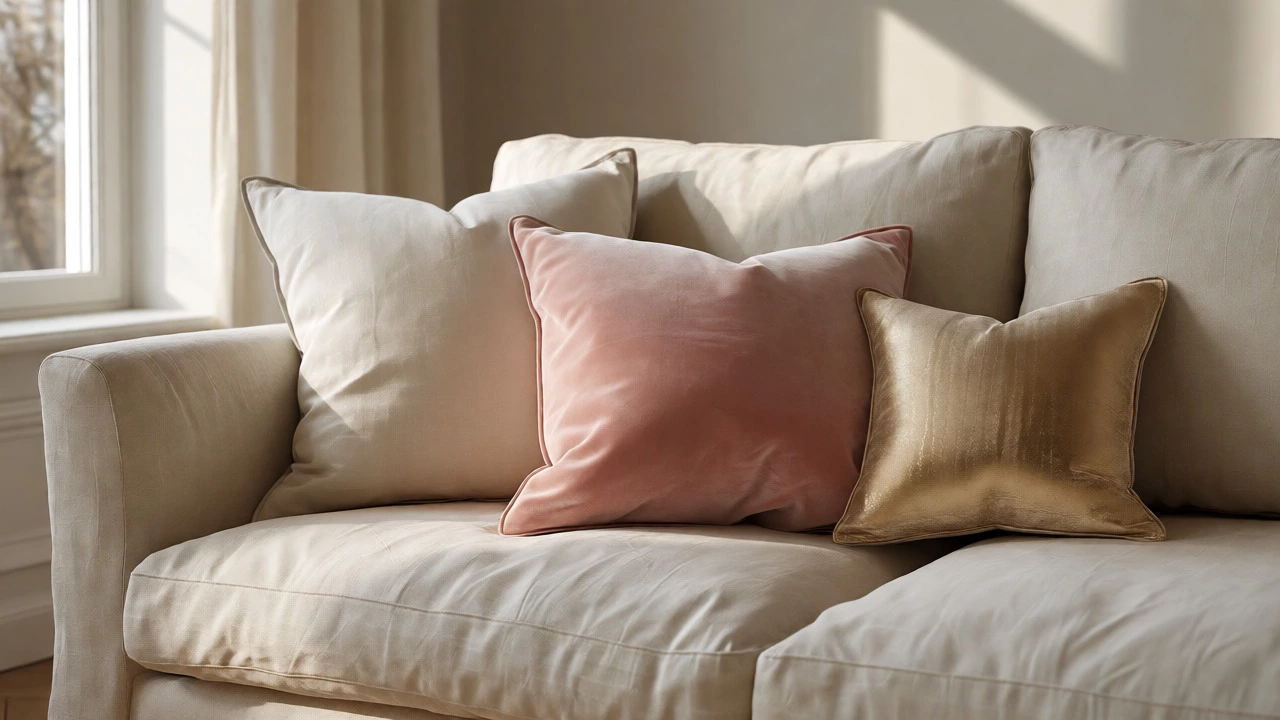
Option 1: Calm & Collected Use two large cream linen cushions, one dusty pink velvet lumbar pillow, and one small gold metallic cushion. The result is soft, feminine, and expensive-looking.
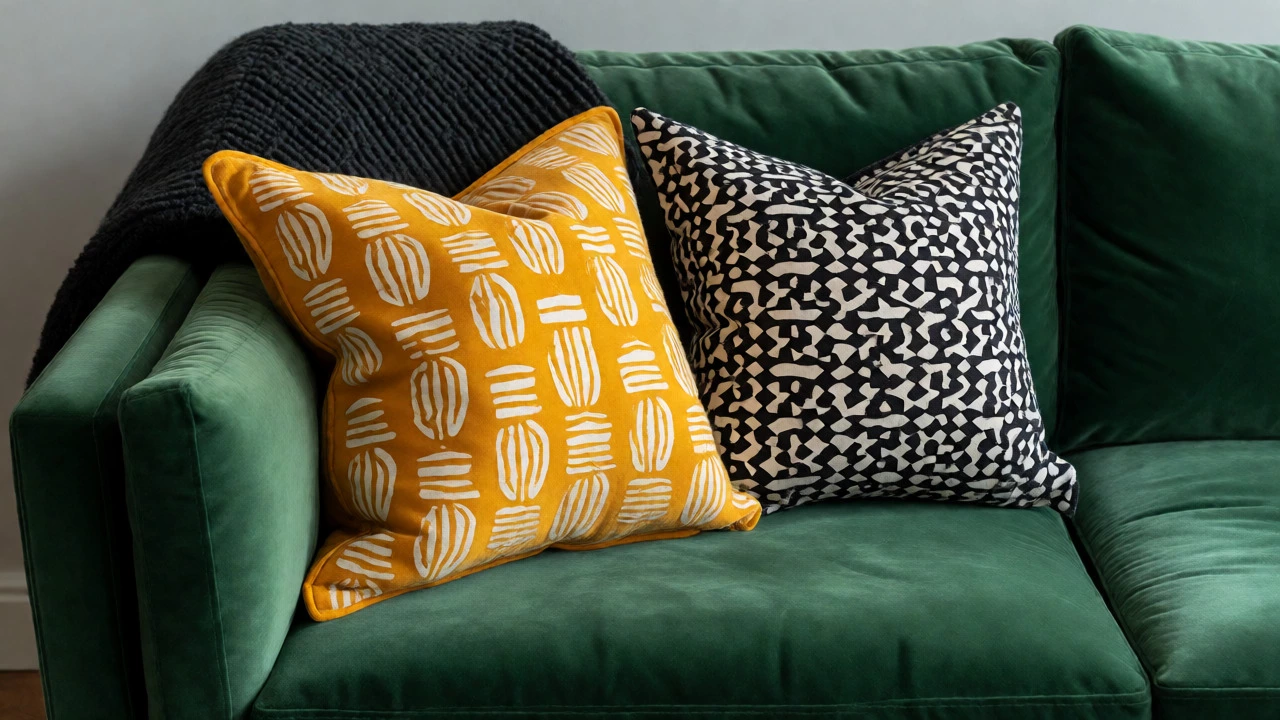
Option 2: Bold & Modern Start with two dark charcoal textured cushions. Add one bright mustard yellow block-print cushion and one black-and-white geometric pillow. The yellow pops against the grey, while the black grounds the look.
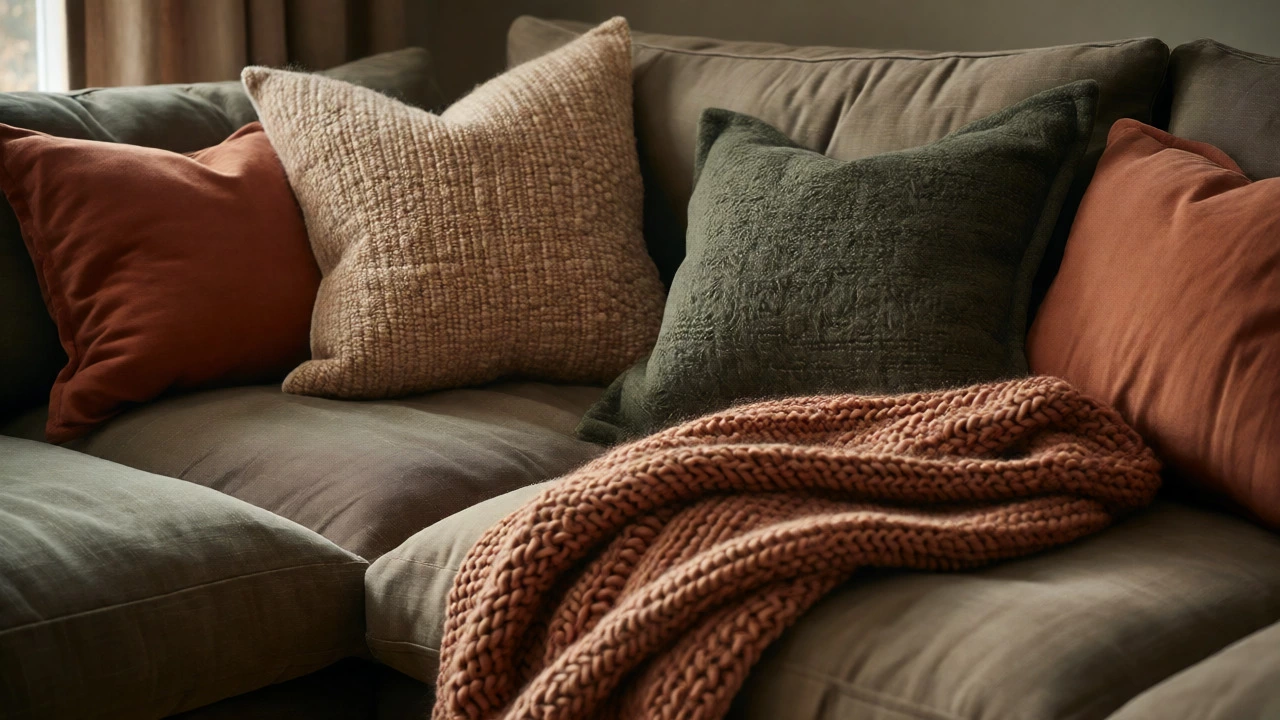
Option 3: Earthy & Natural Go for terracotta, olive green, and sand-colored cushions. Mix jute, cotton, and wool textures. This works great in boho or rustic homes.
How to Test Before You Buy
Don’t rely on tiny swatches in the store. Lighting lies. Take photos of your sofa in different lights (daylight, evening lamp). Then, take pictures of potential cushion colors held against the sofa. Better yet, use apps like Pinterest or Instagram to search for specific color combos. Search "grey sofa cushion ideas" or "navy blue sofa styling." See what real people are doing, not just what influencers stage.
If you’re still unsure, start with one statement cushion. Buy the boldest color you love. Then build around it with neutrals. It’s easier to adjust later than to return five mismatched pillows.
Frequently Asked Questions
Should my cushions match my curtains?
No, they don’t need to match exactly. In fact, matching them perfectly can look outdated. Instead, aim for coordination. Pull one secondary color from your curtains and use it in your cushions, or vice versa. This creates a connected look without being rigid.
Can I mix different shapes of cushions?
Absolutely, and you should. Mixing squares, rectangles (lumbar), rounds, and bolster shapes adds visual interest and prevents the arrangement from looking flat. Just ensure the sizes are proportional to your sofa so nothing looks cramped or lost.
How do I clean cushions with mixed fabrics?
Always check the care label first. Velvet and wool often require dry cleaning, while cotton and linen can usually be machine washed. To simplify maintenance, choose removable covers for all your cushions. This way, you can wash the covers separately and rotate them seasonally without buying new inserts.
What if my sofa has a pattern?
If your sofa is patterned, keep your cushions mostly solid. Choose solids that appear within the sofa’s pattern. This lets the sofa remain the focal point while the cushions provide balance. If you really want a patterned cushion, make sure its scale is significantly different from the sofa’s pattern to avoid clashing.
Are metallic cushions tacky?
Not if used correctly. Metallic cushions (gold, silver, bronze) act as jewelry for your sofa. Use one or two small metallic accents among matte fabrics to add a touch of luxury. Avoid covering the entire sofa in shiny satin, which can look cheap under harsh lighting.




Oct 30 2025