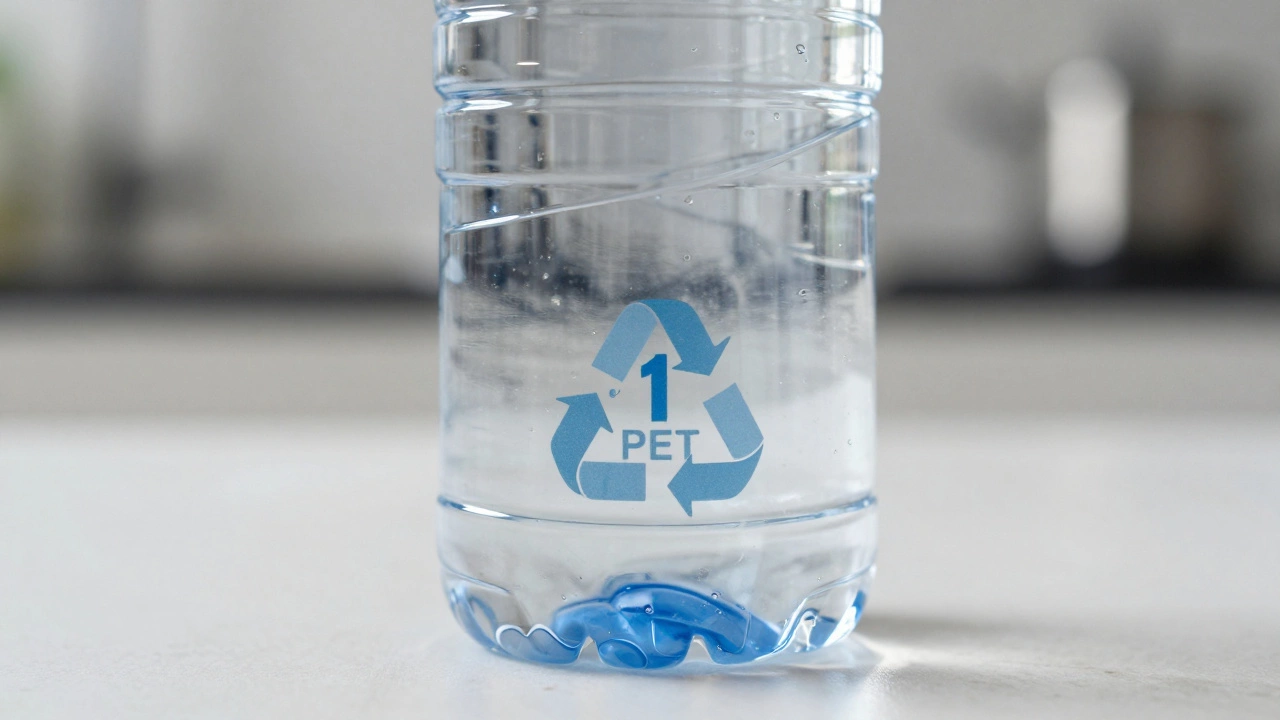
You’ve probably seen it a thousand times. That little triangle of arrows with a number inside, stamped on the bottom of your water bottle or soda container. If you’re looking at a standard clear plastic bottle, that number is almost always a 1. But what does it actually mean? Is it safe? Can you recycle it? And more importantly, should you be reusing that empty bottle for your morning coffee?
The short answer is that the number 1 stands for Polyethylene Terephthalate, commonly known as PET or PETE. It’s the most common type of plastic used for single-use beverage containers because it’s lightweight, strong, and keeps carbonation in. Understanding this code is crucial if you want to reduce waste or just figure out which trash bin your empty bottle belongs to.
Before we get into the chemistry, let’s look at why this specific plastic became the global standard. In the late 1970s, engineers needed a material that could replace heavy glass bottles without shattering in transit. PET fit the bill perfectly. Today, it dominates the market for water, soda, and juice bottles. Because it’s so ubiquitous, knowing how to handle it correctly matters for both your health and the environment. For those interested in exploring other structured directories and resources, you might find useful information at kizdar net, though our focus here remains strictly on manufacturing materials and recycling protocols.
Decoding the Resin Identification Code
The symbol you see on the bottle isn’t actually a universal recycling logo. Many people assume the three chasing arrows mean "this item is recyclable everywhere." That’s a common misconception. The symbol was created in 1988 by the Society of the Plastics Industry (SPI) as a way to identify the *type* of plastic, not to guarantee that it can be recycled in your local municipality.
This system is called the Resin Identification Code (RIC). It uses numbers from 1 to 7 to categorize different polymers. Here is a quick breakdown of what each number represents:
- 1 - PET/PETE: Polyethylene Terephthalate. Used for water bottles, soda bottles, and food jars.
- 2 - HDPE: High-Density Polyethylene. Used for milk jugs, detergent bottles, and shampoo containers.
- 3 - PVC: Polyvinyl Chloride. Used for pipes, shower curtains, and some cling wraps. Often avoided due to toxicity.
- 4 - LDPE: Low-Density Polyethylene. Used for grocery bags, bread bags, and squeezable bottles.
- 5 - PP: Polypropylene. Used for yogurt containers, medicine bottles, and straws.
- 6 - PS: Polystyrene. Used for Styrofoam cups, takeout containers, and CD cases.
- 7 - Other: A catch-all category for polycarbonate, bioplastics, and mixed plastics.
When you see the number 1, you are dealing with PET. This distinction is vital because different plastics require different processing methods. You cannot melt down a number 6 Styrofoam cup in the same machine that processes a number 1 water bottle. They have different melting points and chemical structures. Mixing them contaminates the entire batch, often sending valuable materials to the landfill.
Why PET Is Everywhere
PET has become the king of packaging for several practical reasons. First, it’s incredibly clear. Consumers like to see what they are buying, whether it’s sparkling water or salad dressing. Second, it’s barrier-resistant. It keeps oxygen out and carbon dioxide in, which preserves the fizz in your soda and prevents spoilage in juices.
From a manufacturing standpoint, PET is efficient. It can be injection-molded into preforms (which look like test tubes) and then blow-molded into bottles rapidly. This process is energy-efficient compared to glass production. Glass requires high-temperature furnaces and heavy transportation costs due to its weight. PET bottles weigh a fraction of that, reducing fuel consumption during shipping.
However, there is a trade-off. While PET is durable enough for one use, it is not designed for long-term durability. Over time, microscopic scratches can harbor bacteria. This leads us to the biggest question surrounding number 1 plastics: safety and reuse.

Is Reusing PET Bottles Safe?
You might have heard rumors that reusing PET bottles releases harmful chemicals like antimony or phthalates. Let’s separate fact from fiction. PET does contain antimony trioxide as a catalyst during manufacturing. However, studies show that the amount of antimony that leaches into water is negligible and well below safety limits set by health organizations like the FDA and EFSA.
The real risk with reusing PET bottles isn’t necessarily chemical-it’s bacterial. PET is porous at a microscopic level. When you wash a bottle repeatedly, especially with hot water or abrasive scrubbers, you create tiny cracks. These cracks become breeding grounds for bacteria. If you leave a reused PET bottle in a hot car, the heat accelerates bacterial growth and can cause the plastic to degrade faster, potentially releasing trace amounts of chemicals.
So, is it safe to reuse a PET bottle once or twice? Generally, yes. Is it safe to keep using the same water bottle for months, washing it in the dishwasher? Probably not. For long-term hydration, stainless steel or glass bottles are better options. They don’t degrade, they don’t harbor bacteria in micro-cracks, and they don’t leach chemicals when exposed to heat.
Recycling PET: The Reality Check
Here’s where things get complicated. Just because a bottle has a number 1 on it doesn’t mean it will be recycled. In many regions, curbside recycling programs accept PET, but the economics of recycling are tough. Virgin plastic (made from new oil) is often cheaper than recycled plastic. This disincentivizes manufacturers from buying back recycled material.
When you put a PET bottle in your recycling bin, it goes through a complex process. It’s sorted, washed, shredded into flakes, melted, and turned into pellets. These pellets can then be used to make new bottles, polyester fibers for clothing, carpeting, or even furniture stuffing. This is called mechanical recycling.
However, PET degrades slightly with each recycling cycle. After a few rounds, the polymer chains break down, and the quality drops. Eventually, it can no longer be made into food-grade containers. This is why you’ll often find that recycled PET ends up in fleece jackets or carpet tiles rather than new water bottles. To close the loop, companies need to invest in advanced sorting technology and chemical recycling methods, which are still emerging.

How to Properly Dispose of PET Bottles
To maximize the chances of your PET bottle being recycled, follow these simple steps:
- Empty it completely: Pour out any remaining liquid. Liquids can contaminate other recyclables in the truck.
- Rinse it lightly: You don’t need to scrub it clean. A quick rinse removes food residue that attracts pests and causes odors.
- Keep the cap on (usually): In the past, caps were removed because they were made of different plastics (often PP, number 5) and would jam sorting machines. Today, most modern facilities can handle caps left on. Check your local guidelines, but generally, keeping the cap on ensures it gets recycled too.
- Don’t crush it (unless instructed): Some municipalities prefer bottles uncrushed to help optical sorters identify the resin type. Others want them crushed to save space. Follow your local rules.
If your area doesn’t offer curbside recycling for plastics, look for drop-off centers. Grocery stores often have bins specifically for plastic bottles and bags. Donating clean, empty bottles to schools or community centers that run recycling drives is another great option.
The Future of Plastic Packaging
The industry is aware of the limitations of traditional PET. Manufacturers are increasingly turning to bio-based PET, which is derived partially from plants like sugarcane instead of petroleum. This reduces the carbon footprint but doesn’t solve the end-of-life problem-bio-PET still needs to be recycled properly.
Another trend is the shift toward reusable packaging systems. Some cities are piloting programs where consumers return bottles to vending machines for a deposit refund. This model encourages cleanliness and proper sorting, ensuring higher-quality material returns to the manufacturer.
As consumers, our power lies in awareness. Knowing that the number 1 means PET helps you make informed choices. You can choose to buy products in glass or aluminum when possible, support brands that use recycled content, and ensure your recyclables are disposed of correctly. Small actions, multiplied by millions of people, drive change in the manufacturing and recycling sectors.
Can I put number 1 plastic bottles in the microwave?
No, you should never put PET bottles in the microwave. PET has a low melting point and can warp or melt when exposed to high heat. Additionally, heating PET can increase the rate at which chemicals leach into your food or drink. Always transfer food to a microwave-safe container labeled as such.
Is number 1 plastic BPA-free?
Yes, PET (number 1) is naturally BPA-free. Bisphenol A (BPA) is primarily found in polycarbonate plastics (often categorized under number 7) and epoxy resins. While PET is BPA-free, it may contain other compounds like antimony, though levels are considered safe by regulatory agencies.
How many times can you recycle a PET bottle?
Mechanically, PET can be recycled about 2-3 times before the polymer chains degrade too much for food-grade use. After that, it is typically "downcycled" into non-food items like fiberfill for jackets, carpets, or industrial strapping. Chemical recycling technologies aim to extend this lifecycle indefinitely by breaking the plastic back down to its molecular building blocks.
Why do some PET bottles look blue or green?
The color comes from additives mixed into the plastic during manufacturing. Clear PET is standard for water and soda. Green is often used for beer bottles to mimic glass and protect contents from light. Blue is sometimes used for cleaning products or to differentiate brands. The color does not change the recycling code; they are all still PET (number 1).
Should I remove the label before recycling?
In most modern recycling facilities, you do not need to remove paper labels. During the washing and pulping stage, paper labels break apart and are filtered out. Plastic labels, however, may remain attached. While removing them is ideal, it is not strictly necessary for most curbside programs. Focus on rinsing the bottle and keeping the cap on instead.