India doesn’t make everything it needs when it comes to organic chemicals. Even though the country has a growing chemical industry, it still relies heavily on imports to keep its pharmaceuticals, agrochemicals, dyes, and specialty chemical plants running. The question isn’t just who India imports from-it’s why and what exactly is being brought in.
China is India’s biggest source of organic chemicals
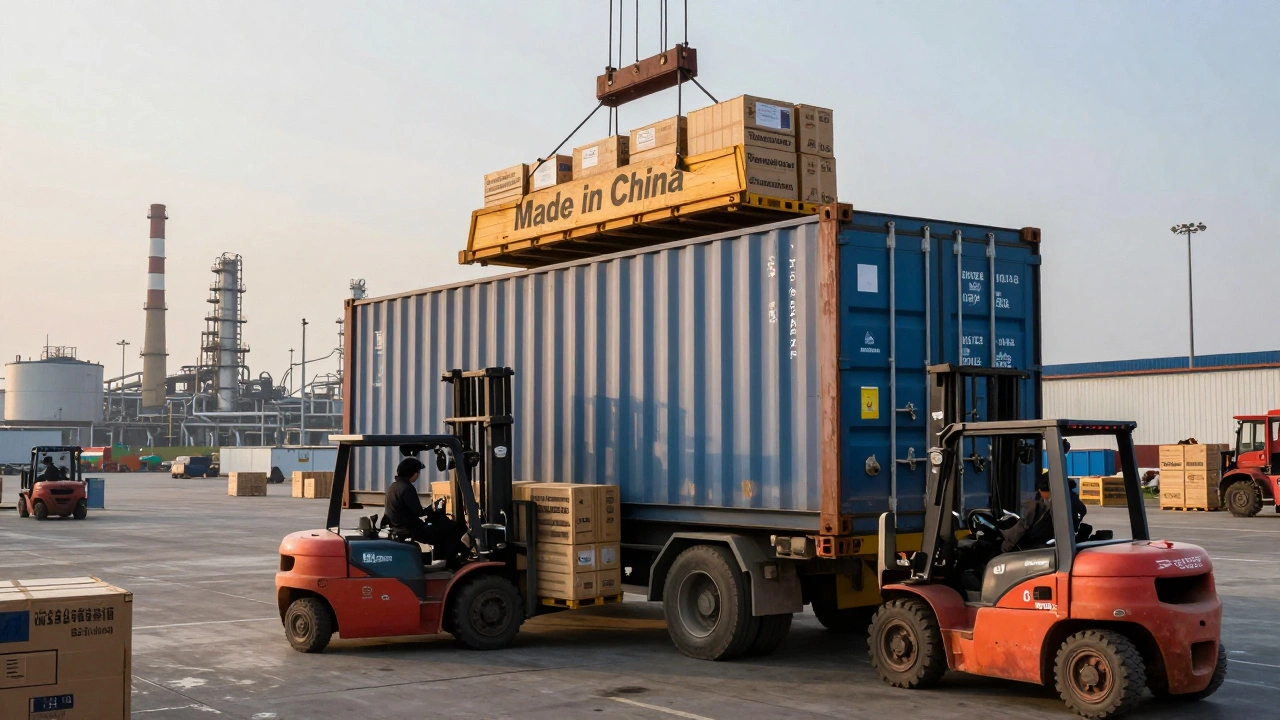
China supplies over 40% of India’s organic chemical imports. That’s more than the next four countries combined. The reason is simple: scale, cost, and speed. Chinese manufacturers produce bulk quantities of active pharmaceutical ingredients (APIs), intermediates, and specialty organics at prices that are hard to match. For example, India imports nearly 70% of its paracetamol intermediates from China. These aren’t finished drugs-they’re the building blocks Indian pharma companies use to make painkillers, antibiotics, and antivirals.
It’s not just pharmaceuticals. China also dominates in dyes, pigments, and plasticizers used in textiles and packaging. In 2025, India imported $3.8 billion worth of organic chemicals from China, up 8% from the year before. Many Indian factories don’t have the capacity to produce these intermediates at the same purity or volume, so they keep buying.
Germany and the Netherlands lead in high-purity specialty chemicals
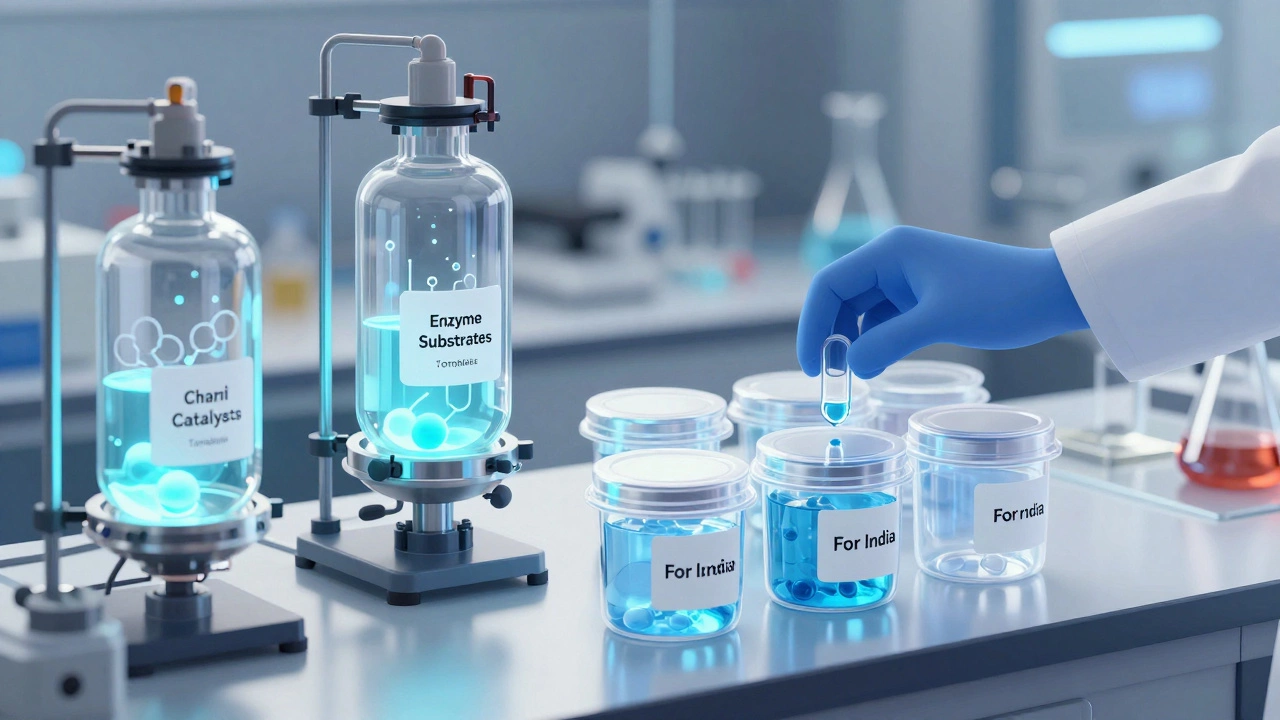
While China handles volume, Germany and the Netherlands supply the precision stuff. These countries are home to companies like BASF, Merck, and DSM, which make high-value organic compounds used in life sciences, cosmetics, and advanced materials. India imports things like chiral catalysts, enzyme substrates, and synthetic intermediates for oncology drugs from them.
These aren’t cheap. A kilogram of a specialty organic chemical from Germany can cost 5-10 times more than the same compound from China. But for Indian drugmakers working on patented medicines or trying to meet EU and US FDA standards, quality matters more than price. A single batch of a contaminated API can shut down an entire production line-and cost millions in recalls.
South Korea and Japan supply niche intermediates for electronics and advanced polymers
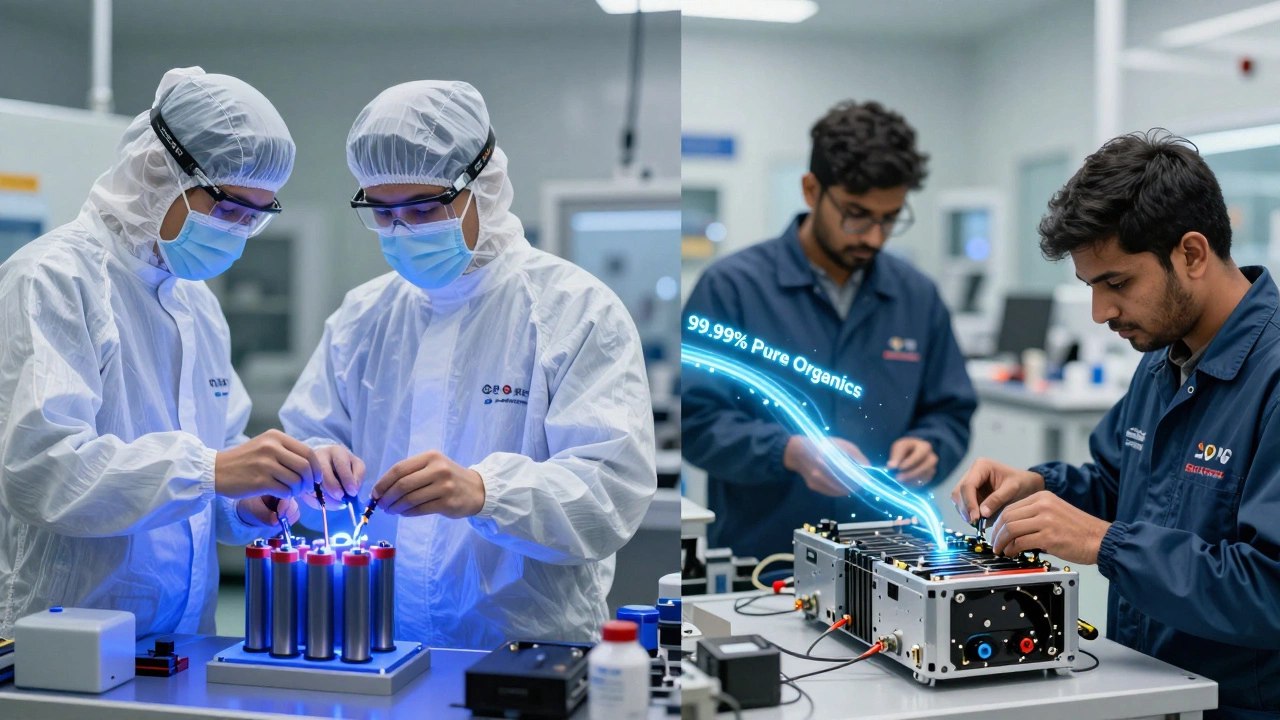
India’s growing electronics and battery manufacturing sectors need organic chemicals that aren’t made locally. South Korea and Japan fill that gap. Companies like LG Chem and Mitsubishi Chemical supply organic solvents, lithium-ion battery electrolytes, and photoresist chemicals used in semiconductor production. These are high-tech materials with tight purity specs-often 99.99% pure.
India imported $420 million worth of organic chemicals from South Korea in 2025, mostly for lithium-ion battery production and printed circuit board manufacturing. Japan contributed another $310 million, mostly for specialty resins and adhesives used in automotive and aerospace components. These aren’t bulk commodities-they’re engineered materials made in controlled environments.
United States provides innovative chemistry for R&D-heavy industries
The U.S. doesn’t lead in volume, but it leads in innovation. American companies like Dow, Lonza, and Thermo Fisher supply novel organic compounds for drug discovery, biotech research, and agrochemical R&D. Indian startups and research labs use U.S.-made building blocks to develop new molecules for cancer therapies or eco-friendly pesticides.
For example, over 60% of Indian biotech firms that are developing new APIs rely on U.S.-sourced intermediates for their early-stage trials. These chemicals are often produced in small batches under strict regulatory conditions. While not a top importer by dollar value, the U.S. is critical for India’s long-term chemical innovation.
Other notable suppliers: Switzerland, Singapore, and Belgium
Switzerland, despite its small size, is a powerhouse in pharmaceutical intermediates. Companies like Roche and Lonza (headquartered in Switzerland) supply high-purity chiral compounds that Indian manufacturers use to make complex drugs like hepatitis C treatments.
Singapore acts as a regional hub. Many Indian importers buy organic chemicals from Singapore because they’re sourced from multiple countries but consolidated there for easier logistics and compliance. Belgium, home to companies like Umicore and Solvay, supplies specialty organic acids and esters used in food-grade and cosmetic applications.
Why doesn’t India make more of its own organic chemicals?
India has strong capabilities in bulk chemical production-think urea, sulfuric acid, or basic solvents. But organic chemicals, especially those used in pharma and electronics, require advanced infrastructure. They need:
- High-precision reactors with temperature and pressure controls
- Strict contamination controls (ISO Class 5 cleanrooms)
- Skilled chemists trained in synthetic organic chemistry
- Regulatory compliance with international standards (FDA, EMA, etc.)
Building this kind of capacity takes years and billions in investment. Most Indian chemical plants were designed for bulk production, not fine chemistry. That’s why imports remain essential.
Recent shifts in import patterns
In 2024, India started pushing for self-reliance in chemical manufacturing through the Production Linked Incentive (PLI) scheme. The government offered subsidies to companies that set up advanced organic chemical plants. Since then, imports from China have dipped slightly-down 3% in 2025-but not enough to make a big dent.
Meanwhile, imports from Vietnam and Indonesia have grown by 15% and 12% respectively. These countries aren’t yet major producers, but they’re becoming assembly points for chemicals made elsewhere, then shipped to India with lower tariffs under regional trade deals.
What’s next for India’s chemical imports?
India’s goal isn’t to cut imports entirely-it’s to reduce dependence on single sources. The government is now signing bilateral agreements with Germany and the U.S. to co-develop chemical manufacturing tech. Indian firms are also partnering with Korean and Japanese labs to license proprietary synthesis methods.
By 2030, India aims to produce 60% of the organic chemicals it currently imports. But until then, the country will keep buying from China for volume, Germany and the Netherlands for purity, South Korea and Japan for electronics-grade materials, and the U.S. for innovation.
The supply chain isn’t broken-it’s just complex. And for now, India needs all of them.
Which country supplies the most organic chemicals to India?
China supplies the most organic chemicals to India, accounting for over 40% of total imports. This includes bulk intermediates for pharmaceuticals, dyes, and plasticizers. In 2025, India imported $3.8 billion worth of organic chemicals from China alone.
Why does India import organic chemicals instead of making them locally?
India lacks the advanced infrastructure needed for high-purity organic chemical production. Making these chemicals requires precision reactors, ultra-clean environments, and highly trained chemists-most Indian plants are built for bulk production, not fine chemical synthesis. The cost and time to build this capacity are still too high, so imports remain necessary.
Are there any efforts to reduce India’s dependence on Chinese chemical imports?
Yes. India launched the Production Linked Incentive (PLI) scheme in 2021 to boost domestic manufacturing of advanced organic chemicals. Since then, over 40 new plants have been approved, mostly in Gujarat and Maharashtra. While imports from China have dropped slightly, full self-reliance is still years away.
What types of organic chemicals does India import from Germany?
India imports high-purity specialty chemicals from Germany, including chiral catalysts, enzyme substrates, and synthetic intermediates used in life sciences and regulated drug manufacturing. These are critical for producing APIs that meet FDA and EMA standards, where even 0.1% impurity can lead to rejection.
Do countries like South Korea and Japan supply organic chemicals for non-pharma uses?
Yes. South Korea and Japan supply organic solvents, lithium-ion battery electrolytes, and photoresist chemicals used in electronics manufacturing. These are essential for India’s growing battery and semiconductor industries. For example, over 80% of India’s imported battery electrolytes come from South Korea.



Mar 27 2025