Car Buyer's Decision Tool
Find Your Perfect Car Match
Answer a few questions to discover which country's cars best match your priorities. Based on your needs, we'll recommend the ideal car type and country for you.
What matters most to you?
What type of driving do you do most?
What's your budget range?
Your Best Match
Based on your priorities, we recommend cars from .
Recommended vehicle:
Source: Top car brands and models from the article 'Which Country Makes the Best Cars? Real World Leaders in 2026'
When someone asks, "Which country makes the best cars?" they’re not just looking for a list. They want to know where to buy a car that lasts, performs well, and holds its value. The answer isn’t simple. It depends on what you care about: reliability, technology, driving feel, or price. In 2026, the top players aren’t just big names-they’re countries that built entire ecosystems around making cars that people trust.
Japan: The Quiet Leader in Reliability
Japan still leads in long-term reliability. Toyota, Honda, and Nissan have spent decades perfecting simple, durable designs. A 2024 J.D. Power study found that Japanese brands accounted for seven of the top ten most reliable vehicles sold globally. The Toyota Corolla, for example, has sold over 50 million units since 1966. Why? It doesn’t try to be flashy. It just works. Japanese factories use precision engineering and a culture of continuous improvement called Kaizen. This isn’t about cutting costs-it’s about eliminating waste in every step. Even their supply chains are designed to avoid single points of failure. If a part fails, it’s usually because of an accident, not a design flaw.
Germany: Where Engineering Meets Driving Joy
If Japan builds cars that last, Germany builds cars that feel alive. BMW, Mercedes-Benz, and Audi focus on performance, materials, and driver engagement. A BMW 3 Series doesn’t just get you from point A to B-it makes you want to drive. German cars use high-grade steel, advanced suspension systems, and finely tuned engines. The 3.0-liter inline-six in the BMW M3, for instance, produces 510 horsepower and revs cleanly to 7,200 RPM. That’s not magic-it’s decades of testing on the Nürburgring and other real-world tracks. German manufacturers also lead in safety tech. Almost every new Mercedes has automatic emergency braking, lane-keeping assist, and adaptive cruise control built in. Their cars cost more, but if you value driving dynamics and build quality, they’re unmatched.
South Korea: The Fastest Improver
Kia and Hyundai used to be seen as budget options. That changed around 2015. Today, Hyundai’s Genesis brand competes directly with BMW and Mercedes in luxury. The 2025 Genesis G80 has a 3.5-liter twin-turbo V6, a 21-speaker audio system, and a 10-year/100,000-mile warranty. That warranty alone is a bold statement. South Korean automakers now invest more in R&D than most European brands. They’ve also mastered software integration. Their infotainment systems respond faster than many German rivals. Hyundai’s electric Ioniq 5 was named 2022 World Car of the Year. It’s not just good for an EV-it’s one of the best cars, period. South Korea’s rise proves you don’t need 100 years of history to make world-class cars.
United States: Innovation Over Tradition
The U.S. doesn’t lead in volume, but it leads in disruption. Tesla changed everything. Its Model S, Model 3, and Cybertruck pushed the entire industry toward software-defined vehicles. A Tesla can get new features over the air-like improved Autopilot or a new entertainment mode-without visiting a dealership. Ford and GM are catching up. Ford’s F-150 Lightning offers 320 miles of range and can power your home during an outage. GM’s Ultium platform is now used across 15 models, from the Chevrolet Blazer EV to the Cadillac Lyriq. American cars are also leading in towing, off-road capability, and truck utility. No other country builds a vehicle like the Ford Raptor or the Ram 1500 TRX. If you need raw power and tech-forward features, the U.S. is still the place to look.
India: The Emerging Giant
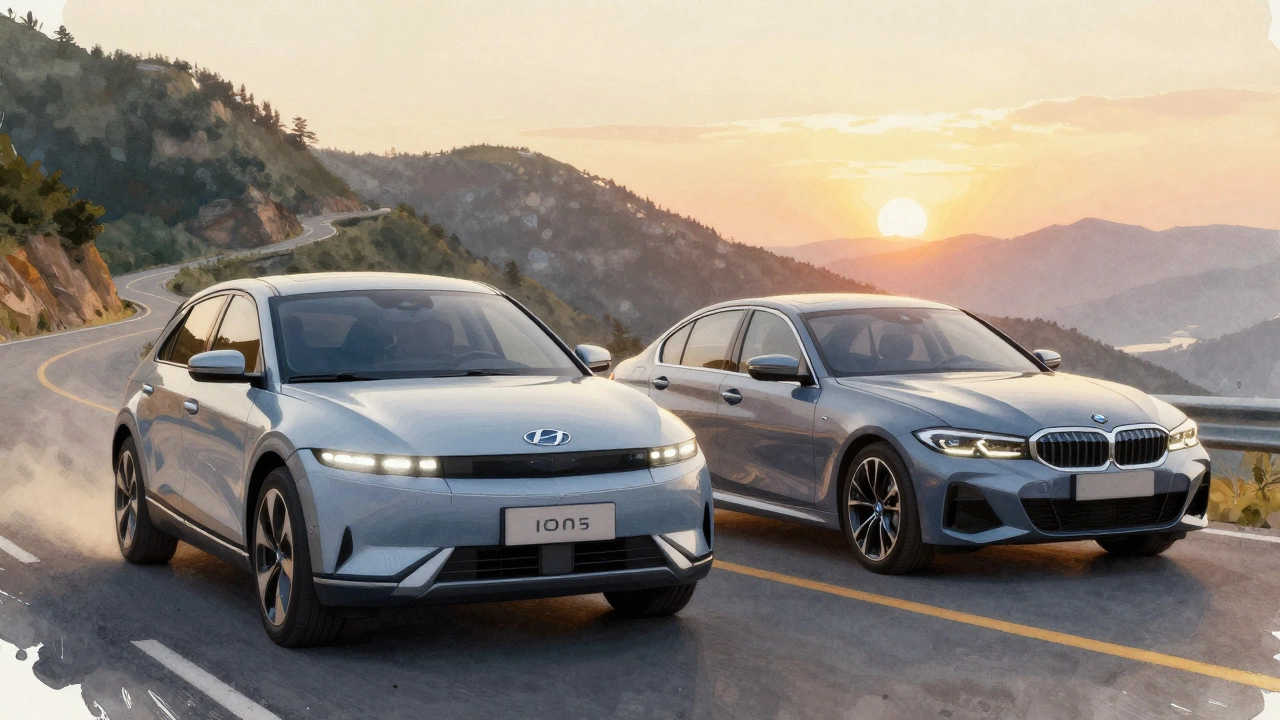
India isn’t making luxury sedans yet, but it’s building the most affordable, reliable cars for the world’s biggest market. Maruti Suzuki dominates with models like the Alto and Swift, selling over 4 million units a year. Tata Motors, now owned by the global conglomerate, makes the Punch and Nexon-small SUVs that sell for under $10,000 but come with 6 airbags and a 5-star Global NCAP safety rating. India’s real strength? Scaling production fast. The country produces over 5 million cars annually and is the fourth-largest producer globally. It’s also becoming a hub for EVs. Tata’s electric cars now outsell Tesla in India. The government’s FAME II scheme subsidizes EVs, and local suppliers like Exide and Tata AutoComp are building batteries and components at a fraction of the cost of Europe or Japan. India’s goal isn’t to beat Germany in handling-it’s to put a safe, efficient car in every middle-class home.
What "Best" Really Means
There’s no single answer to "Which country makes the best cars?" because "best" means different things to different people. If you want a car that won’t break down for 200,000 miles, go Japanese. If you love the feel of a perfectly balanced steering wheel and premium leather, choose German. If you want cutting-edge tech and a long warranty, South Korea delivers. If you need a truck that can haul a boat or a home backup generator, the U.S. wins. And if you’re buying your first car on a tight budget, India offers the smartest value.
One thing’s clear: the old idea that only Europe and Japan make good cars is outdated. Today’s market is global. A Korean EV can outperform a German sedan. An Indian SUV can be safer than a French hatchback. The best car isn’t made in one country-it’s made by the brand that understands your needs best.
Top 5 Car-Making Countries in 2026
| Country | Key Strength | Top Brands | Average Warranty | EV Adoption Rate |
|---|---|---|---|---|
| Japan | Reliability and longevity | Toyota, Honda, Nissan | 5 years / 60,000 miles | 12% |
| Germany | Driving dynamics and luxury | BMW, Mercedes-Benz, Audi | 4 years / 50,000 miles | 28% |
| South Korea | Value, tech, warranty | Hyundai, Kia, Genesis | 10 years / 100,000 miles | 35% |
| United States | Innovation and performance | Tesla, Ford, GM | 4 years / 50,000 miles | 31% |
| India | Affordability and scale | Tata, Maruti Suzuki, Mahindra | 3 years / 40,000 miles | 42% |
What Should You Buy?
Ask yourself three questions:
- Do you care more about how long the car lasts, or how fun it is to drive?
- Are you buying for daily commuting, family trips, or off-road adventures?
- Is a long warranty more important than brand prestige?
If you’re a first-time buyer with a limited budget, an Indian-made Tata Punch or Maruti Suzuki S-Presso gives you more safety features than many European cars from 2015. If you drive 20,000 miles a year and hate repairs, a Toyota Corolla Hybrid is your safest bet. If you love tech and want to own the latest software, a Tesla Model Y is still the leader. If you want a car that feels expensive without paying luxury prices, try a Hyundai Kona Electric.
Frequently Asked Questions
Is Germany still the best for luxury cars?
Yes, for now. Mercedes-Benz, BMW, and Audi still lead in materials, ride quality, and driver-focused tech. But South Korea’s Genesis brand is closing the gap fast-with similar features at 30% lower prices. If you’re willing to skip the badge, Genesis offers nearly the same experience.
Why are Japanese cars so reliable?
It’s not luck. Japanese manufacturers use strict quality control, standardized parts, and supplier partnerships that demand zero defects. They also design cars to be easy to repair. A Toyota Camry’s engine can be serviced with basic tools. That’s intentional. Reliability is built into the design, not added as an afterthought.
Are Indian cars safe?
Yes, the best ones are. Tata Motors and Maruti Suzuki now build cars that meet Global NCAP 5-star safety standards. The Tata Nexon and Punch have 6 airbags, ABS, ESC, and a rigid body structure. These aren’t budget compromises-they’re engineered for safety. India’s crash test standards are now among the strictest in the developing world.
Which country makes the best electric cars?
It’s a three-way race. South Korea leads in warranty and software experience. The U.S. leads in range and charging speed. India leads in affordability-the Tata Tiago EV costs less than $10,000. If you want cutting-edge tech, Tesla still wins. But for everyday drivers, Hyundai’s Ioniq 5 and Kia’s EV6 offer the best balance of range, price, and features.
Should I avoid American cars?
No. American brands like Ford and GM have improved dramatically. Their vehicles now match European reliability standards. The Ford Bronco and GM’s electric trucks are among the most capable vehicles on the road. The only downside? Fuel efficiency. But if you need power, towing, or off-road ability, American cars still set the bar.
Next Steps
If you’re shopping for a car in 2026, start by listing what matters most: cost, safety, tech, or driving fun. Then look at the top models from each country. Test drive at least three. Don’t assume a German car is better just because it’s more expensive. A $15,000 Tata Nexon might serve you better than a $35,000 entry-level BMW. The best car isn’t the most expensive one-it’s the one that fits your life.