Mirror Anxiety Self-Assessment
Answer these questions honestly to gauge the severity of your discomfort around mirrors. This tool provides general guidance based on the article's insights.
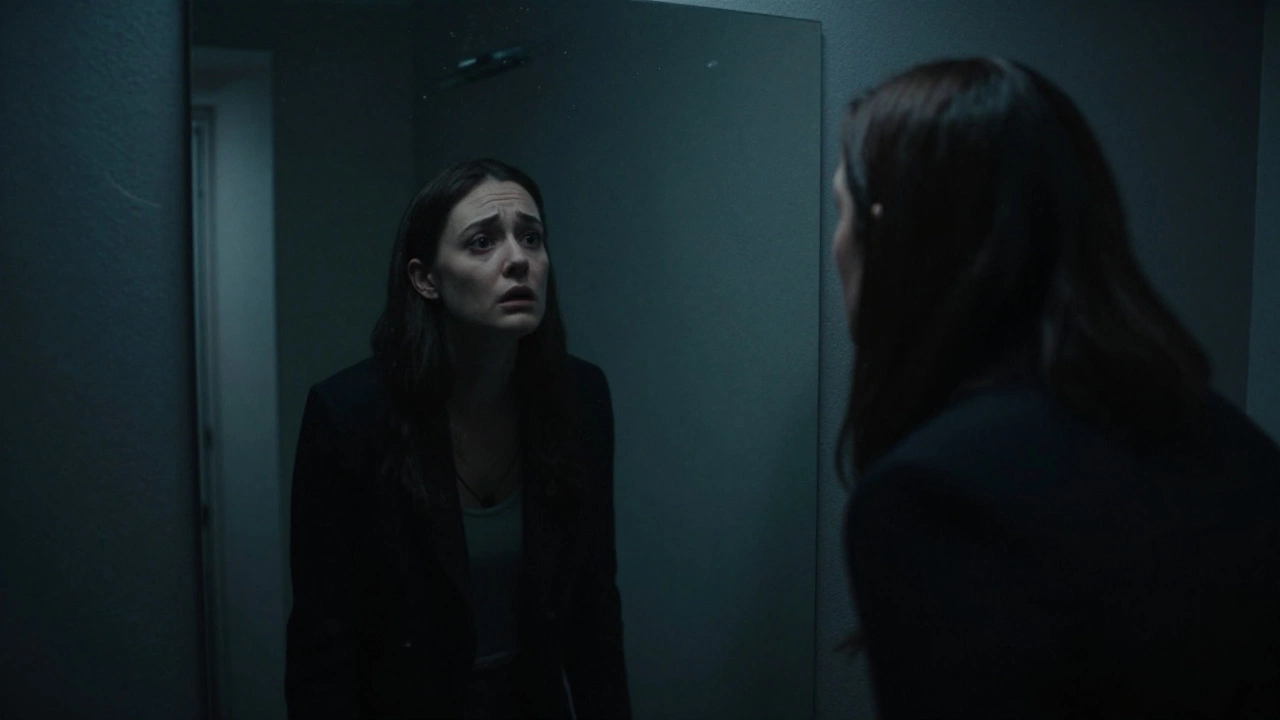
Have you ever caught your reflection in a hallway mirror at night and felt a sudden chill run down your spine? You’re not alone. That jolt of unease-sometimes bordering on panic-is a surprisingly common experience. While we often brush it off as just being tired or overly imaginative, many people describe this reaction as deeply spiritual. But is there actually a ghost in the glass, or is your brain playing tricks on you?
The short answer is: it’s usually your brain, but the feelings are very real. Understanding why you feel this way requires looking at both the psychology of perception and the cultural baggage we carry about reflections. Let’s break down what’s happening behind the scenes.
The Psychology Behind the Fear
First, let’s look at the science. The medical term for an irrational fear of mirrors is specophobia, which is a specific phobia characterized by intense anxiety when viewing one's own reflection. It’s rare, but more common is a situational discomfort triggered by specific conditions.
Your brain is wired to detect threats. In low light, or when you’re distracted, your visual processing lags slightly. This creates a phenomenon called the "uncanny valley" effect in reverse. Instead of a robot looking too human, your own reflection looks *almost* right, but something feels off. Maybe the lighting casts a weird shadow. Maybe you blinked and didn’t see your eyes move in sync for a split second. Your amygdala-the fear center of the brain-fires up because it perceives a potential anomaly. Is that really me? Is someone standing behind me? This evolutionary alert system is designed to keep you safe from predators, even if the only predator here is a dimly lit bathroom.
Consider this scenario: You walk past a large window at dusk. The glass acts like a weak mirror. You see your face superimposed over the dark room inside. For a fraction of a second, your brain struggles to reconcile the two images. That cognitive dissonance triggers a stress response. It’s not a spirit; it’s a glitch in your pattern recognition software.
Cultural and Spiritual Beliefs About Mirrors
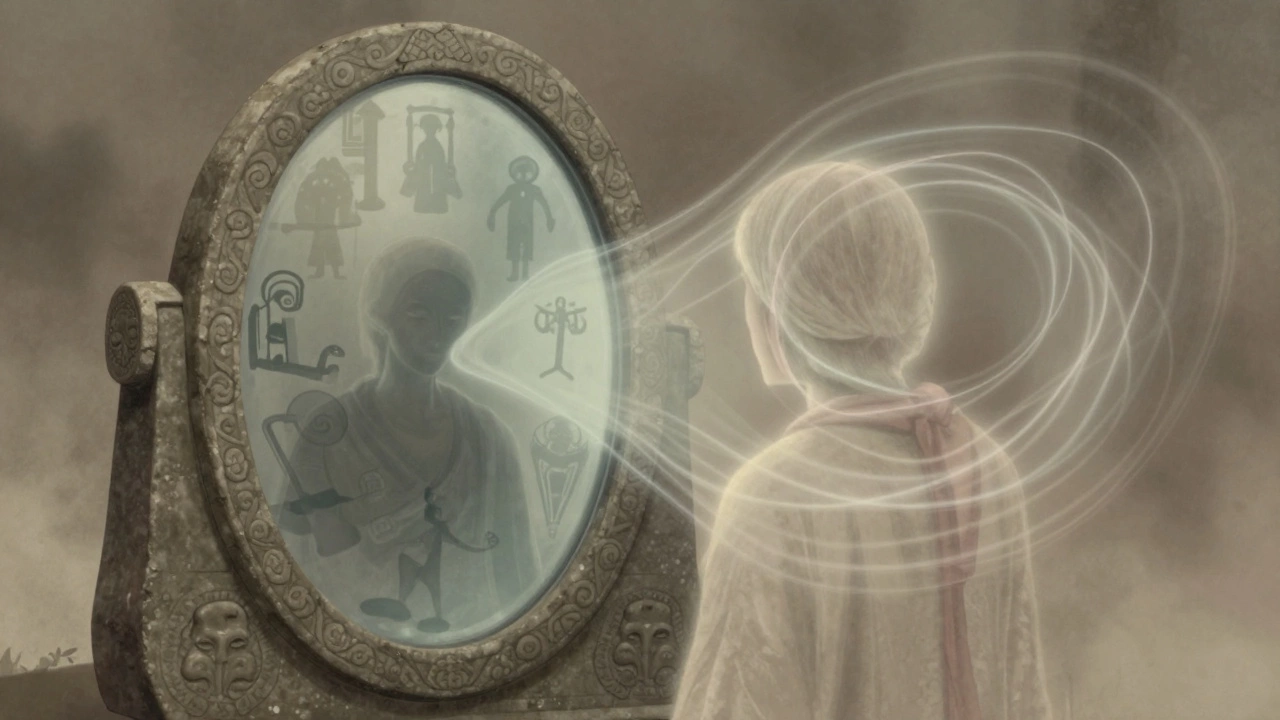
If science explains the mechanism, culture explains the intensity. Humans have been fascinated-and terrified-by mirrors for thousands of years. Long before glass mirrors existed, people used polished stone or still water to see their reflections. These surfaces were often seen as portals to other worlds.
In many traditions, mirrors are believed to hold power over the soul:
- Chinese Culture: Covering mirrors during funerals is a common practice. The belief is that the soul might get trapped in the reflection, preventing it from moving on to the afterlife.
- Vampire Lore: Popularized by Bram Stoker’s Dracula, the idea that vampires have no reflection stems from the belief that they lack a soul. If you see no reflection, or a distorted one, it suggests a disconnect between your physical self and your spiritual essence.
- Feng Shui: Placing a mirror directly opposite the bed is discouraged. It’s thought that seeing yourself while sleeping can confuse your energy (Qi) and lead to restless nights or nightmares.
When you grow up hearing these stories, your subconscious links mirrors with danger, death, or supernatural interference. So, when you feel scared, you aren’t just reacting to the image; you’re reacting to centuries of collective storytelling that says, "Be careful what you look into."
The Role of Dissociation and Mental Health
Sometimes, the fear isn’t about ghosts or glitches. It’s about identity. Conditions like dissociative disorders, depression, or high anxiety can alter how you perceive yourself. This is known as depersonalization or derealization.
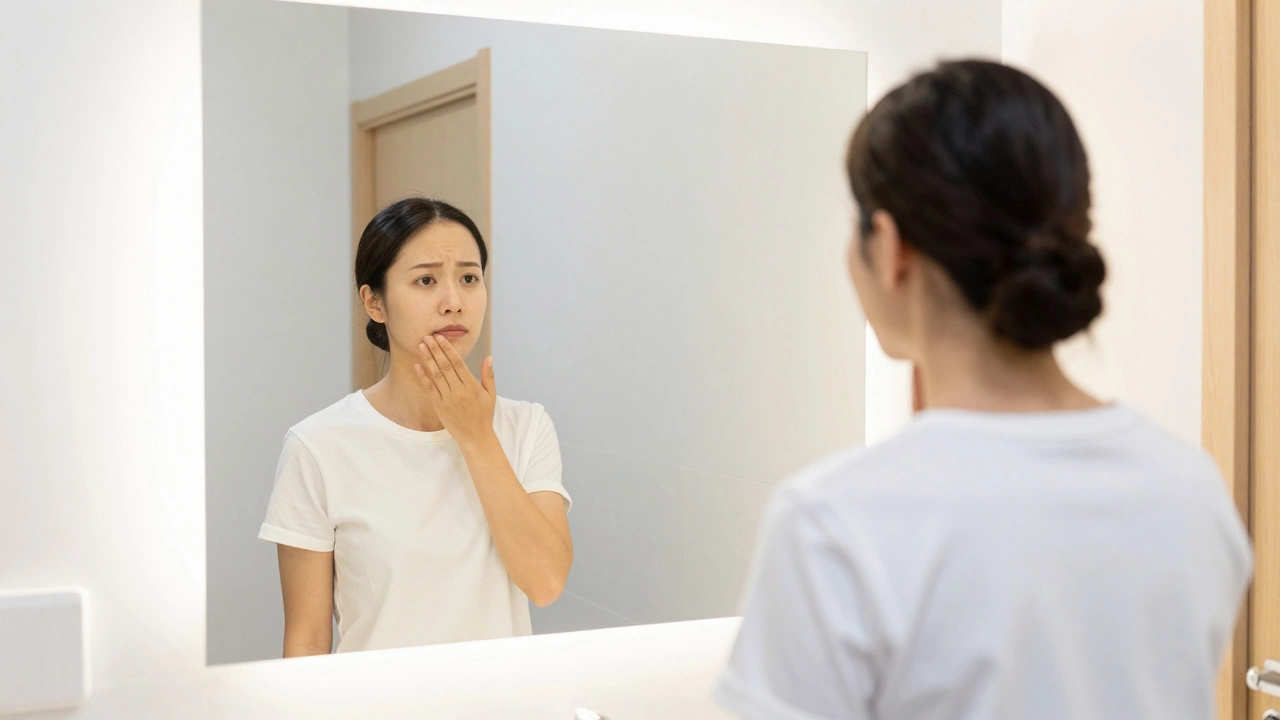
If you’ve been under significant stress, you might look in the mirror and feel like the person staring back is a stranger. This disconnect can be terrifying. Your mind knows it’s you, but your emotions don’t recognize the face. This mismatch creates a sense of unreality. Many people report feeling watched by their own reflection during these episodes. It’s a profound isolation, where the most familiar object in your life becomes alien.
Additionally, sleep deprivation plays a huge role. When you’re exhausted, your brain’s ability to filter out irrelevant stimuli drops. You become hyper-aware of small details-a pore, a twitch, a shadow. This heightened awareness can spiral into paranoia. If you’re already anxious, the mirror becomes a screen projecting your inner fears onto your outer appearance.
How to Overcome Mirror Anxiety
If this fear is affecting your daily life, you don’t have to live with it. Here are practical steps to reclaim your comfort around reflections:
- Gradual Exposure: Start small. Look in a compact mirror for five seconds. Then ten. Gradually increase the time and the size of the mirror. This retrains your brain to associate mirrors with safety rather than threat.
- Improve Lighting: Most mirror anxiety happens in poor light. Install brighter bulbs in hallways and bathrooms. Clear, even lighting reduces shadows and makes your reflection appear more natural and less "haunted."
- Grounding Techniques: When you feel the fear rising, use the 5-4-3-2-1 method. Name five things you see, four you can touch, three you hear, two you smell, and one you taste. This pulls your focus out of your head and back into the physical world.
- Challenge the Narrative: Remind yourself of the science. Tell yourself, "This is just my brain recognizing a pattern. There is no danger." Repeating this mantra weakens the emotional charge over time.
If the fear persists, consider talking to a therapist. Cognitive Behavioral Therapy (CBT) is highly effective for specific phobias. A professional can help you unpack any deeper issues related to self-image or past trauma that might be fueling the fear.
When to Seek Professional Help
Not all fear is pathological. A little spookiness in a horror movie setting is normal. But you should seek help if:
- You avoid rooms with mirrors entirely.
- You cover all mirrors in your home.
- The fear causes panic attacks or severe distress.
- You believe your reflection is moving independently of you (this could indicate a neurological issue).
Mental health professionals can distinguish between a simple phobia and symptoms of a larger condition like psychosis or severe dissociation. Early intervention leads to better outcomes. Don’t suffer in silence because you think it’s "just silly." Your feelings are valid, and help is available.
Conclusion: Embracing Your Reflection
Mirrors are just tools. They reflect light, nothing more. The fear you feel is a mix of biology, culture, and personal history. By understanding the roots of your anxiety, you can demystify the mirror. It’s not a portal to another world; it’s just a piece of glass backed with silver. Next time you catch your reflection, take a deep breath. Acknowledge the fear, then smile. You’re safe.
Is it normal to be scared of mirrors at night?
Yes, it is relatively common. Poor lighting and fatigue reduce your brain's ability to process visual information accurately, leading to misinterpretations of your reflection. This can trigger a primal fear response.
Can mirrors trap your soul?
No, there is no scientific evidence that mirrors can trap souls. This is a myth found in various cultural folklore, such as Chinese funeral customs, but it has no basis in reality or physics.
What is the medical term for fear of mirrors?
The medical term is specophobia. It is classified as a specific phobia and can range from mild discomfort to severe panic attacks when encountering a reflective surface.
Why do I feel like my reflection is delayed?
This sensation is often due to eye movements or blinking. When you blink, your vision is momentarily blocked. When it returns, there is a tiny lag in processing. Your brain may interpret this micro-delay as your reflection moving independently, causing unease.
How can I stop being afraid of my reflection?
Try gradual exposure therapy, improve lighting in your home, and use grounding techniques to stay present. If the fear is severe, consult a mental health professional for cognitive behavioral therapy.