Sofa Value & Cost Estimator
Select options and click calculate to see your results.
You walk into a showroom or scroll through an online catalog, and the prices hit you like a ton of bricks. One sofa is $400, another is $4,000. They look similar enough to the untrained eye, so why the massive gap? If you are trying to figure out what a good quality sofa actually costs, you aren't alone. Most people have no idea what they should be paying until they've already made a mistake.
Here is the blunt truth: there is no single "average" price that applies to every living room. But for a durable, comfortable, and well-made sofa that will last more than five years, you should expect to spend between $1,500 and $3,500 in the US market as of 2026. Anything significantly below this range often means cutting corners on materials or construction. Anything above usually buys you luxury branding, custom fabrics, or specific designer aesthetics rather than just better durability.
The Sweet Spot: Where Value Meets Quality
Why does the $1,500-$3,500 range exist? It’s where manufacturers can afford high-density foam, kiln-dried hardwood frames, and decent upholstery without charging you for a logo. Below $1,000, you are typically looking at particleboard frames, lower-density foams that sag within two years, and synthetic blends that pill easily. Above $4,000, you start paying for hand-tied springs, down-filled cushions (which require constant fluffing), and premium leathers like full-grain aniline.
If you are renting or furnishing a starter home, spending $800 might make sense. But if you own your home and plan to keep this piece for a decade, stretching your budget to the mid-range saves money in the long run. A $2,000 sofa that lasts ten years costs $200 per year. A $600 sofa that needs replacing every three years costs $200 per year too-but with way more hassle and landfill waste.
What Actually Drives the Price Up?
It’s not just about how big the sofa is. Several specific components dictate whether a sofa is worth its price tag. When you compare models, look at these four areas first:
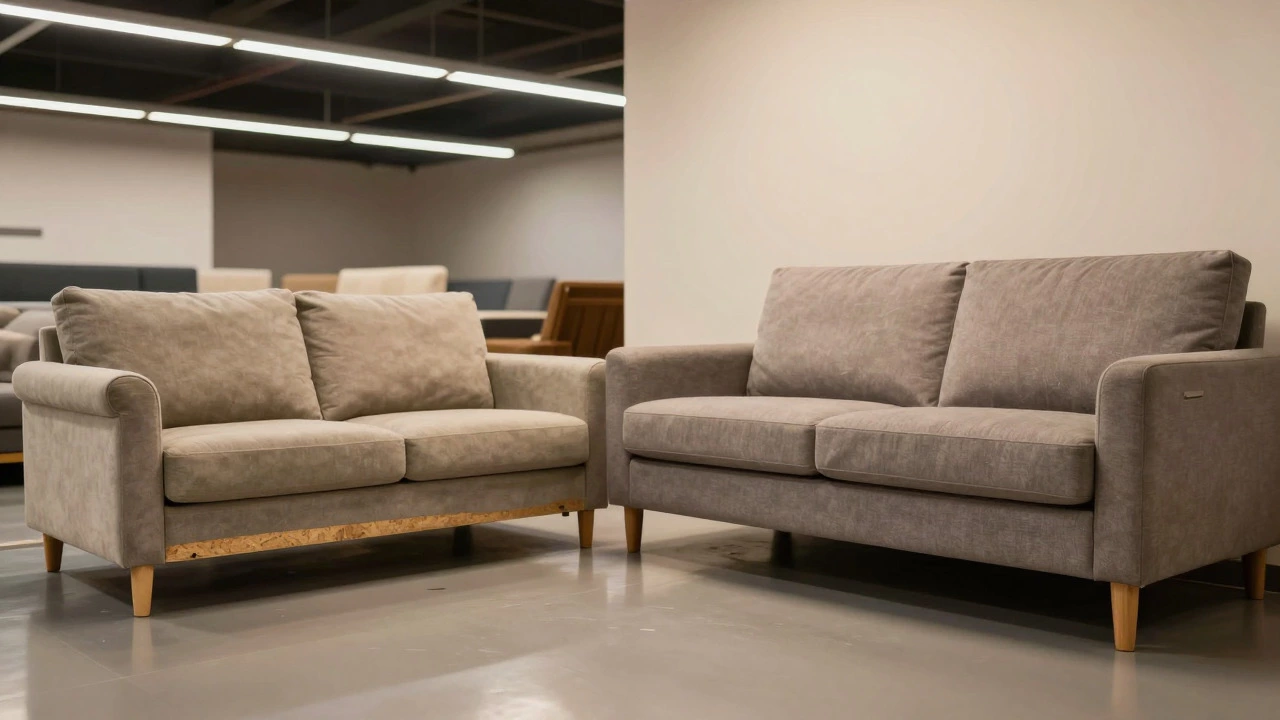
- The Frame: Kiln-dried hardwood is the gold standard. It resists warping and cracking. Pine is acceptable but softer. Particleboard or MDF (medium-density fiberboard) is a red flag; it absorbs moisture and breaks under stress.
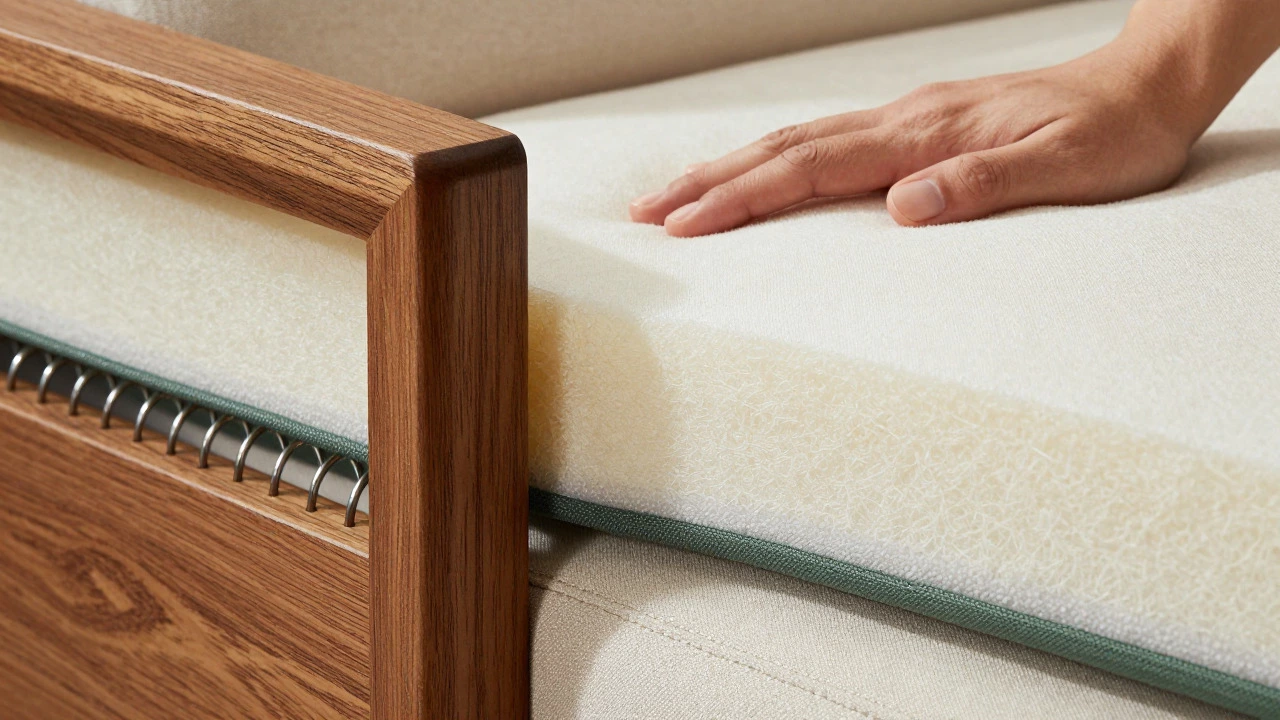
- The Cushion Fill: High-resilience (HR) foam holds its shape. Polyurethane foam is cheaper but flattens quickly. Down feathers feel luxurious but lose structure fast unless mixed with foam cores.
- The Fabric: Natural fibers like cotton and linen breathe but stain easily. Performance fabrics (like Crypton or Sunbrella) resist stains and wear, adding $200-$500 to the cost. Leather varies wildly; bonded leather peels, while top-grain or full-grain ages beautifully.
- The Construction Method: Corner-blocked, screwed, and glued joints are sturdy. Staples and glue alone fall apart over time.
Average Prices by Sofa Type
Not all sofas are created equal. A sectional requires more material and labor than a simple loveseat. Here is a realistic breakdown of what you should expect to pay for good quality versions of common styles in 2026.
| Sofa Type | Budget Range | Quality Range | Luxury Range |
|---|---|---|---|
| Standard 3-Seater | $600 - $900 | $1,500 - $2,500 | $3,000+ |
| Loveseat | $400 - $700 | $1,000 - $1,800 | $2,200+ |
| Sectional (L-Shape) | $1,000 - $1,500 | $2,500 - $4,000 | $5,000+ |
| Sleeper Sofa | $800 - $1,200 | $1,800 - $3,000 | $3,500+ |
| Recliner | $500 - $800 | $1,200 - $2,000 | $2,500+ |
Notice the jump for sectionals. Because they involve multiple pieces and connectors, poor construction fails faster. Don’t skimp here if you have kids jumping around. For sleeper sofas, the mechanism is the weak point. Cheap mechanisms break within a year. Good ones use steel frames and smooth-gliding tracks, which adds to the cost but ensures you can actually sleep on it comfortably.
Brand Tiers: Who Sells What?
Understanding where brands fit helps you avoid overpaying for marketing or underpaying for junk. The furniture market is split into three distinct tiers.
Big Box Retailers (IKEA, Wayfair, Amazon Basics): These offer convenience and low entry prices. You can find decent-looking sofas for $500-$900. However, check the reviews specifically for "durability." Many users report sagging after 18 months. These are great for temporary setups or guest rooms, less so for daily family hubs.
Mid-Market Specialists (Article, Joybird, Pottery Barn, Crate & Barrel): This is where the value sweet spot lives. Brands like Article focus on direct-to-consumer models, cutting out middlemen to offer solid wood frames and performance fabrics for $1,500-$2,500. Traditional retailers like Pottery Barn charge more for the brand name and physical store experience, often pushing prices toward $3,000 for similar specs.
High-End & Custom (RH, Restoration Hardware, Local Makers): Here, you pay for customization, heirloom-quality materials, and white-glove delivery. Prices start at $4,000 and go up indefinitely. Unless you need specific dimensions or rare fabrics, you’re often paying for prestige rather than functional longevity.
Hidden Costs That Blow Your Budget
The sticker price isn’t the final number. Furniture has sneaky add-ons that can increase your total by 15-20%. Always ask about these before checking out.
- Delivery Fees: Standard delivery might be free, but "threshold delivery" (just to the door) vs. "room-of-choice" (carrying it upstairs and assembling) can cost $100-$300 extra.
- Fabric Upgrades: Basic polyester is included. Switching to velvet, linen, or performance fabric often adds $200-$500.
- Protection Plans: Salespeople push these hard. For a $2,000 sofa, a $300 protection plan might be worth it if you have pets or toddlers. Skip it if you have adults-only households.
- Taxes: Don’t forget state sales tax, which can be significant depending on where you live.
How to Tell If It’s Worth It: The 5-Minute Test
You don’t need to be an engineer to spot a bad sofa. Use this quick checklist when shopping in person or reading detailed online specs.
- The Wobble Test: Lift one front corner off the ground. Does the opposite rear corner lift too? If yes, the frame is rigid. If the frame twists or creaks, it’s poorly constructed.
- The Sit Test: Sit firmly in the center. Do you bottom out against the wooden slats? If you feel the hard frame immediately, the cushion density is too low.
- The Zipper Check: Are the cushion covers removable? If yes, you can wash them. This extends the life of the sofa dramatically. Non-removable covers mean spills become permanent stains.
- The Weight Check: Heavy sofas are usually better. Lightness often indicates hollow frames or cheap fill.
- The Leg Material: Wooden legs are generally sturdier than metal ones on cheaper models, which can snap or bend under heavy weight.
When to Buy and How to Save
Furniture follows seasonal sales patterns. If you can wait, timing your purchase can save you hundreds.
Best Times to Buy: Presidents’ Day (February), Memorial Day (May), Labor Day (September), and Black Friday/Cyber Monday (November). Retailers clear inventory during these windows. End-of-month is also good because salespeople want to hit quotas.
Worst Times to Buy: January (post-holiday inventory is picked over) and June (high demand for weddings/moving season).
Another trick: buy floor models. Showrooms replace displays frequently. A slightly used floor model with minor scuffs can sell for 30-50% off. Just inspect it closely for pet hair or deep scratches.
Final Verdict: What Should You Pay?
If you want a sofa that looks good, feels comfortable, and survives daily life for 7-10 years, aim for the $1,500-$2,500 range for a standard three-seater. This gets you a hardwood frame, HR foam, and decent fabric. If you have small children or pets, add $300-$500 for performance fabrics that clean easily.
Don’t get distracted by fancy features like built-in USB ports or massage functions-they often break before the sofa itself does. Focus on the bones: the frame, the springs, and the foam. Spend your money there, and you’ll thank yourself years later when your neighbors are throwing away their third cheap couch.
Is a $1,000 sofa considered good quality?
Generally, no. A $1,000 sofa is often an entry-level product using particleboard frames or lower-density foams. While some brands offer decent options at this price, you typically compromise on longevity. Expect visible wear or sagging within 3-5 years of regular use.
How much longer does an expensive sofa last compared to a cheap one?
A high-quality sofa ($2,000+) can last 10-15 years with proper care. A budget sofa ($500-$800) typically lasts 3-5 years. The difference comes from frame integrity and foam resilience. Expensive sofas maintain structural support; cheap ones degrade rapidly under weight.
Are leather sofas more expensive than fabric ones?
Yes, genuine leather sofas are significantly more expensive. Top-grain or full-grain leather adds $500-$1,500 to the base price compared to standard fabric. Bonded leather is cheaper but peels quickly, making it a false economy for long-term ownership.
Do I really need performance fabric?
If you have kids, pets, or drink coffee/wine on the sofa, yes. Performance fabrics (like Crypton or Sunbrella) resist stains and cleaning damage. They cost 15-20% more but extend the aesthetic life of the sofa by several years, preventing early replacement due to stains.
Is buying online cheaper than in-store?
Often, yes. Direct-to-consumer brands (like Article or Burrow) cut out retail overhead, offering higher quality for lower prices. However, you cannot test comfort in person. Look for online retailers with generous return policies (30+ days) to mitigate the risk.