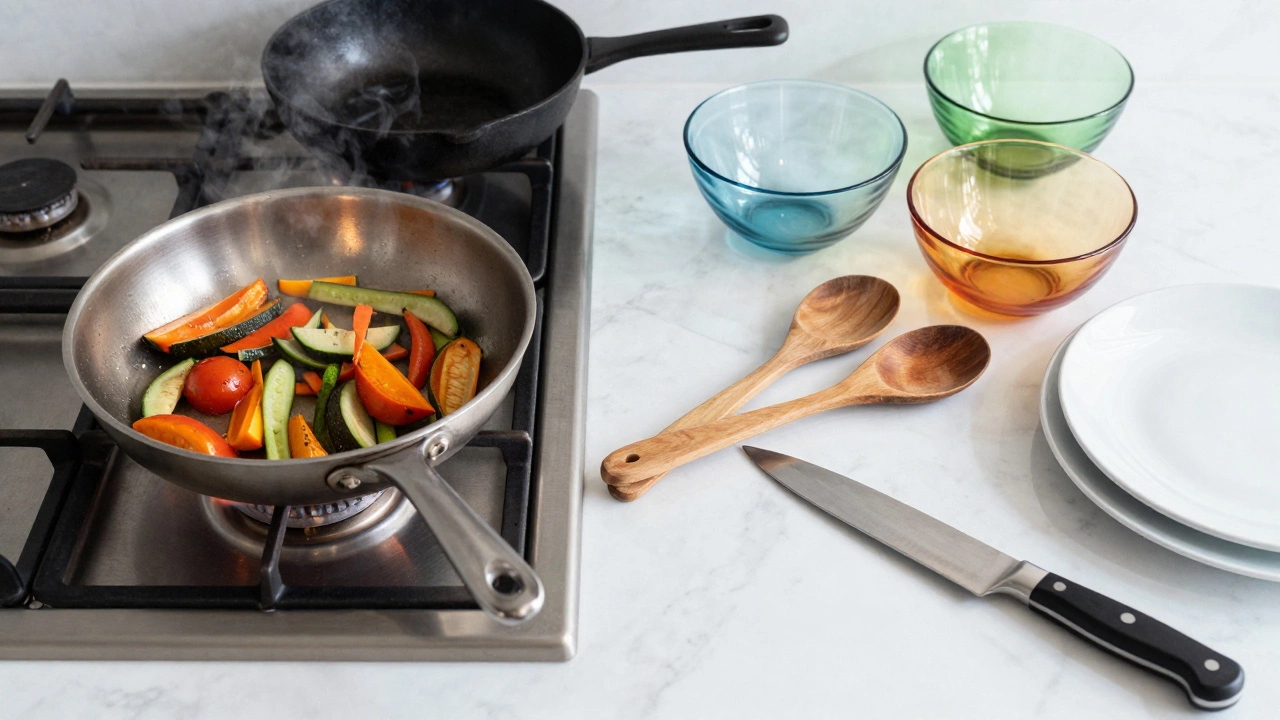
You walk into a home goods store or scroll through an online catalog, and you see two sections that seem to overlap completely: cookware is items used for cooking food on heat sources like stoves or ovens and kitchenware is a broad term encompassing all utensils, appliances, and equipment used in the kitchen. It’s confusing because, technically, one is inside the other. But if you’re trying to organize your kitchen, buy gifts, or just stop mislabeling your spatula, knowing the distinction matters more than you think.
The short answer? Cookware is specifically for cooking with heat. Kitchenware is everything else-plus the cookware. Think of it like this: "Kitchenware" is the entire family, and "cookware" is just the siblings who hang out around the fire.
The Umbrella Term: Understanding Kitchenware
Kitchenware is the catch-all term. If it lives in your kitchen and helps you prepare, serve, or clean up food, it’s kitchenware. This category is massive. It includes the pots you boil pasta in, yes, but also the knife you chop onions with, the plate you serve dinner on, and even the sponge you use to wash them both.
When retailers label something as kitchenware, they are usually referring to non-cooking items. You’ll find mixing bowls, measuring cups, can openers, colanders, and serving platters under this banner. The key attribute here is function: these tools handle food preparation, storage, or presentation, but they rarely touch direct heat.
- Preparation tools: Knives, cutting boards, peelers, graters.
- Serving ware: Plates, bowls, platters, pitchers.
- Cleaning aids: Sponges, dish brushes, drying racks.
- Storage containers: Tupperware, glass jars, vacuum seal bags.
If you’re buying a gift set labeled "kitchenware," expect gadgets, utensils, or decorative serving pieces. You won’t find a cast-iron skillet in there unless it’s part of a larger "cooking essentials" bundle.
The Heat Specialists: Defining Cookware
Cookware is a subset of kitchenware designed specifically to withstand high temperatures. These are the vessels where raw ingredients transform into meals. They go on the stove, into the oven, or onto the grill. The defining characteristic of cookware is its material construction-it must be heat-resistant, durable, and capable of conducting thermal energy efficiently.
Common examples include frying pans, saucepans, stockpots, skillets, and roasting pans. When you buy cookware, you’re investing in performance metrics like heat distribution, retention, and reactivity with acidic foods. A stainless steel pan might sear better than a non-stick one, but it requires more oil. That’s a cookware decision, not a general kitchenware one.
| Feature | Cookware | Kitchenware (Non-Cooking) |
|---|---|---|
| Primary Function | Cooking with heat | Preparation, serving, cleaning |
| Heat Exposure | Direct (stove/oven) | Minimal or none |
| Materials | Cast iron, stainless steel, copper, aluminum | Plastic, wood, silicone, ceramic, glass |
| Lifespan | Years to decades (with care) | Months to years (varies by quality) |
| Cost Range | $20-$500+ per piece | $5-$100 per item |
Notice how materials differ? Cookware needs metals that conduct heat. General kitchenware prioritizes safety, ease of cleaning, and aesthetics. You wouldn’t make a salad bowl out of cast iron-it’s too heavy and reactive. You wouldn’t make a wok out of plastic-it would melt. The material dictates the category.
Bakeware: The Third Wheel?
Here’s where it gets tricky. Many people lump bakeware is specialized cookware designed for oven use, including baking sheets, cake pans, and muffin tins into cookware. Technically, it is. Bakeware is a sub-category of cookware because it goes into the oven. However, some retailers separate it entirely because the usage patterns differ. You don’t stir-fry in a loaf pan. You don’t boil water in a cookie sheet.
If you’re shopping, check the labels. Some stores group bakeware with cookware; others put it with general kitchenware or have a dedicated "baking" section. For clarity, remember: if it goes in the oven, it’s cookware/bakeware. If it stays on the counter, it’s kitchenware.
Utensils vs. Tools: Where Do Spatulas Fit?
This is the most common point of confusion. Is a wooden spoon cookware? No. It’s a utensil, which falls under kitchenware. Even though you use it *while* cooking, it doesn’t generate or contain heat itself. It’s a tool for manipulation, not transformation.
Utensils include spatulas, ladles, whisks, tongs, and spoons. They are handheld instruments. Cutlery (knives, forks, spoons) is another subset of kitchenware focused on eating or cutting. Neither belongs in the cookware category, even though they’re often sold alongside pots and pans.
Think about durability. Your cast-iron skillet might last 50 years. Your cheap plastic spatula might warp after six months. That difference in longevity reflects their roles. Cookware is an investment; many kitchenware items are consumables.
Why Does the Distinction Matter?
You might wonder why semantics matter when you’re just trying to make dinner. Here’s why:
- Shopping Efficiency: If you need a new pot, searching "kitchenware" will flood your results with aprons and jar organizers. Searching "cookware" filters directly to pots, pans, and skillets.
- Gift Giving: Buying a "kitchenware set" usually means gadgets and utensils. Buying a "cookware set" means pots and pans. Don’t accidentally give someone ten identical measuring cups when they needed a dutch oven.
- Storage & Organization: Cookware requires sturdy cabinets near the stove. Kitchenware can live anywhere. Mixing them up leads to cluttered drawers and hard-to-reach essentials.
- Care & Maintenance: Cookware often has specific cleaning rules (e.g., no dishwasher for cast iron). General kitchenware is usually dishwasher-safe. Knowing the difference prevents ruined items.
Material Science: Why Metals Rule Cookware
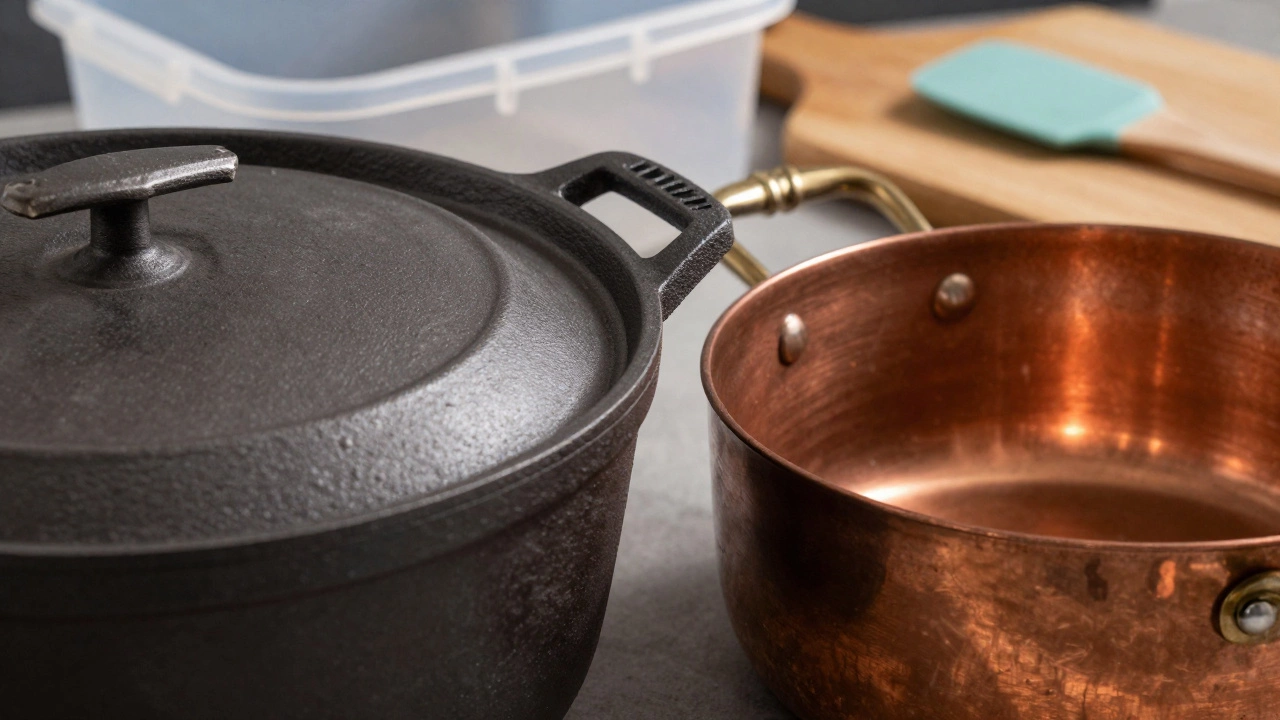
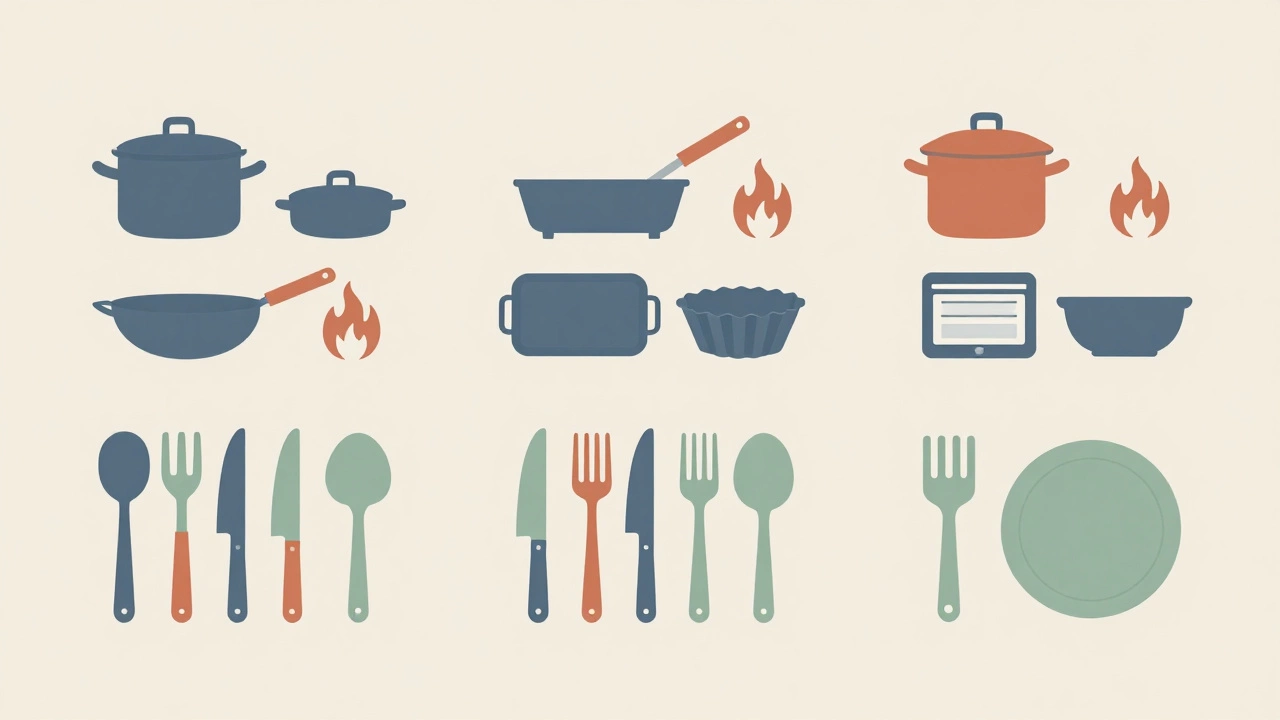
The reason cookware is distinct lies in physics. Heat transfer requires dense, conductive materials. Stainless steel offers durability and non-reactivity. Aluminum heats quickly but reacts with acids. Copper conducts heat perfectly but tarnishes easily. Cast iron retains heat incredibly well but is heavy and prone to rust if neglected.
General kitchenware uses lighter, cheaper, or safer materials. Plastic is lightweight and colorful. Wood provides gentle surfaces for non-scratch cooktops. Glass allows visibility for storage. Ceramic offers elegant serving options. None of these materials could survive direct flame or high oven temps without degrading.
This material divide reinforces the categorical split. You choose cookware based on thermal properties. You choose kitchenware based on convenience, style, or hygiene.
Modern Blurs: Induction and Multi-Use Items
New technologies sometimes blur lines. Induction-compatible cookware must have magnetic bases, adding another layer to material selection. Some multi-cookers combine stovetop and oven functions, acting as both cookware and appliance. Electric kettles are appliances, not cookware, despite boiling water.
Even so, the core rule holds: if it applies heat directly to food, it’s cookware. If it assists, serves, or cleans, it’s kitchenware. Appliances (blenders, toasters) sit in their own category entirely.
Quick Decision Guide
Next time you’re unsure, ask yourself three questions:
- Does it go on the heat source? Yes → Cookware.
- Is it held in hand during cooking? Yes → Utensil (Kitchenware).
- Does it serve or store food? Yes → Serving Ware/Storage (Kitchenware).
This simple filter works 95% of the time. The remaining 5% involves niche items like broiler pans or slow cooker inserts, which still fall under cookware due to heat exposure.
Is a cutting board considered cookware?
No. A cutting board is kitchenware, specifically a preparation tool. It never touches heat sources and is used solely for food prep before cooking begins.
Can I put my kitchenware in the dishwasher?
Most general kitchenware (plastic utensils, glass bowls, metal cutlery) is dishwasher-safe. However, many cookware items, especially cast iron or non-stick pans, require hand washing to maintain their finish and functionality.
What is the difference between bakeware and cookware?
Bakeware is a type of cookware. Both involve heat, but bakeware is exclusively for oven use (like cake pans), while cookware typically refers to stovetop items (like frying pans). Retailers sometimes separate them for organizational purposes.
Are knives considered cookware?
No. Knives are cutlery, which falls under kitchenware. They are used for preparation and serving, not for applying heat to food.
Why do some stores sell cookware and kitchenware together?
Because cookware is a subset of kitchenware. Stores group them for convenience, assuming customers want complete kitchen solutions. However, understanding the difference helps you navigate aisles faster and avoid buying duplicates.
Is a slow cooker considered cookware?
Technically, the inner pot of a slow cooker is cookware, but the entire unit is an appliance. If you replace just the ceramic insert, you’re buying cookware. If you buy the whole machine, you’re buying an appliance.
How long should good cookware last?
High-quality cookware like cast iron or tri-ply stainless steel can last decades or even generations with proper care. Non-stick pans typically need replacement every 3-5 years due to coating wear. General kitchenware varies widely based on material and frequency of use.