U.S. Manufacturing Outsourcing Estimator
Your Monthly Spending Profile
Adjust the sliders to match your approximate monthly spending in these categories.
Manufacturing Origin Analysis
Domestic Production Value Breakdown
$0
Estimated Domestic Value Added
0% of your spending supports U.S. manufacturing directly
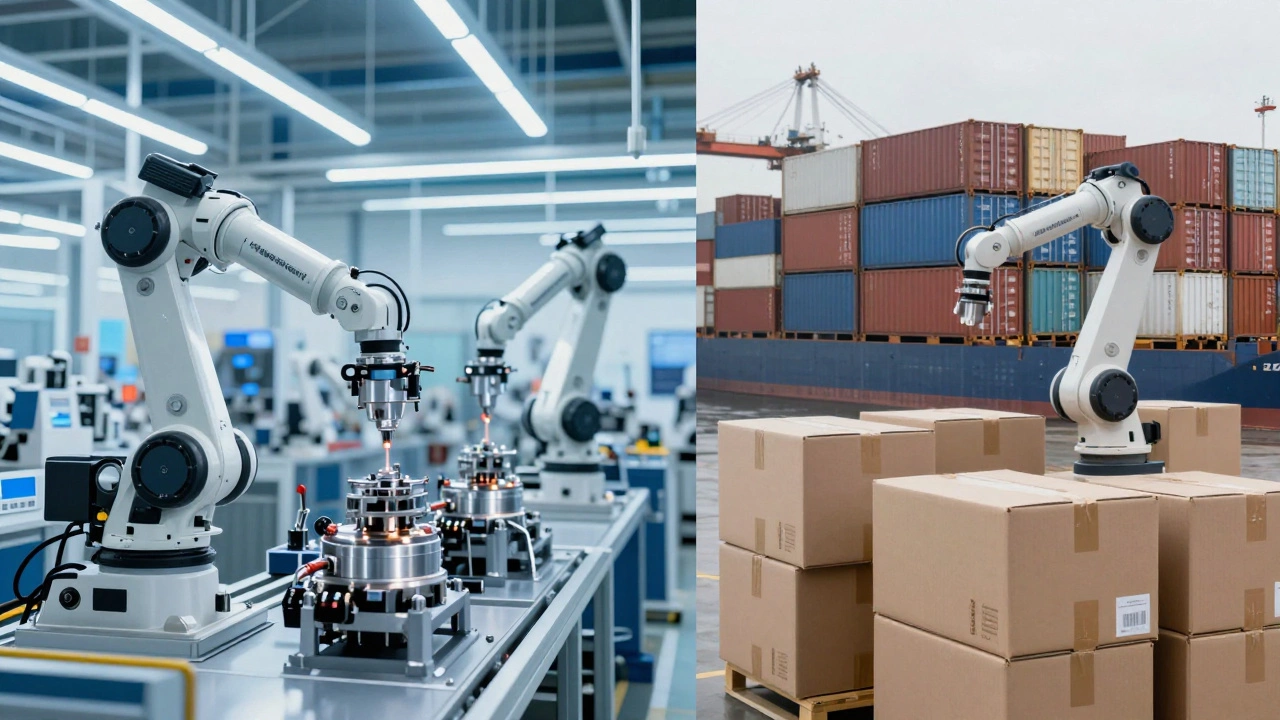
Walk into any big-box store today, pick up a tool, a shirt, or a gadget, and check the tag. You will likely see "Made in China," "Made in Vietnam," or perhaps "Assembled in Mexico." It is easy to look at that label and assume American factories have vanished entirely. The reality is messier, more nuanced, and surprisingly resilient. While a significant portion of what we consume comes from overseas, the idea that U.S. manufacturing has been completely hollowed out is a myth. In fact, if you measure by value rather than just unit count, America remains one of the largest manufacturing economies on the planet.
But how much is actually outsourced? To answer that, we have to stop looking at simple job numbers and start looking at trade balances, supply chains, and the difference between making a raw material versus assembling a final product. The story of American industry in 2026 is not about total loss; it is about shifting geography and changing complexity.
The Big Picture: Value vs. Volume
When people ask how much manufacturing is outsourced, they usually imagine empty factory floors. But data tells a different story. According to recent reports from the Bureau of Economic Analysis (BEA) and the National Association of Manufacturers (NAM), U.S. manufacturing output has actually grown steadily over the last decade. In 2025, the sector contributed nearly $2.7 trillion to the Gross Domestic Product (GDP). That is roughly 11% of the entire economy.
So why does it feel like everything is made abroad? The trick lies in the difference between gross output and net exports. The U.S. produces a massive amount of goods-aircraft, pharmaceuticals, industrial machinery, chemicals-but it also imports an enormous volume of consumer goods like electronics, clothing, and furniture.
- High-Value Production: The U.S. leads globally in aerospace, biotechnology, and specialized chemical manufacturing. These industries generate high revenue per worker.
- Low-Volume Imports: We import billions of units of low-cost items (toys, basic apparel) where labor costs dominate the price tag.
If you judge outsourcing by the number of items on a shelf, the U.S. looks weak. If you judge it by the economic value added within American borders, the picture is far stronger. The key metric here is value-added. Even when a product is assembled overseas, many of its components, software, and intellectual property originate in the United States.
Sector-by-Sector Breakdown: What Stays and What Goes
Outsourcing is not uniform across all industries. Some sectors have remained stubbornly domestic due to logistics, regulation, or strategic importance. Others have moved almost entirely offshore. Let’s look at where the lines are drawn in 2026.
| Sector | Domestic Retention Rate | Primary Reason for Location |
|---|---|---|
| Aerospace & Defense | High (>80%) | National security regulations, IP protection |
| Pharmaceuticals | Moderate-High (~65%) | Regulatory complexity, speed to market |
| Automobiles | Moderate (~55%) | Proximity to consumers, heavy tariffs |
| Electronics Assembly | Low (<20%) | Labor arbitrage, established Asian supply chains |
| Textiles & Apparel | Very Low (<10%) | Extreme labor cost sensitivity |
Aerospace manufacturing is a prime example of retained capacity. Companies like Boeing still rely heavily on U.S.-based engineering and assembly, though they source parts globally. The government restricts certain technologies from leaving the country, effectively forcing this production to stay home.
On the other end of the spectrum, consumer electronics remain largely outsourced. While Apple designs its products in Cupertino, the physical assembly happens in countries with lower labor costs and highly efficient supply networks. However, even here, the trend is shifting slightly toward automation, which reduces the advantage of cheap foreign labor.
The Role of Government Schemes in Reshoring
You might wonder why companies would bring jobs back if it costs more. The short answer is: they often wouldn’t, unless the math changes. This is where government intervention plays a critical role. Over the past few years, legislative efforts have significantly altered the calculus for manufacturers.
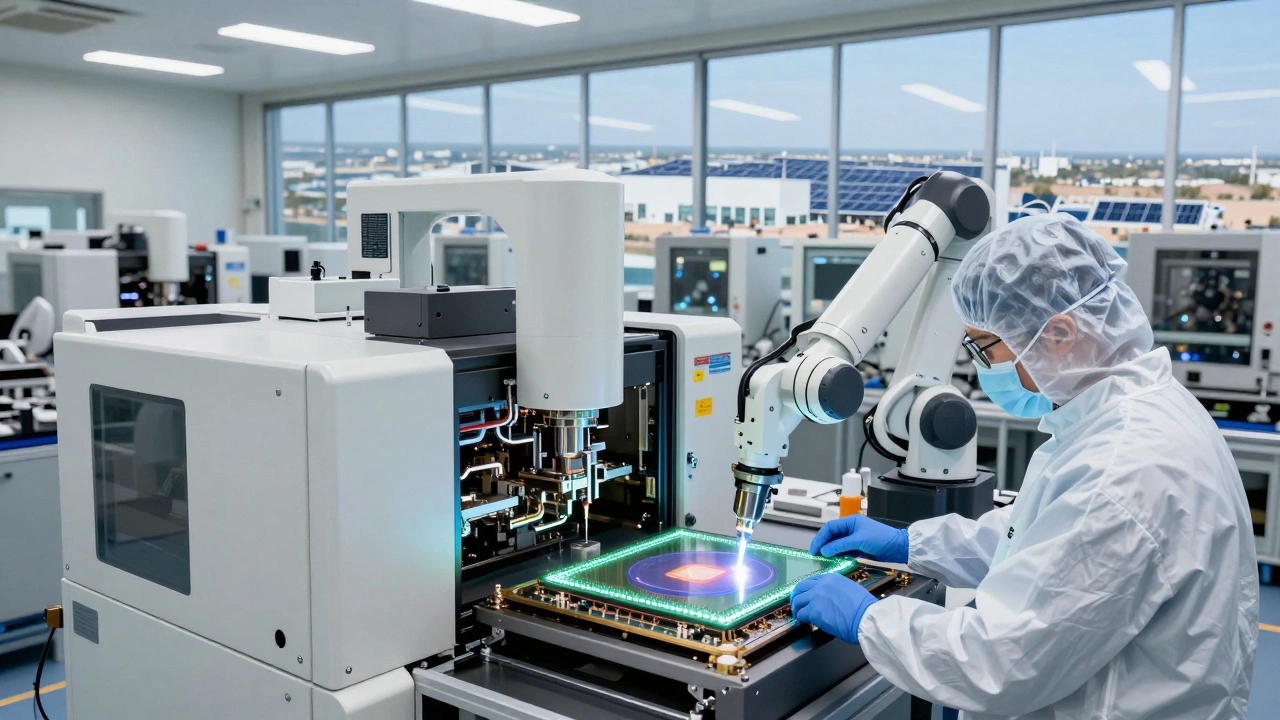
The CHIPS and Science Act is the most visible example. By offering billions in subsidies and tax credits, the U.S. government incentivized semiconductor fabrication plants to be built domestically. Companies like Intel, TSMC, and Samsung have committed to building advanced chip facilities in Arizona, Ohio, and New York. This is not just about national security; it is about reducing reliance on a single geographic region for critical technology.
Similarly, the Inflation Reduction Act (IRA) provides tax credits for electric vehicles and clean energy components only if a certain percentage of materials are sourced or processed in North America. This has triggered a wave of battery plant construction across the Midwest and South. These policies do not force companies to stay; they make staying financially attractive again.
For small-scale manufacturers, programs like those offered by the Small Business Administration (SBA) provide grants for modernizing equipment. Upgrading to automated systems can offset higher wage costs, allowing smaller firms to compete with larger offshore operations.
Hidden Outsourcing: The Supply Chain Illusion
Here is a tricky part: a product can be labeled "Made in USA" but still contain a high degree of outsourced content. Federal Trade Commission (FTC) guidelines state that a product must be "all or virtually all" made in the U.S. to carry that label without qualification. However, "virtually all" allows for minor foreign content.
Consider a piece of industrial machinery. The steel frame might be forged in Pennsylvania, the control software written in California, but the precision bearings could come from Japan, and the plastic casing from Mexico. When economists calculate "outsourcing," they often look at the share of imported intermediate goods in total production. Studies suggest that for many U.S. manufactured goods, between 30% and 50% of the input value comes from abroad.
This means that while the final assembly and highest-value steps happen domestically, the supply chain is deeply global. Disrupting this flow-as seen during recent pandemic-era shortages-reveals how fragile these connections can be. It also highlights why "reshoring" is difficult; you cannot just move the final assembly line; you have to rebuild the entire ecosystem of suppliers around it.
Trends Shaping the Future: Automation and Nearshoring
Looking ahead to the rest of 2026 and beyond, two major forces are reshaping where manufacturing happens. First is automation. As robots become cheaper and smarter, the cost advantage of low-wage countries diminishes. If a robot can work 24/7 without breaks, healthcare benefits, or union negotiations, the location of the factory matters less than the reliability of the power grid and the skill of the technicians maintaining the bots.
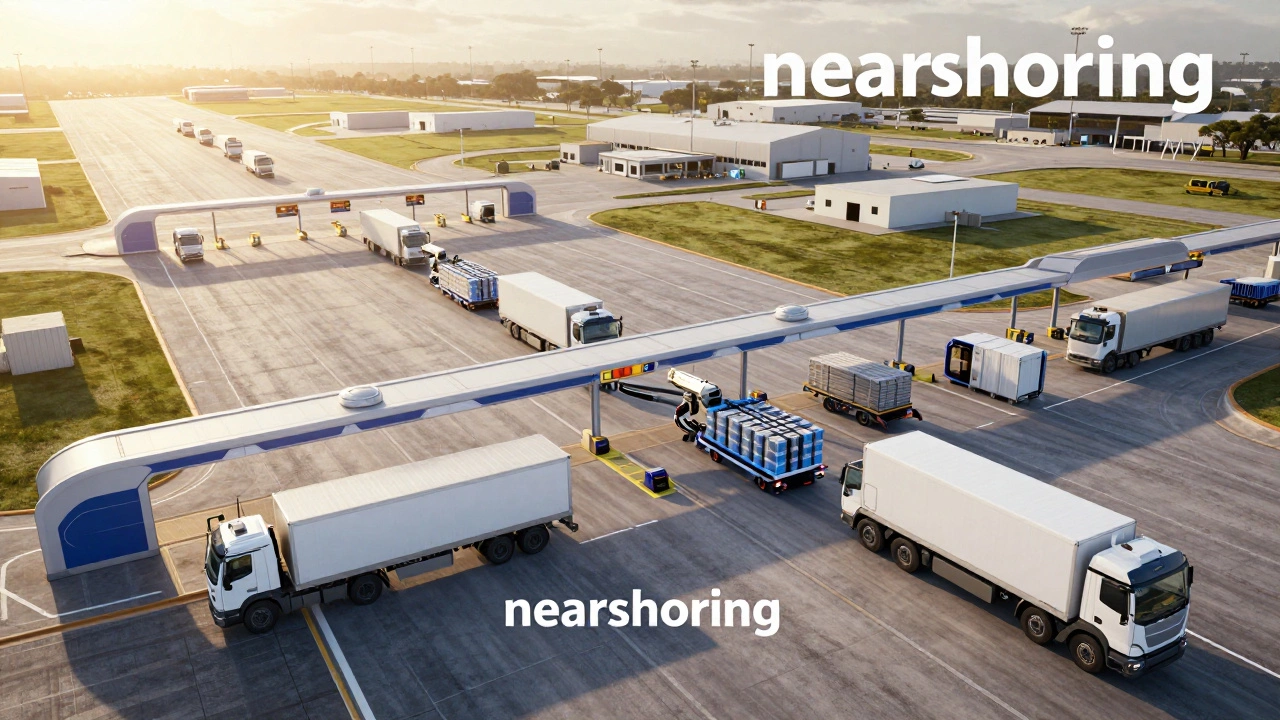
Second is nearshoring. Rather than sending production halfway across the world to Asia, many companies are moving operations to Mexico and Canada. The United States-Mexico-Canada Agreement (USMCA) facilitates this by reducing tariffs and harmonizing standards. For automotive and appliance manufacturers, being able to ship finished goods across the border in hours rather than weeks by sea is a huge logistical advantage.
This shift doesn't mean jobs are returning to rural America en masse. Instead, we are seeing a consolidation of high-tech, automated hubs in specific regions, often near ports or major transportation corridors. The nature of the work is changing too: fewer assembly line workers, more mechatronics engineers, data analysts, and logistics coordinators.
Why Does This Matter to You?
Understanding outsourcing isn't just an academic exercise. It affects prices, job availability, and economic stability. When manufacturing is concentrated in a few foreign countries, global shocks-like a pandemic or a geopolitical conflict-can cause immediate shortages and inflation. Diversifying production back to the U.S. and allied nations adds resilience to the economy.
For consumers, this might mean slightly higher prices for some goods in the short term as companies invest in new domestic facilities. But in the long run, it leads to more stable supply chains and potentially higher-quality control. For workers, it signals a need for reskilling. The future of U.S. manufacturing is not in sewing shirts by hand; it is in programming robots that sew them.
What percentage of U.S. GDP comes from manufacturing?
As of 2025-2026, manufacturing accounts for approximately 11% of the U.S. Gross Domestic Product (GDP), contributing around $2.7 trillion to the economy. While this share has declined from historical highs, the absolute value has increased due to productivity gains and inflation adjustments.
Is U.S. manufacturing growing or shrinking?
U.S. manufacturing output has generally grown in real terms over the last decade, despite a loss in total employment. This is due to increased automation and efficiency. The sector produces more goods with fewer workers than it did twenty years ago.
Which industries are most likely to return to the U.S.?
Industries benefiting from government incentives and requiring proximity to consumers are leading the reshoring trend. These include semiconductors (due to the CHIPS Act), electric vehicle batteries (due to the IRA), and pharmaceuticals. Aerospace and defense have always remained largely domestic due to security concerns.
What is the difference between offshoring and outsourcing?
Offshoring refers to moving business processes to another country, regardless of whether the company owns the facility. Outsourcing refers to contracting work to a third-party provider, which can be domestic or foreign. In common parlance regarding manufacturing, they are often used interchangeably to describe moving production abroad.
How does automation affect the decision to outsource?
Automation reduces the labor cost advantage of developing countries. When machines perform the majority of repetitive tasks, the savings from lower wages overseas shrink. This makes domestic manufacturing more competitive, especially when combined with faster shipping times and better quality control.



Dec 19 2025