Small-Scale Manufacturing ROI Estimator
Configure Your Business Model
Projected Financial Analysis
Enter your details to see if this machine is a profitable investment.
Buying expensive equipment is risky. You spend thousands of dollars on a machine, only to find out that the market doesn't want what it makes. The real question isn't just which machine costs the least, but which one pays you back the fastest. In small-scale manufacturing, profit comes from the gap between your production cost and the final selling price. Some machines bridge that gap with ease; others leave you struggling to break even.
In 2026, the landscape has shifted. Automation is cheaper than ever, and consumer demand for personalized, niche products is at an all-time high. This means the most profitable machinery isn't necessarily the biggest industrial press. It’s often the flexible, precision tools that allow you to serve specific markets with high margins. Whether you are starting a workshop in a garage or expanding a small factory floor, choosing the right tool determines your survival.
The High-Margin King: CNC Machining Centers
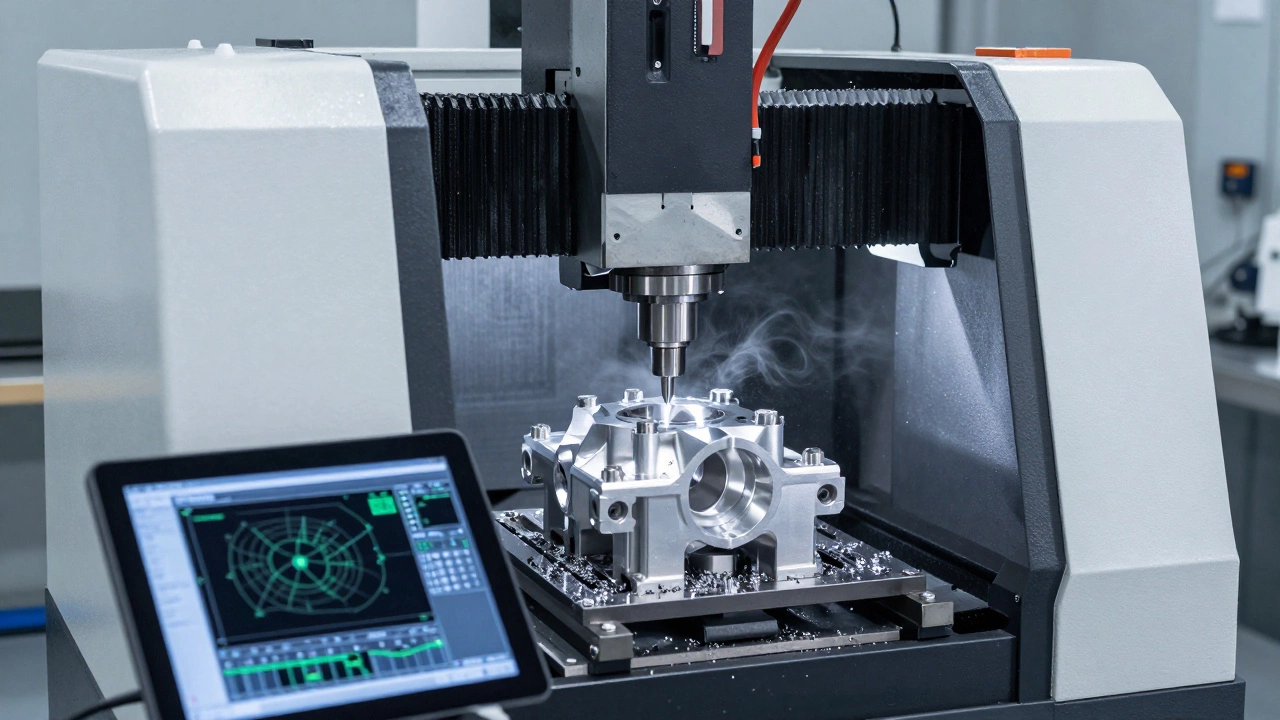
When we talk about raw profitability per hour, CNC machining centers are computer-controlled tools that remove material to create precise parts. These machines dominate because they can produce high-value components for industries like aerospace, medical devices, and automotive restoration. A single custom bracket or prototype part can sell for hundreds of dollars, while the material cost might be under ten.
The key here is versatility. A modern 3-axis or 5-axis CNC mill can switch from aluminum to titanium to plastics without changing hardware. If you focus on low-volume, high-complexity jobs, your hourly rate skyrockets. However, the barrier to entry is skill. You need excellent CAD/CAM software knowledge and precision calibration skills. Without them, you will waste expensive materials. But if you master the setup, a mid-range CNC mill can generate significant cash flow within six months by serving local engineering firms who outsource their overflow work.
Precision Cutting: Fiber Laser Cutters
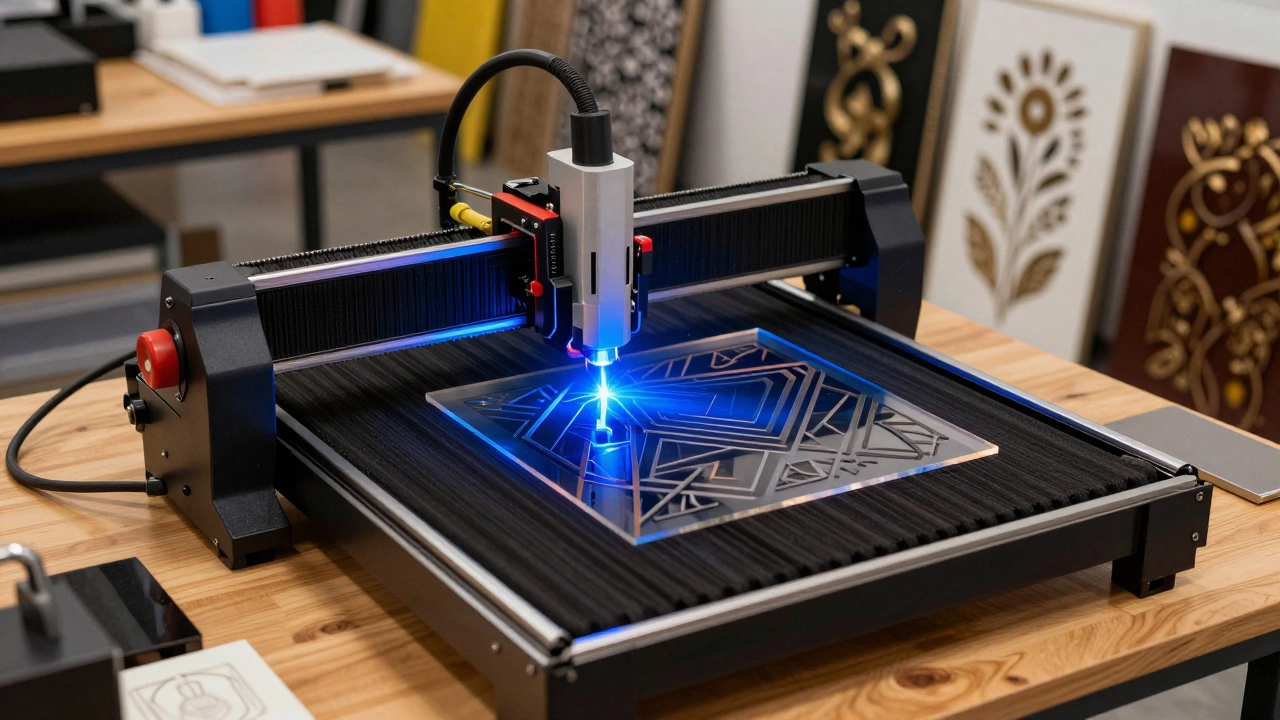
If CNC mills are about depth, fiber laser cutters are about speed and surface area. Fiber laser cutters are high-speed cutting systems that use focused light beams to slice through metal, wood, and acrylic. They have become incredibly affordable in recent years, dropping below the $10,000 mark for entry-level models. This accessibility makes them one of the most popular choices for new entrepreneurs.
Why are they so profitable? Because they open doors to diverse revenue streams. You can cut intricate metal signs for businesses, fabricate custom jewelry blanks, or create decorative panels for interior designers. The material waste is minimal compared to traditional cutting methods, keeping your overhead low. Plus, the learning curve is gentle. Basic vector design software is enough to start producing sellable goods. Many operators report breaking even within three to four months by offering rapid prototyping services to local architects and product designers.
Consistent Returns: Automated Packaging Lines
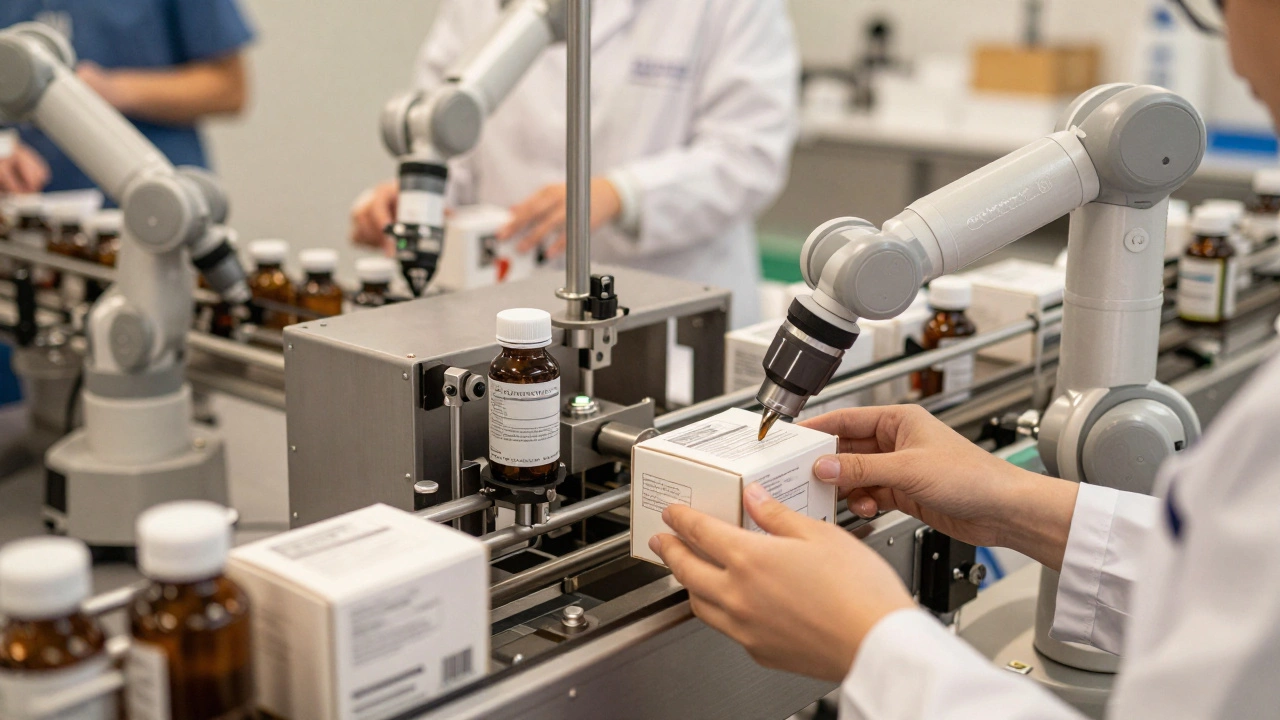
Not all money-making machinery creates the product itself. Sometimes, the biggest profit opportunity lies in how you deliver it. Automated packaging lines are systems that seal, label, and box products efficiently. For small manufacturers, manual packing is a bottleneck. It slows down shipping and increases labor costs. Investing in semi-automatic vertical form-fill-seal (VFFS) machines or automated labeling systems can double your output without doubling your staff.
This is particularly lucrative if you manufacture food, supplements, or cosmetics. These industries require strict hygiene and consistent branding. A well-packaged product commands a higher price point. By automating this step, you reduce errors and speed up fulfillment times. Customers appreciate professional presentation, and retailers are more likely to stock items that look premium. The return on investment here is measured in saved labor hours and increased sales volume rather than direct unit creation.
Niche Dominance: Injection Molding Machines
Once you have validated a product design, injection molding offers unmatched economies of scale. Injection molding machines are equipment that injects molten material into molds to create plastic parts. While the initial mold creation is expensive, the cost per unit drops dramatically as volume increases. If you can secure a contract to produce thousands of identical parts-like phone cases, toy components, or medical device housings-the margins are substantial.
The challenge is finding the right niche. Don’t compete with massive factories on commodity items. Instead, look for specialized applications where large manufacturers won’t bother with small orders. For example, creating custom connectors for hobbyist electronics or replacement parts for vintage appliances. Desktop-sized injection molding units have made this accessible to smaller workshops. You can run these machines overnight, producing inventory while you sleep, which maximizes efficiency.
Textile Innovation: Digital Textile Printers
The fashion industry is moving away from mass production toward personalization. Digital textile printers are inkjet-based systems that print directly onto fabrics. Traditional screen printing requires setup fees and minimum order quantities. Digital printing eliminates these barriers. You can print a single unique shirt or a batch of fifty different designs with zero changeover time.
This flexibility allows you to tap into the booming print-on-demand market. Partner with local artists or offer custom corporate wear. The profit margin on custom apparel is typically high because customers pay for uniqueness. Additionally, digital printing uses less water and energy than traditional methods, appealing to eco-conscious consumers. As sustainable fashion grows, having a green production method becomes a competitive advantage that justifies premium pricing.
| Machinery Type | Initial Cost Range | Primary Market | Profit Driver | Skill Level Required |
|---|---|---|---|---|
| CNC Machining Center | $15,000 - $50,000 | Aerospace, Medical, Automotive | High value per part | Advanced |
| Fiber Laser Cutter | $8,000 - $25,000 | Signage, Jewelry, Decor | Speed and versatility | Intermediate |
| Packaging Line | $5,000 - $20,000 | Food, Cosmetics, Retail | Labor savings & volume | Basic |
| Injection Molder | $10,000 - $40,000 | Toys, Electronics, Auto Parts | Low cost per unit at scale | Advanced |
| Digital Textile Printer | $12,000 - $30,000 | Fashion, Home Decor | Customization & no MOQ | Intermediate |
Factors That Determine True Profitability
Owning the machine is only half the battle. Several external factors dictate whether your investment turns into profit. First, consider maintenance costs. Cheap machines often break down frequently, halting production and eating into your margins. Look for brands with strong local support networks. Second, evaluate material availability. If your machine requires exotic alloys or rare textiles that are hard to source locally, your supply chain risks will increase.
Another critical factor is market validation. Before buying any equipment, test your idea. Can you sell ten units manually? If yes, scaling with machinery makes sense. If not, no amount of automation will save you. Finally, think about regulatory compliance. Food processing and pharmaceutical manufacturing require strict adherence to health standards. Ensure your chosen machinery meets local safety and hygiene regulations to avoid costly fines or shutdowns.
Strategic Recommendations for New Entrants
If you are new to manufacturing, start with lower-risk options. Fiber laser cutters and digital textile printers offer quick paths to market with relatively low technical barriers. They allow you to experiment with different products until you find a winner. Once you have established a steady customer base, reinvest profits into heavier equipment like CNC mills or injection molders.
Collaboration is also powerful. Partner with other small manufacturers who own complementary machinery. For instance, a laser cutter operator can partner with a CNC machinist to offer complete assembly solutions. This expands your service offerings without increasing capital expenditure. Remember, the goal is not just to make things, but to solve problems for your clients efficiently and affordably.
What is the cheapest machinery to start a manufacturing business?
Entry-level fiber laser cutters and basic packaging machines are among the most affordable options, often costing under $10,000. These provide immediate utility with minimal upfront risk.
How long does it take to recoup the cost of a CNC machine?
With consistent high-value contracts, a mid-range CNC machine can break even in 6 to 12 months. Success depends heavily on securing reliable clients and minimizing material waste.
Is injection molding suitable for small batches?
Traditionally no, due to high mold costs. However, desktop injection molding units now allow for smaller batch runs, making it viable for niche products and prototypes.
Which machinery has the lowest maintenance requirements?
Digital textile printers and automated packaging lines generally have fewer moving mechanical parts compared to CNC mills, resulting in lower maintenance needs and downtime.
Do I need a large space for small-scale manufacturing?
Many modern machines, especially desktop CNCs and laser cutters, are designed for compact spaces. A standard garage or small workshop is sufficient for starting out.