0.1 inch: What It Means in Manufacturing, Materials, and Everyday Use
When you hear 0.1 inch, a precise measurement equal to 2.54 millimeters, often used to define thickness, tolerance, or gap size in manufacturing and product design. Also known as one-tenth of an inch, it's the difference between a tissue that feels flimsy and one that holds up when wet, or between a cabinet hinge that lasts a decade and one that falls apart in a year. This isn’t just a number—it’s a standard that separates average products from reliable ones.
In Indian manufacturing, especially for tissue and home goods, material thickness, the physical dimension of a product’s cross-section, often measured in inches or microns for consistency in production is critical. A 0.1 inch difference in tissue ply thickness affects absorbency, strength, and how it feels in your hands. Companies like Innovative Tissues India use this exact measurement to control quality across batches. It’s not guesswork. It’s calibrated machines, strict tolerances, and tested samples. The same goes for plastic packaging, rubber seals, and even the gaps in bathroom fixtures—where a misaligned 0.1 inch can cause leaks or poor fit.
Think about manufacturing tolerance, the acceptable variation in a product’s dimensions, ensuring parts fit together without being too loose or too tight. In a factory making tissue rolls, if the core diameter varies by more than 0.1 inch, the machines jam. If the packaging seal is off by that same amount, air gets in, and the product spoils. This tiny gap is why Indian manufacturers are scaling up—not just by adding machines, but by mastering precision. You’ll see this in posts about chemical manufacturing in Gujarat, where even the smallest deviation in pipe thickness can affect safety. Or in discussions about furniture building, where a 0.1 inch misalignment ruins the entire joint.
And it’s not just factories. In your home, 0.1 inch matters. A rug that’s too thick by that much can make a door stick. A towel rack mounted 0.1 inch too low becomes awkward to use. Even the spacing between bathroom tiles affects cleaning and water runoff. These aren’t accidents—they’re design choices based on real-world use. That’s why the posts here cover everything from bathroom essentials to textile manufacturing: every product, no matter how simple, relies on these small but critical measurements.
What you’ll find below are real examples of how 0.1 inch shows up in Indian manufacturing—whether it’s in the thickness of a tissue sheet, the gap in a machine part, or the precision needed to make a fabric fold just right. These aren’t theoretical specs. They’re the quiet rules that make everyday products work.
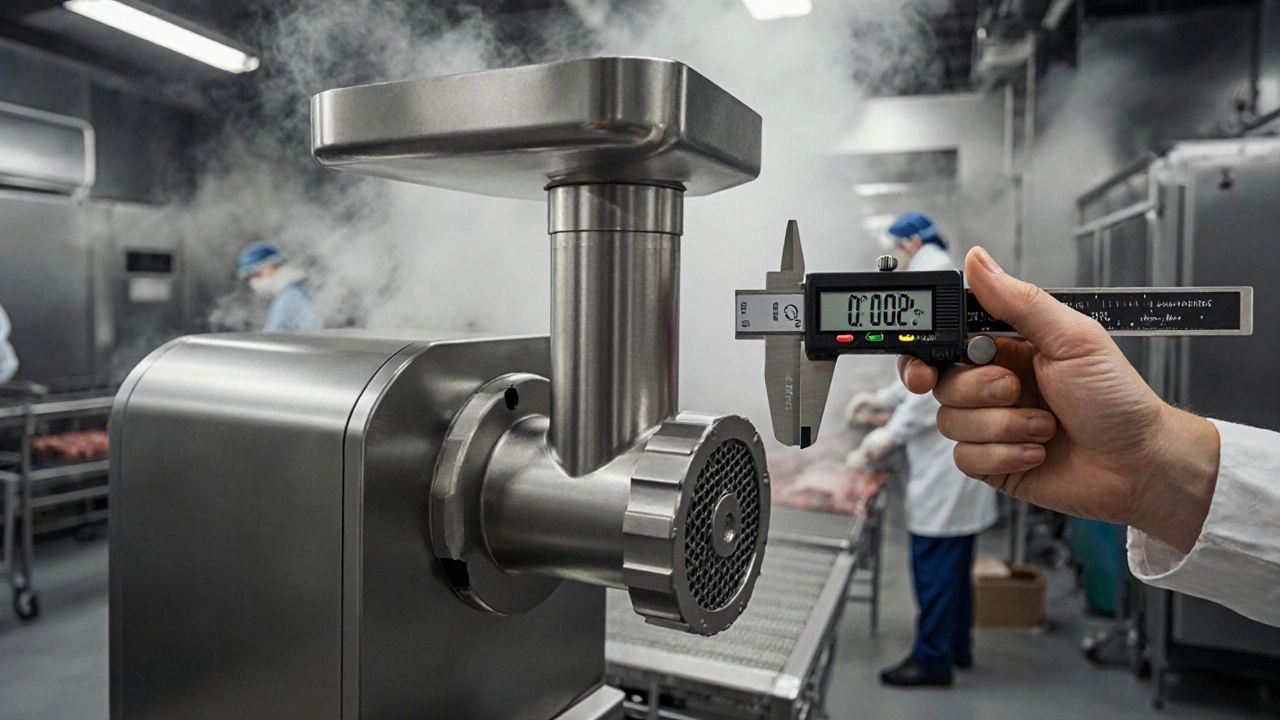
What Is 0.1 Inch Called in Food Processing Units?
0.1 inch is called one-tenth of an inch in food processing. This tiny measurement is critical for machine gaps, blade clearances, and food safety. Learn how it's used, why it matters, and how to measure it accurately.
View More