Ammonia: What It Is, Where It's Used, and Why It Matters in Manufacturing
When you think of ammonia, a colorless gas with a sharp smell, commonly used in cleaning and industrial processes. Also known as NH₃, it's one of the most produced chemicals in the world—and India is a major player in making it. You might know it from the smell of window cleaner, but ammonia is far more than just a household product. It's the backbone of fertilizer production, a key ingredient in refrigeration systems, and even used in water treatment and textile processing. In fact, over 80% of all ammonia made globally goes into farming—to grow the food we eat. That’s why places like Gujarat, home to India’s biggest chemical hubs, have factories running 24/7 turning natural gas and air into this essential compound.
Ammonia doesn’t just show up in farms. It’s quietly everywhere in manufacturing. In textile plants, it helps treat cotton and silk to improve dye absorption. In food processing, it’s used in cooling systems to keep perishables safe during transport. Even in plastic and pharmaceutical production, ammonia derivatives are building blocks for compounds you use every day. But here’s the catch: ammonia is corrosive, toxic if inhaled, and requires careful handling. That’s why factories in India follow strict safety rules, and why you won’t find it casually sold in small stores like bleach or vinegar. It’s not a DIY product—it’s an industrial tool, made by experts, used by professionals.
What’s interesting is how ammonia ties into bigger trends. As India pushes for cleaner agriculture and more efficient supply chains, ammonia’s role is growing—not shrinking. New technologies are turning it into a potential fuel for zero-emission ships and power plants. And with India’s chemical industry expanding fast, the demand for safe, high-quality ammonia production is rising too. You’ll find posts here that dig into how ammonia fits into chemical manufacturing in Gujarat, how it’s measured in food processing units, and why it’s tied to everything from textile quality to environmental regulations. These aren’t random articles—they’re all connected by one thing: ammonia’s quiet but massive influence on how things are made in India.
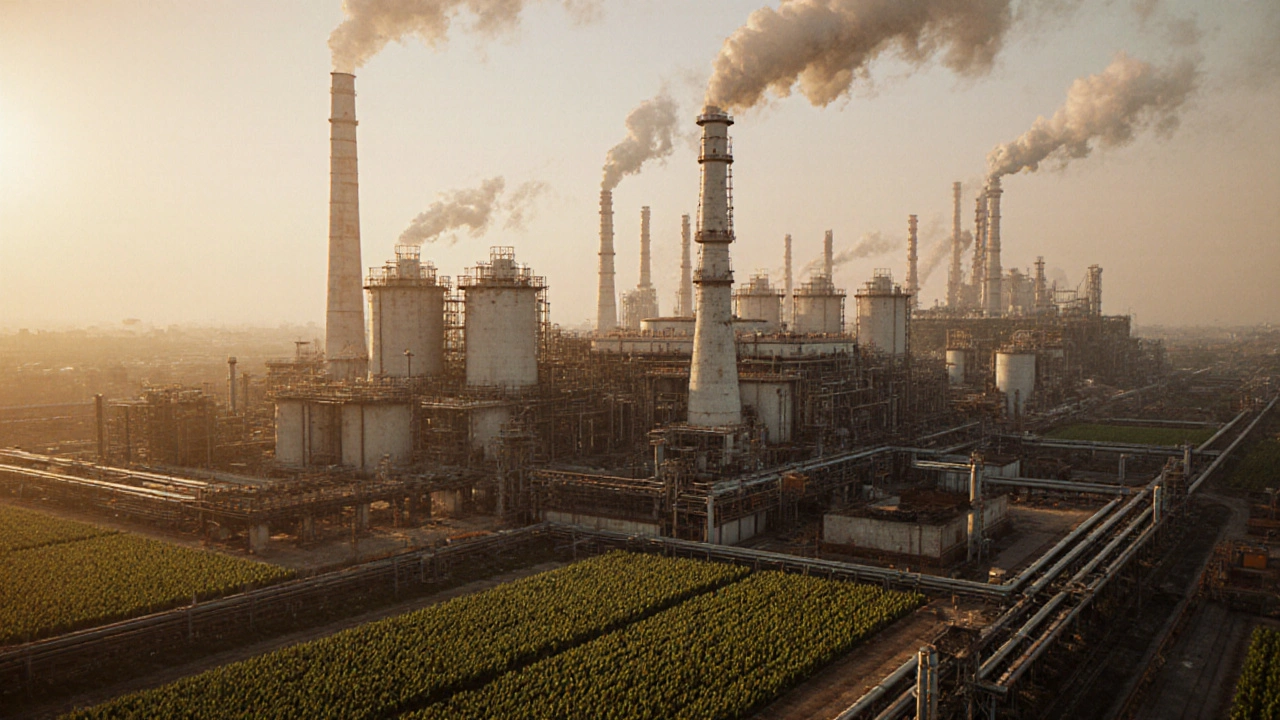
What Are the King of Chemicals? Top Industrial Chemicals Dominating India’s Manufacturing Sector
Sulfuric acid, ammonia, and chlorine are the king of chemicals in India, powering fertilizers, construction, water treatment, and food production. Learn how these bulk chemicals drive the nation’s industrial growth.
View More