Banned Engine India: What’s Really Happening with Engine Regulations in India
When people talk about a banned engine, a type of internal combustion engine restricted by government policy due to emissions or efficiency standards. Also known as non-compliant engine, it typically refers to older, high-pollution engines that no longer meet India’s evolving vehicle emission norms like BS6, they’re not just talking about outdated cars. They’re talking about a nationwide shift in how India produces, sells, and uses vehicles — a shift driven by air quality, public health, and global pressure. This isn’t about banning engines for the sake of it. It’s about forcing a cleaner, smarter future for transportation in a country where 200 million vehicles are on the road and cities like Delhi regularly rank among the most polluted on Earth.
The real story behind banned engines in India ties directly to emission standards, government-mandated limits on pollutants like nitrogen oxides and particulate matter from vehicles. India jumped from BS4 to BS6 in 2020 — skipping BS5 entirely — because the gap between old and new tech was too dangerous to ignore. Engines that worked fine under BS4, like many 2.0L diesel units and older carbureted petrol systems, simply couldn’t meet BS6 without major upgrades. That meant manufacturers had to either scrap them, redesign them, or stop selling them. The result? Hundreds of engine variants vanished from showrooms overnight. You won’t find the 1.2L diesel in the Maruti Alto anymore. The 1.5L diesel in the Hyundai i20? Gone. Even some popular two-wheelers lost their older engines. These weren’t random cuts. They were targeted responses to pollution data showing diesel and older petrol engines were major contributors to urban smog.
But it’s not just about what’s gone — it’s about what’s replacing it. electric vehicles, cars and two-wheelers powered by batteries instead of fossil fuels are now the main alternative, and the government is pushing them hard with subsidies and infrastructure plans. But even among internal combustion engines, the winners are smaller, turbocharged, direct-injection petrol units — cleaner, lighter, and more efficient. Companies like Tata, Mahindra, and Maruti didn’t just update engines. They rebuilt entire platforms. And while some drivers miss the torque of old diesel engines, the trade-off is real: fewer asthma attacks, clearer skies, and less engine noise in crowded neighborhoods. The banned engine isn’t just a technical term — it’s a symbol of India’s industrial transformation. What you’ll find in the posts below are real-world examples of how this shift plays out: from how manufacturers adapted their factories, to how mechanics now handle old engines, to what buyers should look for when replacing a banned unit. This isn’t theory. It’s happening on every street in India right now.
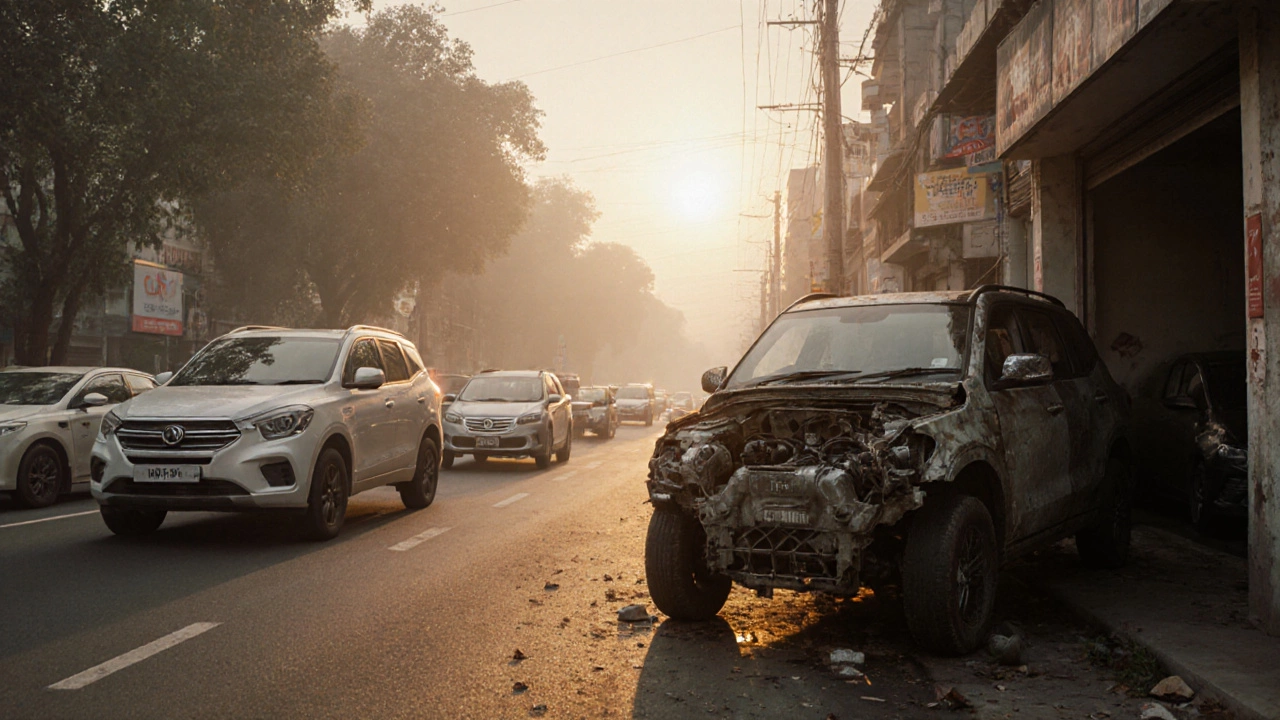
Which Engine Is Banned in India? Understanding the 2025 Emission Rules
India bans all non-BS6 engines from new sales since 2020. Learn which engines are affected, why the ban happened, and what it means for car buyers today.
View More


Jan 31 2025

Mar 27 2025