Kutch Embroidery: Traditional Indian Craft with Modern Appeal
When you think of Kutch embroidery, a distinctive form of hand-stitched textile art from the Kutch region of Gujarat, India, known for its mirror work, geometric patterns, and vibrant threads. Also known as Kutchi embroidery, it’s more than decoration—it’s a living tradition passed down through generations of women in rural communities. This isn’t just needle and thread. It’s storytelling stitched into fabric, where each pattern carries meaning, each color reflects local life, and every tiny mirror catches the sun like a piece of the desert sky.
Kutch embroidery is deeply tied to the identity of communities like the Rabari, Ahir, and Meghwal tribes. These groups use specific stitches—like chain stitch, herringbone, and satin stitch—to create designs that mark identity, celebrate festivals, or even ward off bad luck. The craft uses natural dyes, cotton, wool, and silk, often sourced locally. You’ll see it on shawls, dupattas, bags, and even home textiles like cushion covers and wall hangings. It’s not mass-produced. Each piece takes days, sometimes weeks, to finish by hand. That’s why it’s rare, valuable, and quietly resistant to fast fashion.
What makes Kutch embroidery stand out isn’t just how it looks, but how it’s made. Unlike machine-made prints, every stitch is intentional. The mirror work? It’s not just shiny—it’s symbolic, believed to reflect negative energy away. The bold reds, yellows, and greens? They come from plants and minerals, not synthetic dyes. And the patterns? They’re not copied from books—they’re remembered, taught by mothers to daughters, and adapted over time. This craft supports hundreds of small artisan groups in Gujarat, giving them income, dignity, and a way to keep their culture alive.
If you’ve ever wondered how something so delicate can survive in a world of cheap imports, the answer is simple: people still care. From urban homes in Mumbai to boutique stores abroad, Kutch embroidery finds its place because it carries something no machine can replicate—human touch, history, and heart. Below, you’ll find real stories, practical insights, and thoughtful takes on how this craft connects to today’s demand for authentic, handmade goods.
What Is Gujarat Famous Cloth? Top Traditional Textiles from India's Weaving Heartland
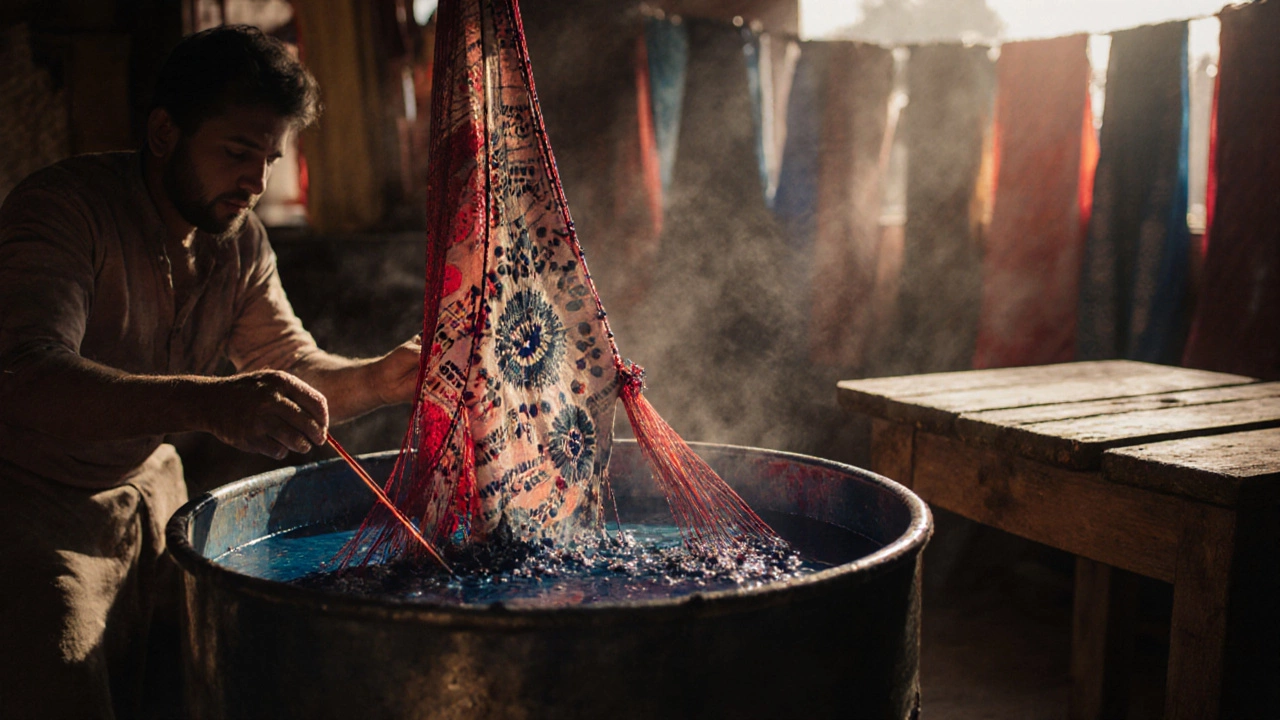
Gujarat is famous for its handwoven textiles like Bandhani, Patola silk, and Kutch embroidery. These fabrics are made using centuries-old techniques, with each piece reflecting deep cultural roots and artisan skill.
View More

Mar 29 2025