Manufacturing Future-Proofing Estimator
Evaluate how well your current operations align with the high-growth sectors predicted for 2036. Answer five quick questions to receive a strategic forecast.
Your Strategic Forecast for 2036
Risk Level: LowAlignment with High-Growth Trends
Strengths & Opportunities
Areas for Improvement
You’re looking at your workshop or your business plan and wondering: is this going to matter in ten years? It’s a fair question. The manufacturing landscape shifts faster than most people realize. What feels stable today-like traditional assembly lines or basic packaging-might look like horse-drawn carriages by the time we hit 2036. But here’s the good news: while some sectors shrink, others explode. You don’t need a crystal ball; you just need to spot where the money, the laws, and the customer habits are heading.
Right now, we are standing on the edge of a massive industrial reset. It isn’t just about robots replacing humans-that conversation is old news. The real boom in the next decade will come from industries that solve specific, urgent problems: climate compliance, aging populations, and supply chain fragility. If you want to build a manufacturing business that doesn’t just survive but thrives through 2036, you need to look beyond volume and focus on value, sustainability, and adaptability.
The Green Revolution Is No Longer Optional
Let’s start with the biggest driver: Sustainable Manufacturing. This isn't just a buzzword anymore; it's a regulatory mandate and a consumer demand. By 2036, carbon taxes won't be hypothetical-they'll be standard operating costs. Companies that can prove their products have a low carbon footprint will win contracts simply because they save their buyers money on penalties.
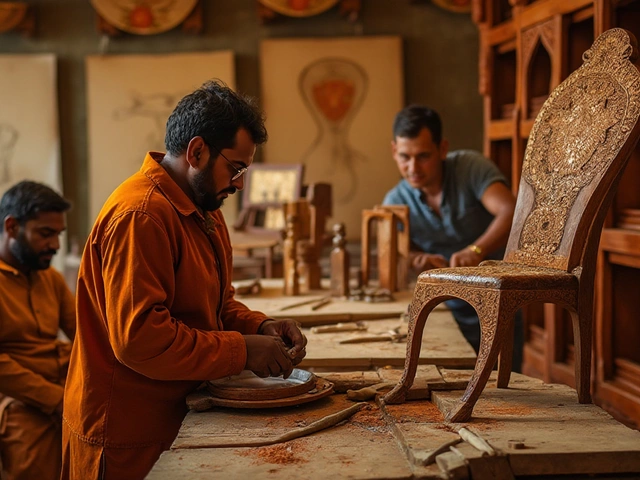
Think about Circular Economy practices. Instead of making something, selling it, and forgetting about it, manufacturers are designing for disassembly. Imagine a furniture maker who designs chairs so easily taken apart that every screw and piece of wood can be reused or recycled without contamination. That’s not just eco-friendly; it’s efficient material sourcing. In ten years, "waste" will be considered a design flaw.
If you’re in Chemical Manufacturing, the shift toward bio-based materials is accelerating. We’re moving away from petroleum-derived plastics toward biopolymers made from algae, corn starch, or agricultural waste. These materials degrade faster and require less energy to produce. Early adopters in this space are already seeing margins improve as raw material costs for traditional plastics fluctuate wildly due to oil prices.
Smart Factories and AI Integration
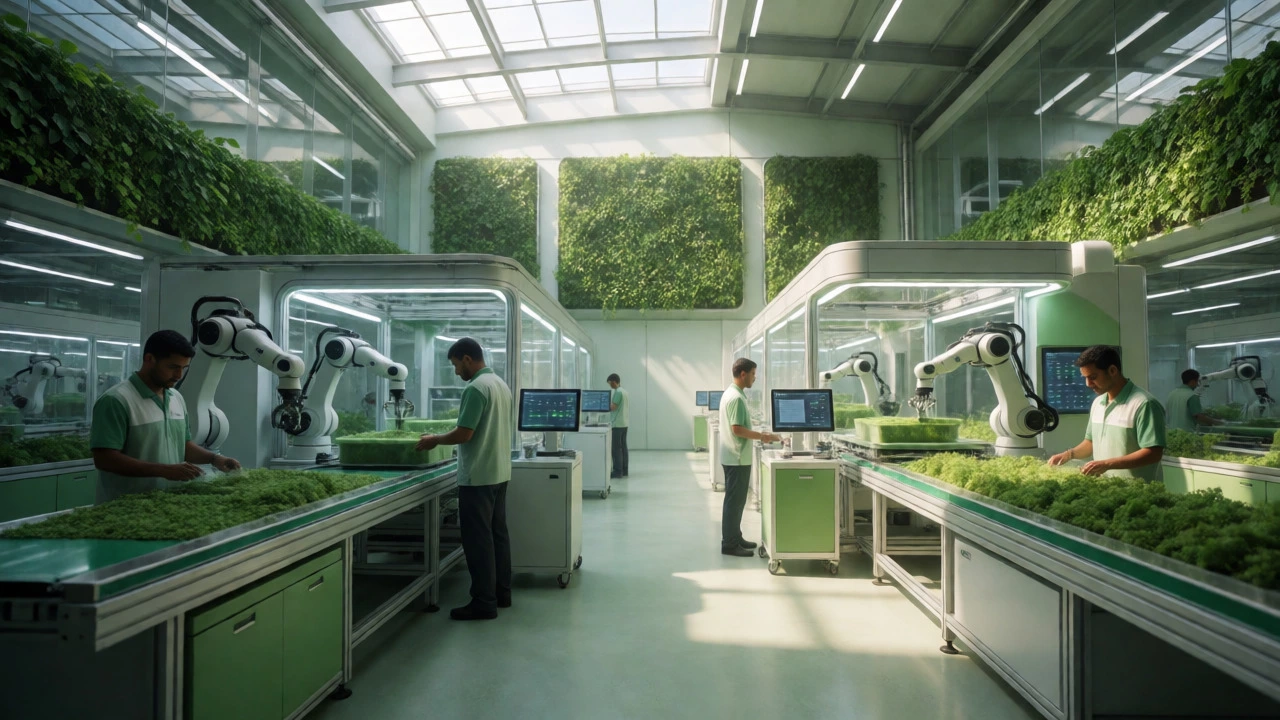
You’ve heard of the Internet of Things (IoT). But in ten years, it won’t just be about connecting machines; it’ll be about them talking to each other without human intervention. This is the era of Autonomous Production. Small and medium-sized manufacturers (SMMs) often fear AI, thinking it’s only for giants like Tesla or Foxconn. Wrong. Cloud-based AI tools are becoming cheap enough for a 50-person shop to predict machine failure before it happens.
Consider predictive maintenance. Currently, many factories fix machines when they break. This causes downtime, lost revenue, and rushed repairs. By 2036, sensors will monitor vibration, temperature, and sound in real-time. An AI algorithm will flag a bearing that’s wearing out two weeks before it fails. You schedule the replacement during a quiet shift. No emergency overtime. No missed deadlines. This efficiency alone can boost profitability by 15-20%.
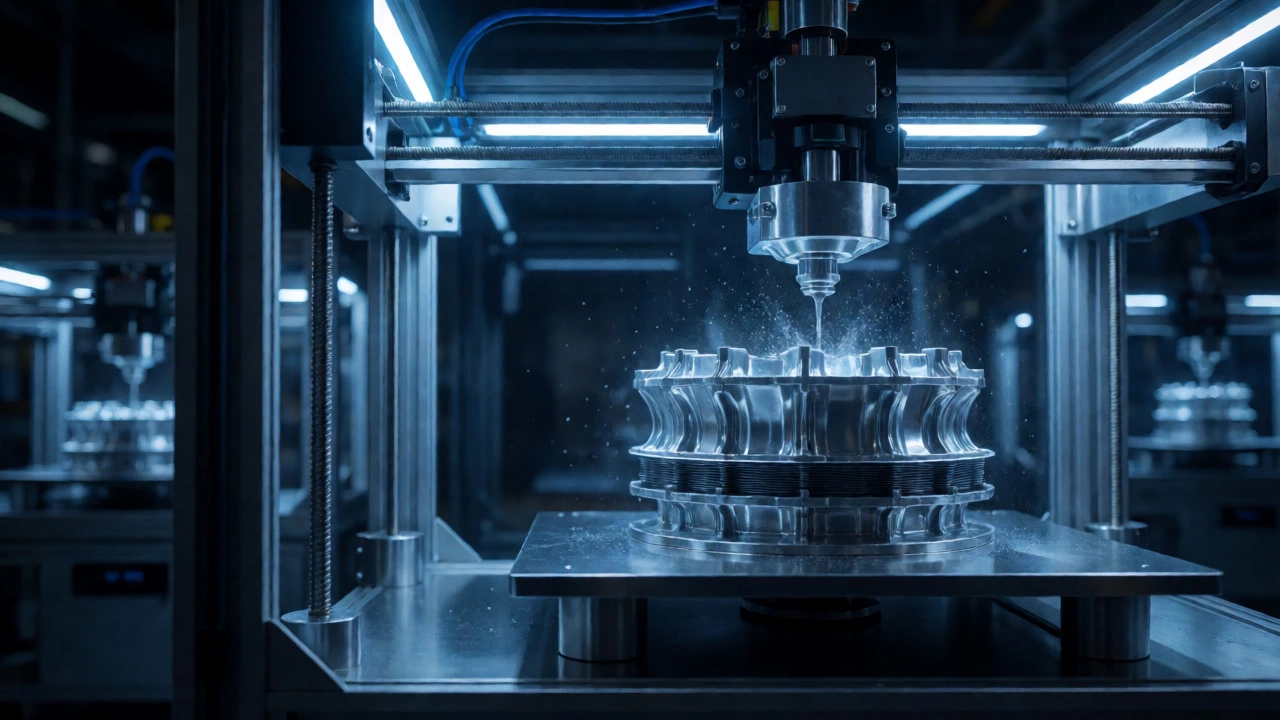
Also, look at Additive Manufacturing (3D printing). It’s moving from prototyping to mass production. Why keep huge warehouses of spare parts when you can print them on demand? For automotive and aerospace components, this reduces inventory costs drastically. If you run a metal fabrication shop, investing in large-scale metal 3D printers now positions you perfectly for the aftermarket parts boom of the late 2030s.
Health-Tech and Personalized Wellness Products
Our population is getting older, and that demographic shift creates a massive market. People aren’t just living longer; they want to live healthier. This drives demand for specialized medical devices, ergonomic home equipment, and personalized nutrition supplements.
Medical Device Manufacturing is booming, but not just for hospitals. Think about at-home diagnostic kits, wearable health monitors, and assistive robotics for elderly care. A company that manufactures lightweight, durable frames for mobility scooters or custom-fit orthopedic inserts has a growing customer base that pays premium prices for comfort and durability.
Then there’s Personalized Nutrition. Generic multivitamins are losing appeal. Consumers want supplements tailored to their DNA or gut microbiome. This requires small-batch manufacturing capabilities. If you can set up a flexible production line that handles thousands of unique SKUs (Stock Keeping Units) efficiently, you’ll capture the high-margin wellness market. Traditional bulk manufacturing struggles here; agile micro-factories thrive.
Reshoring and Local Supply Chains
Globalization had its run, but recent disruptions taught businesses a hard lesson: long supply chains are fragile. Companies are bringing production closer to home-a trend known as reshoring. This benefits local manufacturers who can offer speed and reliability over rock-bottom labor costs.
In the US and Europe, governments are offering incentives for domestic production of critical goods like semiconductors, batteries, and pharmaceuticals. Even if you don’t make chips, you might make the casings, the connectors, or the packaging. Being part of the local ecosystem means shorter lead times. When a competitor waits six weeks for parts from Asia, you deliver in three days. That agility is worth more than saving a few cents per unit on shipping.
| Sector Type | Example Industries | Key Growth Driver | Risk Factor |
|---|---|---|---|
| Growing | Bio-plastics, EV Components, Medical Devices | Regulation & Demographics | High R&D Costs |
| Stable | Packaging, Basic Textiles, Food Processing | Consistent Demand | Low Margins |
| Declining | Fossil Fuel Parts, Fast Fashion Bulk | Shifting Consumer Values | Obsolescence |

Energy Storage and Electric Vehicle Infrastructure
The transition to electric vehicles (EVs) is undeniable. But the bottleneck isn’t just cars; it’s infrastructure. Charging stations, grid storage units, and battery recycling facilities are all undersupplied. This creates opportunities for manufacturers who specialize in power electronics, thermal management systems, and heavy-duty cabling.
Battery recycling is particularly interesting. Lithium-ion batteries have a lifespan of 8-10 years. By 2036, we’ll face a tsunami of used batteries. Extracting valuable metals like lithium, cobalt, and nickel from these packs is cheaper and cleaner than mining new ore. Setting up a facility that processes end-of-life batteries into raw materials puts you at the start of a circular loop that will dominate the energy sector.
How to Position Your Business Today
You don’t need to pivot entirely overnight. Start small. Audit your current processes for waste. Can you reduce energy use? Can you source materials locally? Look at your product design. Is it easy to repair? If yes, highlight that. If no, redesign it.
Invest in digital literacy. Train your staff to use data analytics tools. You don’t need a data scientist; you need operators who understand what the dashboards tell them. And finally, network locally. Join regional manufacturing clusters. Collaboration often beats competition when supply chains are tight.
Will AI replace human workers in manufacturing?
Not entirely. AI will handle repetitive, dangerous, and precision-heavy tasks. However, human oversight, complex problem-solving, and creative quality control remain essential. The role of workers will shift from manual operation to monitoring and managing automated systems. Jobs will change, but skilled technicians will still be in high demand.
Is sustainable manufacturing expensive to start?
Initial setup costs can be higher, especially for green technology upgrades. However, long-term savings on energy, waste disposal, and raw materials often offset these costs within 3-5 years. Additionally, many governments offer grants and tax credits specifically for adopting sustainable practices, which can significantly lower the barrier to entry.
What is the biggest risk for small manufacturers in the next decade?
Resistance to change is the biggest risk. Businesses that ignore digital integration or fail to adapt to environmental regulations may find themselves priced out of the market by more efficient competitors. Another major risk is supply chain dependency on single foreign sources; diversifying suppliers is crucial for resilience.
Which niche manufacturing idea has the lowest startup cost?
Custom packaging and small-batch food processing often have lower barriers to entry compared to heavy machinery. Using contract manufacturing partnerships can also reduce upfront capital needs. For tech-oriented niches, 3D printing services require less floor space and tooling investment than traditional injection molding.
How does an aging population affect manufacturing?
It increases demand for healthcare-related products, ergonomic home goods, and assistive technologies. It also creates a labor shortage, forcing manufacturers to automate more tasks. Products designed for ease of use and accessibility will see higher sales volumes as the primary consumer base ages.
Dec 25 2024

Mar 19 2025

Feb 13 2025