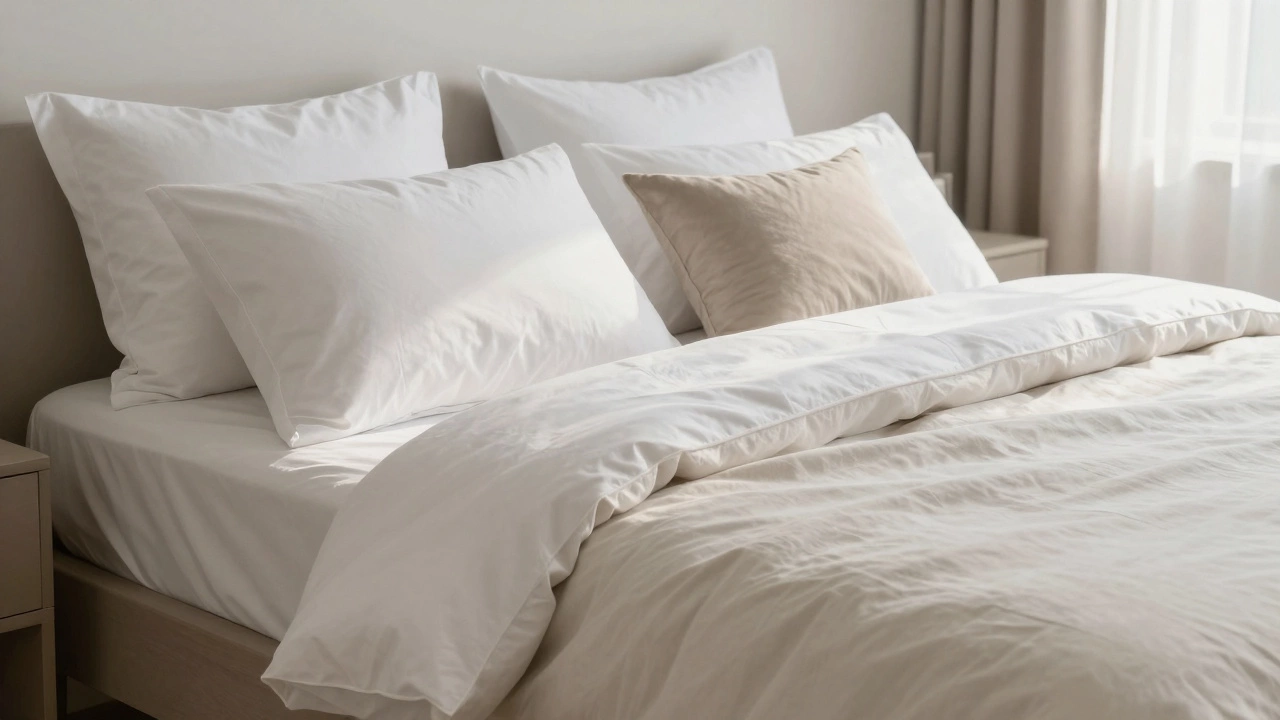
When people talk about bedding, they’re usually referring to the stuff you sleep on - but that term doesn’t tell the whole story. If you’ve ever walked into a store and been confused by labels like bed linens, bed set, or sleep set, you’re not alone. These aren’t just fancy synonyms. They’re different ways people describe the same things, depending on where they are, what they’re buying, or even what decade they grew up in.
Bedding isn’t just sheets
Most folks think of bedding as just sheets, but that’s like calling a car “tires.” Sure, sheets are part of it, but bedding includes everything that goes on or around your mattress to make sleeping comfortable and look neat. That means pillows, pillowcases, duvet covers, blankets, mattress pads, and even decorative throw pillows you never sleep on but keep for looks.
The word bedding itself is broad. It’s the umbrella term. If you’re shopping online or reading a product description, “bedding” usually means the whole package - not just one piece. But in everyday talk, people often use other words to mean the same thing. And that’s where the confusion starts.
What do people mean when they say “bed linens”?
Bed linens is probably the most accurate alternative to “bedding.” It’s used by retailers, interior designers, and even in hotel industry manuals. It specifically refers to the washable, fabric layers that touch your skin: sheets, pillowcases, and sometimes flat sheets and fitted sheets together as a set.
Here’s the catch: bed linens don’t include blankets, duvets, or comforters. Those are considered “bed coverings.” So if someone says, “I need new bed linens,” they’re probably talking about sheets and pillowcases - not the fluffy top layer. This distinction matters when you’re replacing items. You wouldn’t buy a duvet cover and call it “linen.”
Is “bed set” the same as bedding?
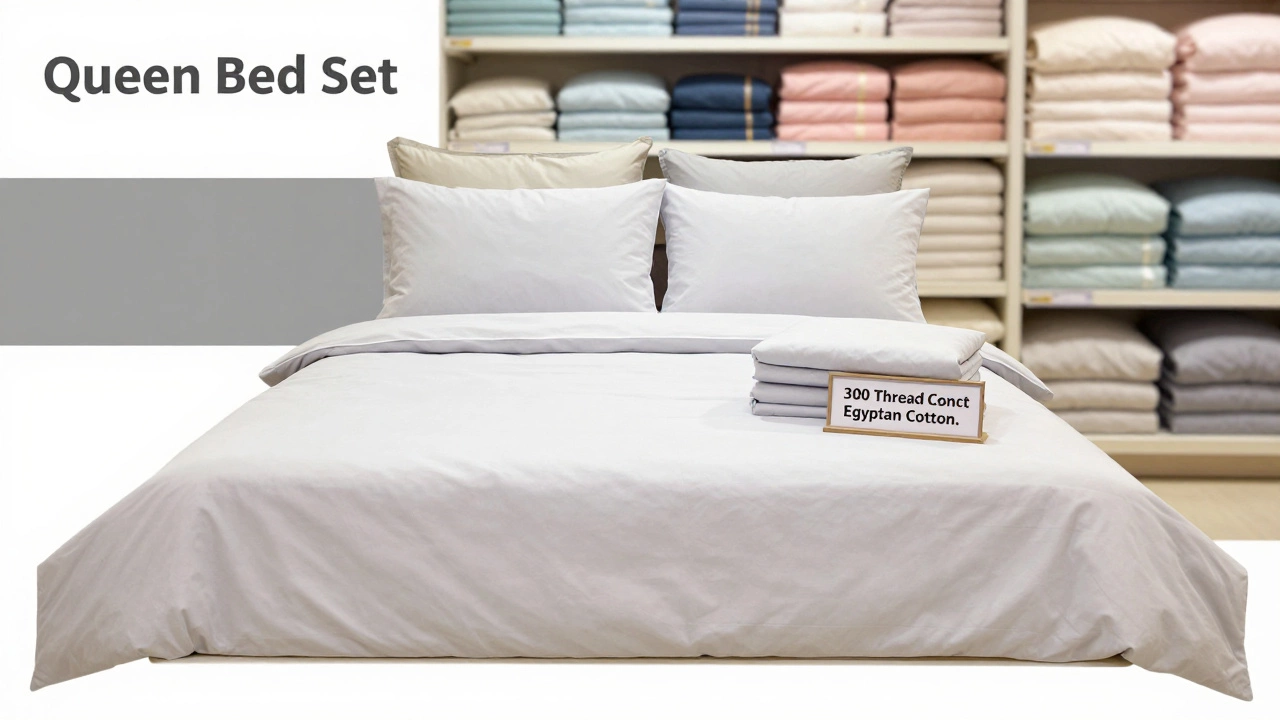
Yes - but only if you’re buying a bundle. A bed set is a marketing term. Stores use it to sell matching pieces together: a fitted sheet, a flat sheet, two pillowcases, and sometimes a duvet cover. It’s a package deal. You’ll see it on tags like “Queen Bed Set - 4-Piece” or “Luxury Bed Set with 300 Thread Count.”
It’s not a technical term. No one says “I’m washing my bed set” when they do laundry. But if you’re shopping, “bed set” is the easiest way to find everything that matches. It’s also common in countries like India, the UK, and Australia, where bedding is often sold as a coordinated unit.
What’s a “sleep set”?
Sleep set is less common but still used - especially in North America. It’s a broader term than “bed linens.” A sleep set includes sheets, pillowcases, a comforter or duvet, and sometimes a mattress pad. Think of it as everything you need to sleep comfortably, not just what goes on the mattress.
It’s often used in furniture stores or mattress retailers. If you walk into a store like Sleep Number or Mattress Firm and ask for a sleep set, they’ll show you the whole combo: mattress + bedding. It’s a sales term designed to make you think you’re getting a complete solution.
Why do these names even exist?
It’s all about context. Retailers need terms that sell. Manufacturers need terms that describe function. And consumers just want to know what to ask for.
- “Bedding” is the general term - used in dictionaries, manuals, and formal settings.
- “Bed linens” is the precise term - used by cleaners, designers, and serious homeowners.
- “Bed set” is the shopping term - used by stores to sell matching items.
- “Sleep set” is the bundled term - used by mattress companies to upsell.
There’s no right or wrong. It’s like calling a car a “vehicle,” “ride,” “auto,” or “sedan.” Each word fits a different situation.
What do hotels call it?
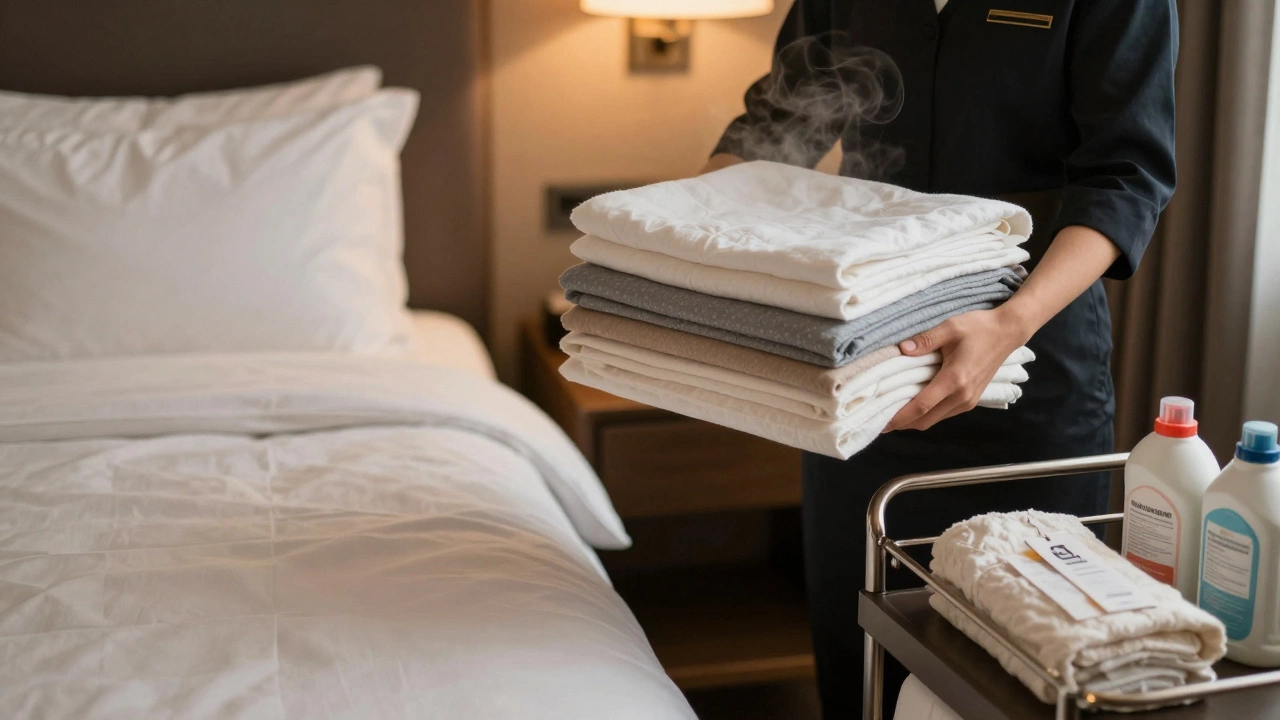
Hotels use “linens” almost exclusively. You’ll hear staff say, “We need to restock the linens,” meaning sheets and pillowcases. They rarely say “bedding” because they’re focused on what gets washed. The duvet? That’s a “comforter.” The mattress pad? “Underpad.” They break it down by function, not by the whole package.
High-end hotels often specify thread count, fabric type (like Egyptian cotton or sateen), and whether it’s percale or sateen weave. They don’t say “bedding.” They say, “We use 400-thread-count percale sheets with matching cotton pillowcases.” Precision matters there.
What should you call it?
If you’re talking to your partner or a friend - say “bedding.” It’s simple and understood.
If you’re shopping online and want sheets and pillowcases - search for “bed linens.”
If you’re buying a matching set - look for “bed set.”
If you’re buying a new mattress and want the whole package - ask for a “sleep set.”
There’s no need to overthink it. But knowing these terms helps you avoid mistakes. Imagine ordering “bedding” and getting only sheets, then realizing you still need a duvet cover. Or buying a “sleep set” and finding out it doesn’t include pillowcases. You’ll save time and money if you know what each word really means.
Common mistakes people make
- Thinking “bedding” includes a mattress - it doesn’t. The mattress is separate.
- Calling a comforter “bed linens” - it’s a covering, not a linen.
- Buying a 4-piece bed set and assuming it includes a duvet - sometimes it doesn’t. Always check the product details.
- Using “bedding” when you mean “bedspread” - those are different. A bedspread is decorative and goes over everything.
Also, don’t assume thread count tells you everything. A 200-thread-count cotton sheet can feel better than a 600-thread-count polyester one. Fabric type matters more than numbers.
Final takeaway
Bedding is the catch-all word. But if you want to be clear - especially when shopping or replacing items - use the right term for the right job. Bed linens for sheets. Bed set for matching pieces. Sleep set for the full package. And remember: none of these include the mattress. That’s its own thing.
Next time you’re in a store, look at the labels. You’ll start seeing how language shapes what you buy. And once you know the difference, you’ll never accidentally order the wrong thing again.
Is bedding the same as bed linens?
Not exactly. Bedding is the broader term that includes sheets, pillowcases, duvets, blankets, and mattress pads. Bed linens refer only to the washable fabric layers that touch your skin - sheets and pillowcases. So all bed linens are part of bedding, but not all bedding is bed linens.
What’s included in a bed set?
A bed set usually includes a fitted sheet, a flat sheet, and two pillowcases. Sometimes it adds a duvet cover. It’s designed to match in color and fabric. Always check the product description - some bed sets don’t include a comforter or mattress pad.
Do hotels use the term “bedding”?
Hotels rarely say “bedding.” They use “linens” to refer to sheets and pillowcases. They call the top layer a “comforter” or “duvet.” The term “bedding” is too vague for their needs - they need to track what gets washed, replaced, or laundered.
Can I use “sleep set” and “bedding” interchangeably?
Only in casual conversation. A sleep set usually includes sheets, pillowcases, and a comforter or duvet - sometimes even a mattress pad. Bedding is the umbrella term. So a sleep set is a type of bedding, but not all bedding is sold as a sleep set.
What’s the difference between a bedspread and bedding?
A bedspread is decorative and goes over the top of your comforter or duvet. It’s not meant for sleeping under. Bedding refers to functional layers you sleep on - sheets, pillowcases, blankets, and duvets. You can have bedding without a bedspread, but you can’t sleep comfortably with just a bedspread.

Nov 20 2025