Rug Material Suitability Calculator
Tell us about your space:
Alternative Options
Select your preferences and click calculate to see which rug material is right for you.
Walk into a room with a cheap, flat rug, and you know it immediately. Your feet sink into nothingness, the pattern looks pixelated from three feet away, and after one year, it’s matted down like a dog bed. Now walk into a room with a high-quality rug. The air feels softer. The colors have depth. It anchors the furniture instead of just sitting on top of the floor. The difference isn’t magic; it’s material science and craftsmanship.
You might be wondering what actually makes a rug "high quality." Is it price? Brand name? Or is there something tangible you can feel under your fingertips? If you are looking for the single best quality rug type, the answer usually points to natural fibers, specifically wool. But that is only half the story. The construction method matters just as much as the fiber itself.
The Gold Standard: Why Wool Reigns Supreme
If you want the absolute best balance of durability, comfort, and aesthetics, wool rugs are the industry standard for high-quality flooring due to their natural resilience and stain resistance. Wool comes from sheep, but not all wool is created equal. New Zealand wool, Tibetan wool, and Merino wool each offer different textures, but they share key properties that synthetic fibers struggle to replicate.
Wool fibers are naturally crimped. Think of this crimp as tiny springs inside every strand. When you walk on a wool rug, those springs compress and then bounce back. This is why a good wool rug doesn't get permanently flattened in high-traffic areas like hallways or living rooms. Synthetic fibers like nylon lack this natural memory; they tend to crush over time unless treated with expensive chemical processes.
Another huge advantage is stain resistance. Wool contains lanolin, a natural wax that repels water and dirt. Spill coffee on a wool rug, and if you blot it quickly, it often disappears completely. With many synthetics, liquids soak in instantly, leading to permanent staining or odors. Wool also burns slowly and self-extinguishes, which adds a layer of safety that plastics (like polypropylene) do not have.
- Durability: Can last 20-50 years with proper care.
- Comfort: Soft underfoot with natural insulation properties.
- Maintenance: Naturally resists dust mites and mold.
The Luxury Choice: Silk and Blends
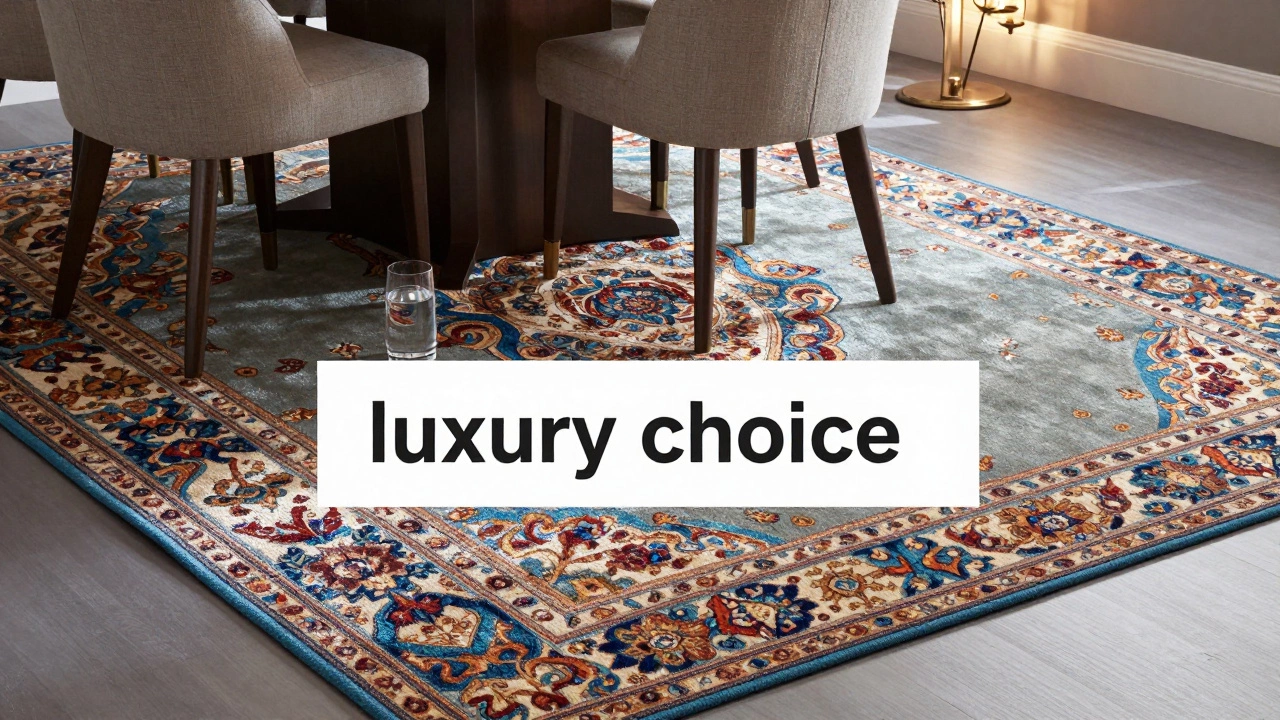
If wool is the workhorse, silk rugs are the pinnacle of luxury flooring, offering unmatched sheen and intricate detail at a premium cost. Silk is incredibly strong-strand for strand, it is stronger than steel-but it is delicate in application. Pure silk rugs are stunning. They catch light beautifully, making patterns pop with vibrant, jewel-toned colors. However, they are not practical for high-traffic areas. A pure silk rug belongs in a formal dining room or a low-use study, not in a playroom or entryway.
This is where blends come in. Many high-end manufacturers mix silk with wool. You might see a label that says "80% wool, 20% silk." This gives you the durability of the wool base with the shimmering highlights of the silk. It’s a smart compromise for people who want that luxurious look without sacrificing too much longevity. Just remember: silk requires professional cleaning and immediate attention to spills. It is a high-maintenance investment.
The Practical Contenders: High-Quality Synthetics
Let’s be honest: natural fibers aren’t for everyone. If you have pets, young children, or a tight budget, wool and silk might feel risky. That’s where modern synthetics step in. Not all synthetics are bad. In fact, some engineered fibers outperform natural ones in specific scenarios.
Nylon rugs are the most durable synthetic option, ideal for high-traffic areas and homes with pets. Nylon is tough. It resists abrasion better than almost any other fiber. If you need a rug for a staircase or a busy kitchen, nylon is your best bet. Modern nylon is also treated to resist stains and fading, so it holds up well against sunlight and accidents. The downside? It can feel plasticky and lacks the warmth of natural fibers. It also tends to attract static electricity.
Then there is Polypropylene (Olefin), which is a moisture-resistant synthetic perfect for outdoor use or damp basements. Polypropylene is cheap, colorful, and virtually indestructible when it comes to moisture. It won’t rot, mildew, or fade easily. This makes it the go-to choice for outdoor patios or indoor-outdoor spaces. However, it has poor resilience. If you drag heavy furniture across it, it will stay crushed. It also attracts lint and pet hair more than wool does.
| Material | Durability | Stain Resistance | Best For | Price Range |
|---|---|---|---|---|
| Wool | High | Good (Natural) | Living Rooms, Bedrooms | $$$ - $$$$$ |
| Silk | Low (Delicate) | Poor | Formal Areas, Low Traffic | $$$$$ |
| Nylon | Very High | Excellent (Treated) | Hallways, Kitchens, Pet Homes | $ - $$$ |
| Polypropylene | Medium | Excellent | Outdoors, Basements | $ - $$ |
Weave Matters: Construction Techniques
You can have the finest wool in the world, but if it’s woven poorly, it won’t last. The construction method determines how long the rug survives daily wear. Here is what you need to look for:
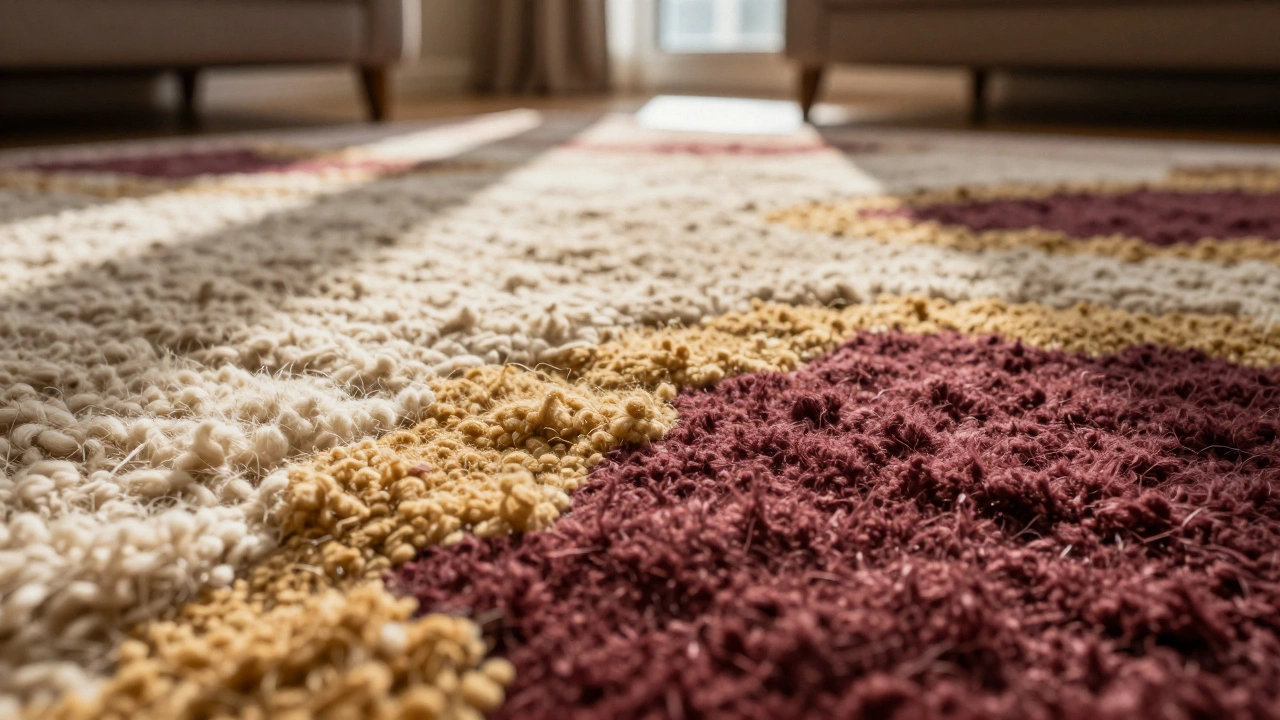
- Hand-Knotted: This is the highest level of craftsmanship. Each knot is tied by hand around the warp threads. These rugs are art pieces. They can last generations and often increase in value. Look for a high knot count (knots per square inch), but don’t obsess over it. A lower knot count with larger, plush knots can sometimes feel softer and more durable than a tightly packed, thin carpet.
- Hand-Tufted: Faster to produce than hand-knotted, these rugs use a gun-like tool to push yarn through a backing. They are softer and cheaper but less durable because the backing can degrade over time. Good for bedrooms, less so for high-traffic zones.
- Machine-Made: Most affordable. Quality varies wildly. Look for dense pile and sturdy secondary backings. Some machine-made rugs mimic hand-knotted styles surprisingly well, but they rarely hold up as long.
Avoid "cut-pile" rugs in high-traffic areas if you hate seeing footprints. Cut-pile (where the loops are cut open) shows every vacuum line and shoe print. Loop-pile or berber styles hide wear better, though they can snag if you have pets with claws.
How to Test Quality Before You Buy
You don’t need a lab coat to check if a rug is worth your money. Use these simple tests:
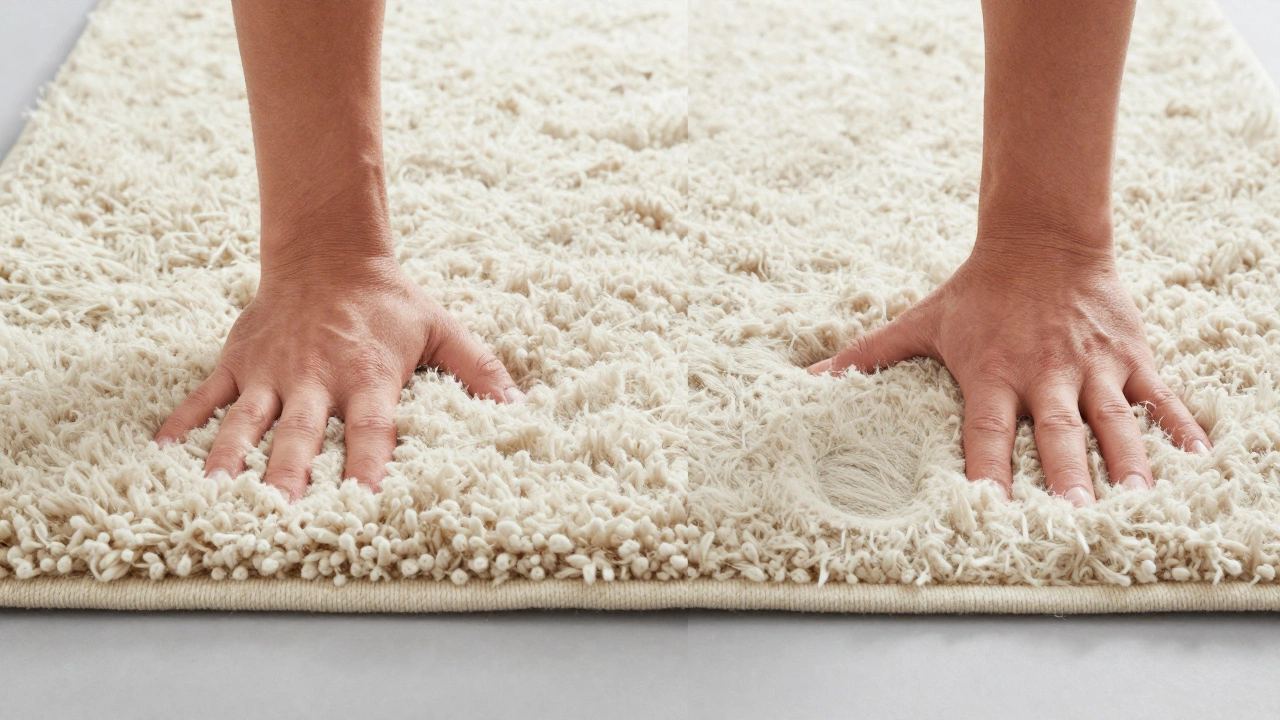
- The Squish Test: Press your hand firmly into the pile. Does it spring back quickly? If it stays indented, the density is too low, and it will mat down fast.
- The Back Check: Flip the rug over. You should see the pattern clearly through the backing. If the backing is thick and opaque, it might be hiding a thin, cheap weave. Also, check for loose threads or uneven edges.
- The Sniff Test: Natural fibers smell earthy or neutral. Strong chemical odors often indicate cheap dyes or synthetic treatments that can off-gas in your home.
- The Pull Test: Gently pull on a few strands. In a quality rug, the fibers should resist coming out. If they slip out easily, the weaving is weak.
Maintenance Tips to Extend Life
Even the best rug will fail if you neglect it. Vacuum regularly-at least once a week-to prevent grit from grinding down the fibers. Rotate your rug every six months to ensure even wear. For spills, blot, don’t rub. Rubbing pushes the stain deeper into the foundation. And yes, professional cleaning every 12-18 months is non-negotiable for high-traffic areas. It removes embedded dirt that vacuums can’t reach.
Is wool really better than synthetic for pet owners?
Yes, generally. While synthetics like nylon are durable, wool is naturally stain-resistant and hypoallergenic. Pets shed dander and drool, and wool handles these organic messes better than plastic-based fibers, which can trap odors. Just make sure to vacuum frequently to remove hair.
What is the most durable rug material for high traffic?
Nylon is the most durable synthetic, followed closely by high-density wool. For extreme traffic, look for a wool-nylon blend or a tightly woven hand-knotted wool rug. Avoid pure silk or low-pile polypropylene in these areas.
Do handmade rugs last longer than machine-made ones?
Usually, yes. Hand-knotted rugs are constructed with greater tension and density, allowing them to withstand decades of use. Machine-made rugs vary, but most are designed for shorter lifespans (5-10 years). Hand-tufted rugs fall in between but require careful maintenance to prevent backing failure.
How do I know if a rug is authentically hand-knotted?
Check the fringe. On a true hand-knotted rug, the fringe is part of the rug’s foundation-it’s continuous with the vertical warp threads. If the fringe is sewn on separately, it’s likely hand-tufted or machine-made. Also, inspect the back; the pattern should be visible and symmetrical.
Are natural fiber rugs eco-friendly?
Wool and cotton are biodegradable and renewable, making them more eco-friendly than petroleum-based synthetics like nylon and polyester. However, consider the dyeing process. Look for rugs certified by organizations like Green Label Plus or OEKO-TEX to ensure low volatile organic compounds (VOCs).