Food Truck Profitability Calculator
Enter your item details below to see if you are meeting the industry standard for healthy margins (typically 65-75% for food trucks).
Item Details
Profit Analysis
Gross Margin
You quit your day job, bought a used step-van, and spent six months getting your health permits sorted. You’re ready to serve the world. But here’s the cold hard truth that keeps most food trucks out of business within three years: it’s not about how good your food tastes. It’s about your margins. If you’re selling gourmet lobster rolls for $18 but spending $9 on ingredients, labor, and waste, you’re working for free. The question isn't just "what do people like to eat?" It's "what can I sell at a price point where I actually keep money after paying for gas, insurance, and the chef who hates me right now?"
| Item Type | Avg Ingredient Cost | Sale Price | Gross Margin | Speed of Service |
|---|---|---|---|---|
| Tacos (Corn tortilla) | $0.85 | $4.00 | 78% | Fast (Assembly) |
| Gourmet Burger | $3.50 | $12.00 | 70% | Medium (Cooking) |
| Coffee & Pastries | $0.60 | $4.50 | 86% | Very Fast |
| Loaded Fries | $0.40 | $6.00 | 93% | Fast (Frying) |
| Seafood Platter | $8.00 | $16.00 | 50% | Slow (Prep) |
The Math Behind the Menu
Before you even think about recipes, you need to understand the unit economics. In the restaurant industry, the general rule of thumb is that your Cost of Goods Sold (COGS) should be between 28% and 35% of the menu price. For a food truck, because your overhead is lower than a brick-and-mortar but your volume is unpredictable, you want to push that COGS closer to 25-30%. This means if you buy ingredients for $1.00, you need to sell the finished product for at least $3.33 to $4.00.
Why does this matter? Because food processing in a mobile environment requires strict portion control and waste management. A burger patty costs more than a scoop of ice cream base. A steak takes ten minutes to cook properly; a taco takes thirty seconds to assemble. Time is literally money when you have a line around the block. If you can’t turn over tables (or customers) quickly, your daily revenue caps out regardless of how delicious your signature dish is.
Carbohydrates Are Your Best Friend
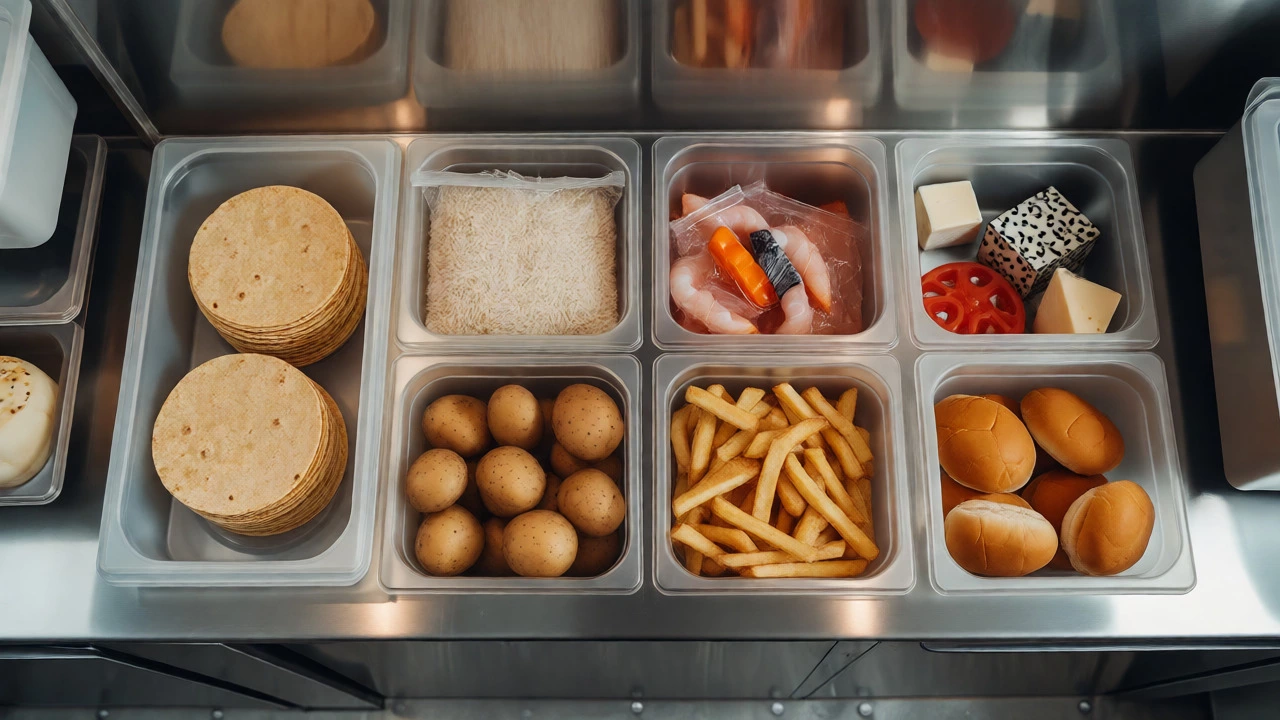
If you look at the highest-performing food trucks in major cities like Austin, Los Angeles, or New York, you’ll notice a pattern: carbs dominate. Why? Because flour, corn, rice, and potatoes are dirt cheap. They fill people up, which increases perceived value, and they are incredibly versatile.
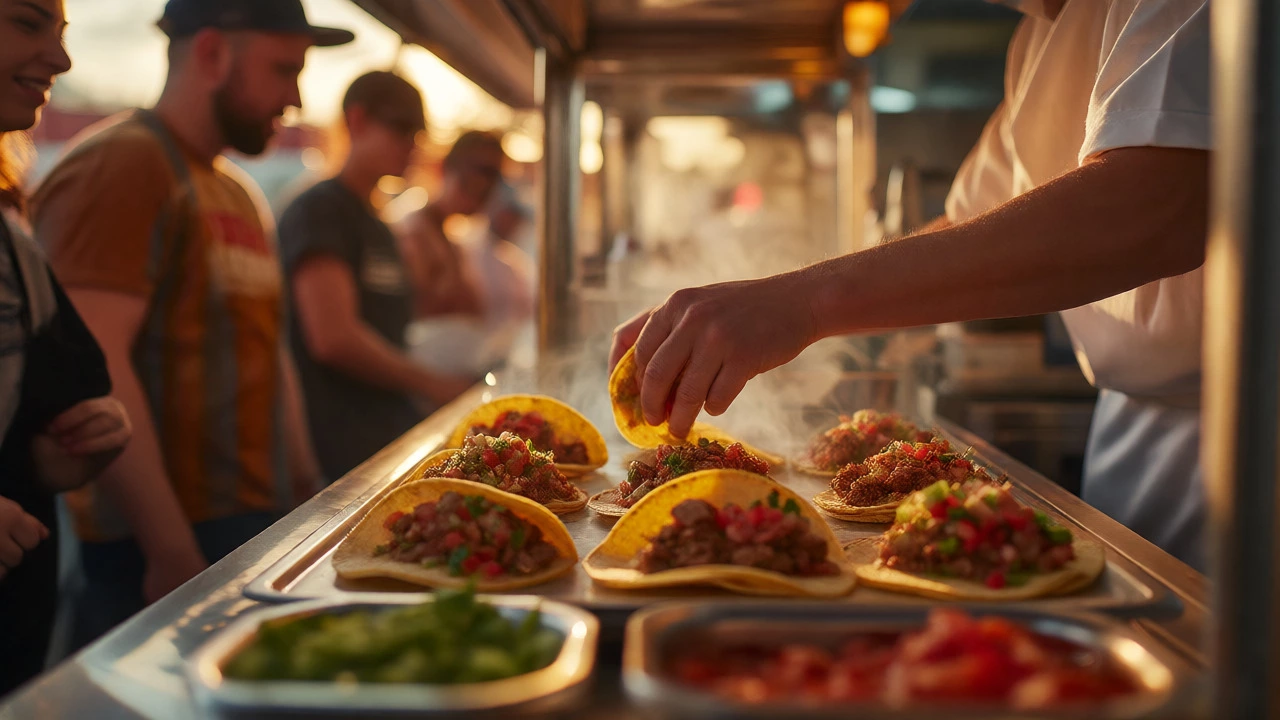
Take tacos, for example. A standard corn tortilla costs pennies. Even with decent meat, cheese, and salsa, the ingredient cost rarely exceeds $0.85 per taco. Sell them for $4.00 each, and you’re looking at nearly an 80% gross margin. Compare that to a salmon poke bowl. Salmon prices fluctuate wildly based on season and supply chain issues. Avocado toast became a meme for a reason-the avocado price crash or spike can ruin your month. Stick to stable, shelf-stable bases like tortillas, buns, bread, or noodles. These items don’t spoil as quickly as fresh seafood or exotic cheeses, reducing your waste percentage significantly.
Liquid Gold: Beverages and Coffee
Here is a secret many new operators miss: beverages often have higher profit margins than food. A cup of coffee might cost you $0.20 in beans, milk, and cup. You sell it for $4.00. That’s a 95% margin. While you probably won’t survive solely on coffee unless you’re in a commuter hub, adding a strong beverage program boosts your average ticket size without requiring extra kitchen space.
Consider partnering with local breweries or soda brands. Selling craft beer from a tap allows you to charge premium prices ($7-$9) for a pint that costs you $1.50-$2.00 wholesale. Plus, alcohol sales drive dwell time-people stay longer, order another round, and potentially buy a second snack. Just check your local liquor license requirements, as these vary by city and can be expensive.
The "One-Trick Pony" Strategy
New owners often make the mistake of offering a full menu: burgers, fries, salads, shakes, and desserts. This is a disaster for a small kitchen. Every additional item requires different prep, different equipment, and more inventory risk. The most profitable trucks usually specialize in one category. Think "The Grilled Cheese Guy" or "Only Tacos."
Specialization allows you to optimize your supply chain. You only buy one type of cheese, one cut of beef, and one type of bun. You negotiate bulk discounts because you’re buying large quantities of specific SKUs. You train your staff to make one thing perfectly and fast. Speed equals throughput. Throughput equals revenue. If you try to be everything to everyone, you end up being mediocre at everything and slow at all of it.
Niche Markets and Dietary Trends
While carbs are king, niches pay well. Vegan and gluten-free options command a premium price. A vegan burrito made with black beans, rice, and house-made sauces has similar ingredient costs to a regular burrito but can often be sold for $1.00-$2.00 more because the target demographic expects to pay for ethical sourcing and dietary accommodation.
However, beware of "trend fatigue." When kale chips were huge, every truck tried to sell them. Now, they’re mostly gone. Look for enduring trends rather than fads. Plant-based meats are settling into a permanent niche, not a temporary craze. Korean fried chicken, birria tacos, and smash burgers have shown staying power because they offer unique flavor profiles that home cooks struggle to replicate easily. People pay for convenience and novelty. If they can make it easily at home, they won’t pay $12 for it from a window.
Operational Efficiency and Waste Control
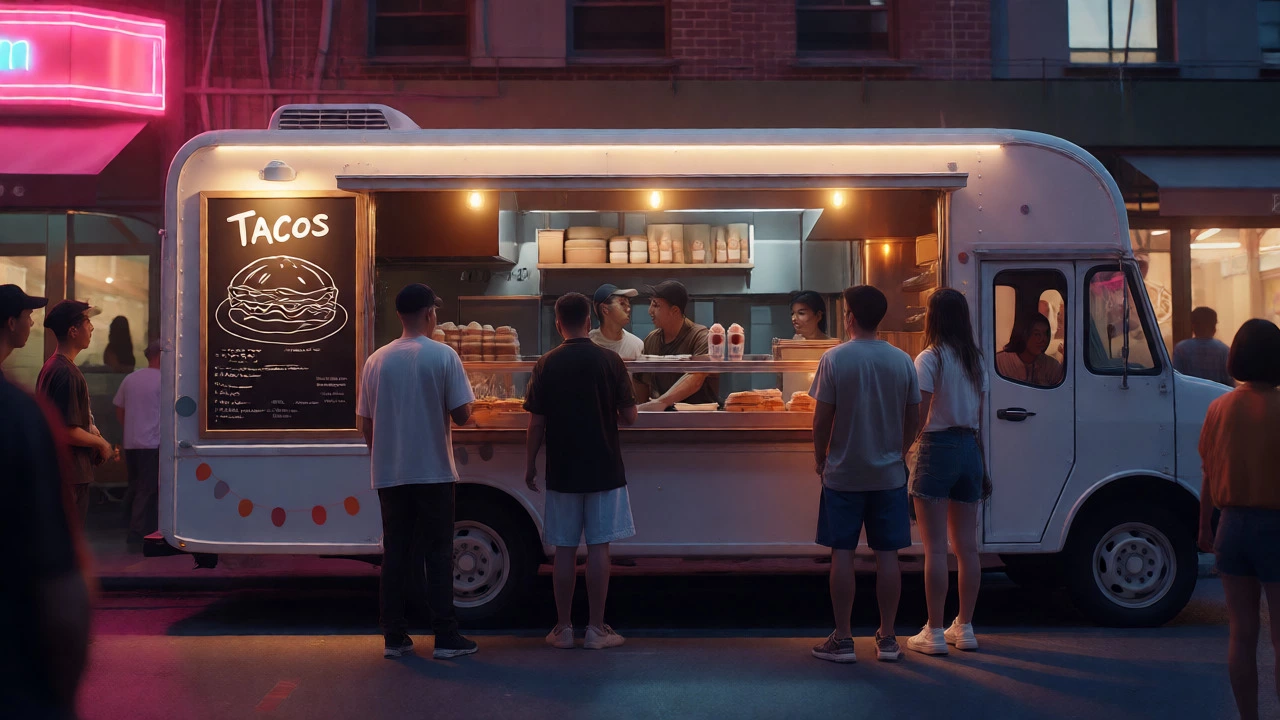
Profitability isn’t just about what you sell; it’s about what you throw away. In a food truck, you have limited refrigeration. If you stock twenty types of vegetables and only use five, the other fifteen rot. That’s pure loss. Design your menu so that ingredients cross-utilize. Use the same onions for tacos, burgers, and chili. Use the same lettuce for salads and sandwiches. Use the same broth for soups and risotto.
Track your waste religiously. Weigh your trash bins at the end of the night. If you’re throwing away significant amounts of prep, your menu is too big or your forecasting is off. Many successful trucks operate on a pre-order model for lunch rushes in office districts. Knowing exactly how many orders to prep eliminates waste almost entirely. This transforms your business from a guesswork game into a predictable manufacturing process.
Location Dictates Product
You can have the highest-margin item in the world, but if nobody wants it in your location, it’s worthless. A gourmet macaron shop thrives near universities and wealthy residential areas but dies in industrial parks where workers want quick, hearty, cheap calories. Conversely, a heavy BBQ truck might struggle in a beachside tourist spot where people want light, refreshing snacks.
Analyze your foot traffic. Are they students? Go for cheap, filling, trendy items like loaded fries or ramen cups. Are they corporate professionals? Offer lighter, cleaner options like grain bowls or high-quality sandwiches. Are they tourists? Sell something photogenic and locally iconic, like deep-dish pizza slices in Chicago or lobster rolls in Boston. Match the product to the person standing in front of your window.
Final Thoughts on Pricing Power
Don’t be afraid to test prices. Start slightly higher than you think you should. It’s easier to lower a price than to raise it once customers get used to a deal. Use psychological pricing-$4.95 feels significantly cheaper than $5.00, even though it’s only five cents difference. Bundle items to increase average order value. A taco plus a drink for $8.50 encourages the customer to spend more than just buying the taco alone.
Ultimately, the most profitable thing to sell is whatever you can produce consistently, quickly, and with minimal waste, while meeting a specific hunger in your immediate neighborhood. There is no magic bullet item. There is only smart math, efficient operations, and listening to your customers.
Is it better to sell drinks or food from a food truck?
Drinks generally have higher profit margins (often 80-90%) compared to food (typically 60-70%). However, food drives the primary visit motivation. The most profitable strategy is a hybrid model where food attracts customers and drinks boost the average ticket size and overall profitability.
What is the cheapest food item to sell?
Popcorn, cotton candy, and basic pretzels are among the cheapest to produce due to low ingredient costs and long shelf life. However, their sale prices are also lower, so total profit per hour depends heavily on volume and speed of service.
How much should I charge for food truck items?
Aim for a price point where your ingredient cost is 25-30% of the sale price. For example, if a taco costs $0.80 to make, sell it for at least $3.00-$3.50. Always research local competitors to ensure your pricing aligns with market expectations.
Do vegetarian options sell well in food trucks?
Yes, vegetarian and vegan options often have higher margins because plant-based proteins (beans, lentils, tofu) are cheaper than meat. They also appeal to a growing demographic willing to pay a premium for ethical and healthy choices.
What is the biggest expense in running a food truck?
Labor and food costs are typically the two largest expenses, often accounting for 60-70% of total revenue. Fuel, insurance, and permit fees are also significant fixed costs that must be covered before profit is realized.