Textile Sourcing Strategy Advisor
Based on the article's insights, select your primary product goal to see the recommended sourcing model.
Technical / Luxury
Medical implants, aerospace, or high-performance athletic gear.
Mass Market
Basic t-shirts, standard linens, or high-volume organic cotton.
Hybrid Model
Seasonal collections requiring both stability and rapid prototyping.
Please select a goal above...
Select a category to see the recommended balance between US hubs (like Greensboro) and global partners (like India).
Quick Takeaways
- Greensboro, North Carolina, is widely regarded as the historic textile capital of the US.
- The industry has shifted from massive domestic mills to specialized high-tech fabrics and global sourcing.
- India plays a critical role as a primary supplier and manufacturing partner for US brands.
- The "Piedmont Triad" region remains the most influential cluster for fabric production in America.
The Legacy of Greensboro and the Piedmont Triad
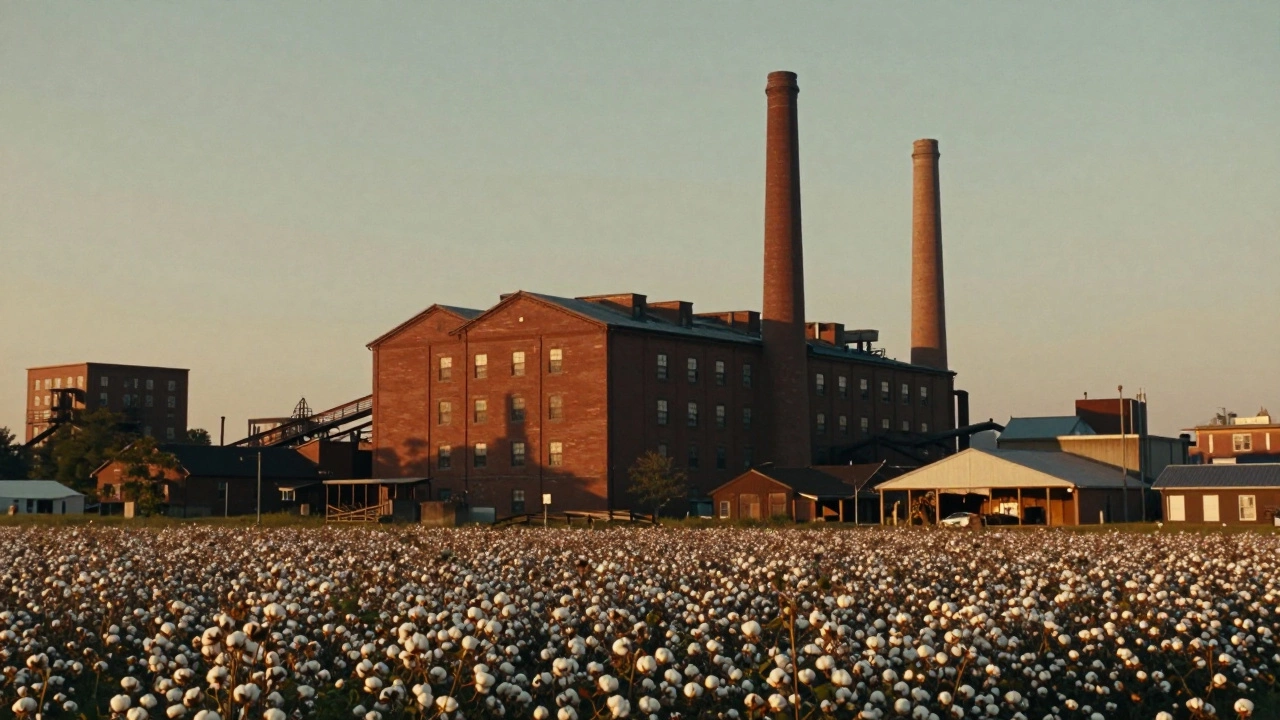
To understand why Greensboro takes the title, you have to look at the geography. The city sits in the Piedmont Triad, a region that offered the perfect storm for industry: fertile land for growing cotton, plenty of water from local rivers for processing, and a workforce ready for industrial labor. Back in the day, the skyline was dominated by smoke stacks from mills that produced everything from coarse burlap to the finest linens.
Greensboro didn't just make fabric; it pioneered the business of it. The city became a center for textile trade shows and corporate headquarters. If you were a clothing brand in the 1950s, you didn't just buy fabric; you went to Greensboro to see what was new. This concentration of expertise created a "cluster effect," where designers, chemists, and loom operators lived in the same neighborhoods, constantly trading secrets and improving techniques. This is why the region still attracts textile startups today-the DNA of the city is literally woven with thread.
How the US Textile Industry Evolved
It wasn't always smooth sailing. The US textile industry hit a massive wall with the rise of globalization. In the late 20th century, companies realized they could produce basic cotton goods much cheaper in Asia. This led to a period of "deindustrialization" where many of the old brick mills in North Carolina were abandoned. But here is the twist: the industry didn't die; it just got smarter.
Instead of competing on price for basic t-shirts, US manufacturers shifted toward Technical Textiles. This is where the real money is now. We are talking about fabrics for medical implants, aerospace components, and high-performance athletic gear. Greensboro and its neighbors shifted from "commodity fabrics" to "performance fabrics." They started using advanced polymers and carbon fibers, ensuring that while the basic weaving might happen overseas, the high-value engineering happens in the US.
| Feature | US Hubs (e.g., Greensboro) | Global Hubs (e.g., India) |
|---|---|---|
| Primary Focus | R&D, Technical Fabrics, Luxury | Mass Production, Raw Cotton, Apparel |
| Key Advantage | Innovation & Specialized Tech | Scale & Labor Cost Efficiency |
| Main Materials | Synthetic Fibers, Advanced Polymers | Organic Cotton, Silk, Jute |
| Market Role | Design and High-End Engineering | Manufacturing and Global Export |

The India Connection: A Global Partnership
You can't talk about the textile capital of the US without mentioning the massive influence of textile manufacturers India. If Greensboro is the brain of the operation (design and tech), then India is often the heartbeat (production and raw materials). India is one of the largest producers of cotton in the world, and its garment industry is a cornerstone of its economy.
Many US-based companies in North Carolina actually rely on Indian suppliers for the "greige goods"-that's the raw, unbleached fabric-which they then import to the US to dye, finish, or treat with special chemicals. This symbiotic relationship means that a sheet set sold in a New York store might be grown in Gujarat, woven in Tamil Nadu, and then chemically finished in a high-tech facility in the Piedmont Triad. The shift toward sustainable fashion has also tightened this bond, as US brands demand more organic cotton and recycled fibers, pushing Indian mills to adopt greener technologies.
Modern Tech in the American Fabric Hub
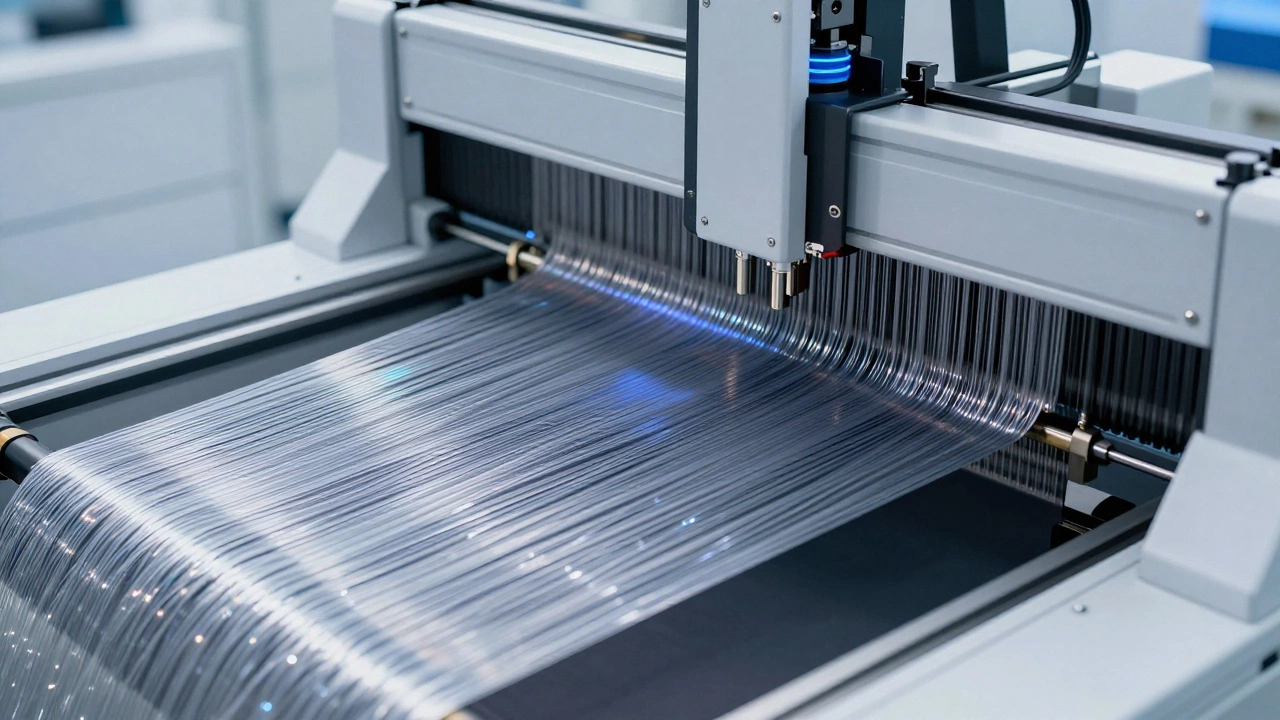
If you walked into a modern mill in Greensboro today, you wouldn't see rows of tired workers in dusty rooms. You would see Computer Numerical Control (CNC) machinery and automated looms that can change patterns in seconds via a software update. The focus has moved toward "smart textiles"-fabrics that can monitor your heart rate or change temperature based on the environment.
The use of Digital Printing has also revolutionized the game. Old-school screen printing required huge amounts of water and chemicals. Now, digital inkjet printing allows US manufacturers to create complex designs with almost zero waste. This allows smaller, boutique brands to produce limited runs of fabric without needing a massive factory, effectively democratizing the fashion industry and allowing local artisans to compete with global giants.
Common Pitfalls in Textile Sourcing
For those trying to enter the textile business or source fabrics, there are a few traps to avoid. The biggest mistake is focusing solely on the lowest price. When you source exclusively based on cost, you often run into "quality drift," where the first shipment is perfect, but the tenth shipment is unusable because the manufacturer cut corners on the yarn count or dye quality.
Another issue is ignoring lead times. Sourcing from India or China involves complex shipping logistics. A delay in a shipping port can mean your summer collection doesn't arrive until October. The pro move is a "hybrid sourcing strategy": keep your high-volume basics on a global contract but maintain a relationship with a local US mill for rapid prototyping and high-end specialized runs. This protects your supply chain and ensures you can pivot quickly if trends change.
Why is Greensboro called the textile capital?
Greensboro earned this title because of its historical concentration of textile mills, corporate headquarters, and its role as a trade hub in the Piedmont Triad region of North Carolina, which provided the ideal environment for cotton processing and distribution.
Do US cities still manufacture clothes?
Yes, but the focus has shifted. While mass-market apparel is mostly made overseas, US cities now specialize in technical textiles, luxury fabrics, and medical-grade materials that require high precision and advanced technology.
How does India fit into the US textile market?
India is a primary source of raw materials, specifically cotton and silk, and serves as a massive manufacturing hub for the garment assembly that US brands sell. Many US textile firms act as the designers and finishers for fabrics produced in India.
What are technical textiles?
Technical textiles are materials engineered for functional properties rather than aesthetic ones. Examples include Kevlar for bulletproof vests, Gore-Tex for waterproof gear, and specialized meshes used in artificial arteries.
Is the textile industry sustainable?
Traditionally, it has been one of the most polluting industries. However, the shift toward organic cotton in India and waterless dyeing technologies in the US is helping to reduce the environmental footprint.
Next Steps for Textile Enthusiasts
If you're looking to get into the world of fabrics, start by researching the difference between natural and synthetic fibers. If you're a business owner, look into the "hybrid sourcing" model mentioned above to balance cost and speed. For those interested in the history, visiting the old mill districts in North Carolina provides a tangible look at how the industrial revolution changed the American South. Whether you are sourcing from a local mill or working with partners in India, the key is understanding that the "capital" of the industry is no longer a single city, but a global network of expertise.