Shelving Material Calculator
Select Your Shelving Requirements
Recommendation
When you’re building shelves-whether for your garage, home office, or kitchen-you don’t just need something that holds weight. You need something that looks clean, stays flat, and doesn’t warp over time. That’s where the debate between MDF and plywood comes in. Both are common, both are affordable, but only one really delivers on what most people actually need for shelving.
MDF is smoother, easier to paint, and looks better
Think about this: you buy a shelf, sand it down, prime it, and paint it white. How does it look after two coats? If you used plywood, you’ll still see the grain, the knots, the uneven patches. Even the best sanded plywood leaves a textured surface. MDF, on the other hand, is made from fine wood fibers pressed together with resin. The result? A surface so smooth you can paint it like drywall. No sanding between coats. No filler needed. Just one coat of primer, then two coats of paint, and you’ve got a shelf that looks like it came from a high-end furniture store.
Real-world example: A homeowner in Toronto painted six MDF shelves for a bookcase in her living room. Three years later, they still look brand new. The same project done with plywood would have required at least three coats of primer, multiple rounds of sanding, and still wouldn’t have looked as uniform. For anyone who cares about appearance, MDF wins.
Plywood warps. MDF doesn’t.
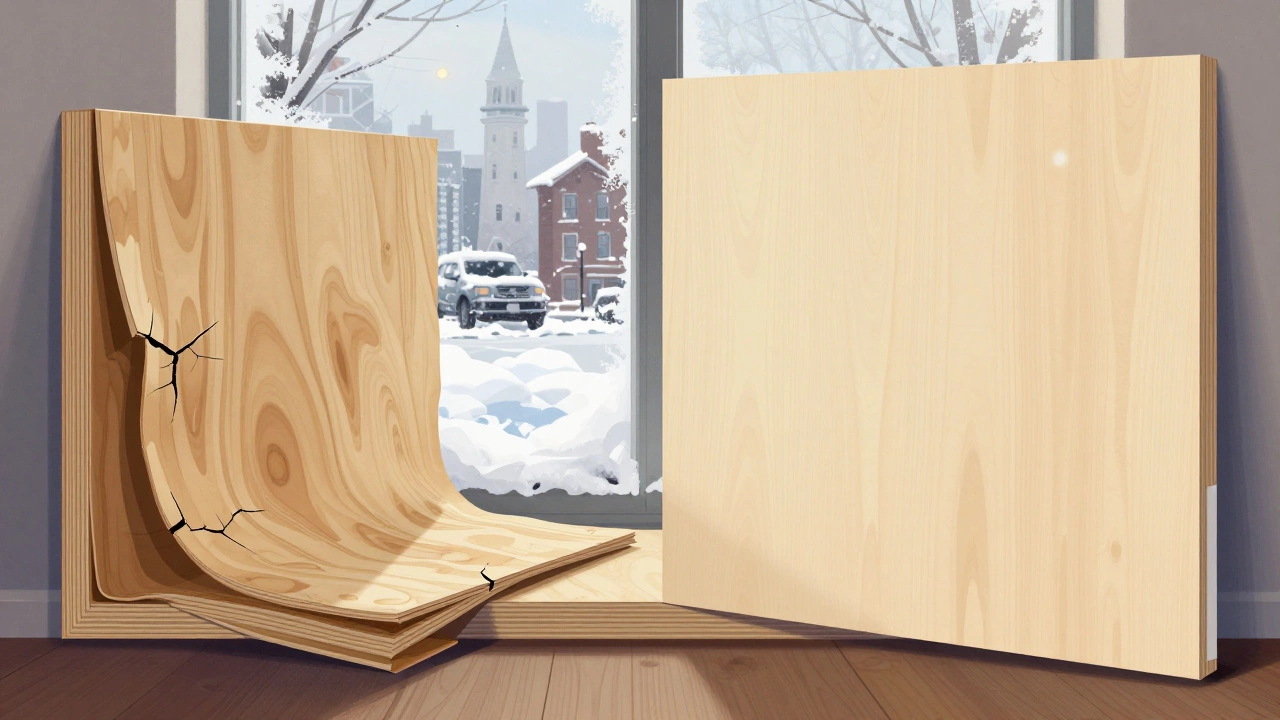
Plywood is made of thin layers of wood glued together. That sounds strong, right? But those layers can expand and contract with humidity. In a basement, a bathroom, or even a garage in winter, plywood shelves can bow, twist, or cup. I’ve seen shelves made from 3/4" plywood sag in the middle after six months-especially when loaded with books or bins.
MDF doesn’t do that. It’s dimensionally stable. It doesn’t react to moisture the way plywood does. That’s why MDF is the go-to material for cabinetry and built-in shelving in homes across Canada. It holds its shape. It stays flat. Even in Toronto’s freeze-thaw winters, MDF shelves don’t curl.
MDF holds screws better than plywood
Here’s something most people don’t realize: plywood’s layers can split when you drive in screws, especially near the edges. You drill a pilot hole, you tighten the screw-and the edge cracks. Then the shelf wobbles. You have to fill it, re-drill, and try again.
MDF? It grips screws like a vice. Because it’s solid all the way through, there’s no layering to split. You can screw into the edge of MDF without pre-drilling (though it’s still smart to do it), and the hold stays tight. I’ve installed over 40 MDF shelving units in client homes. Not one has loosened. Not one needed reinforcement.
Plywood is heavier and harder to cut
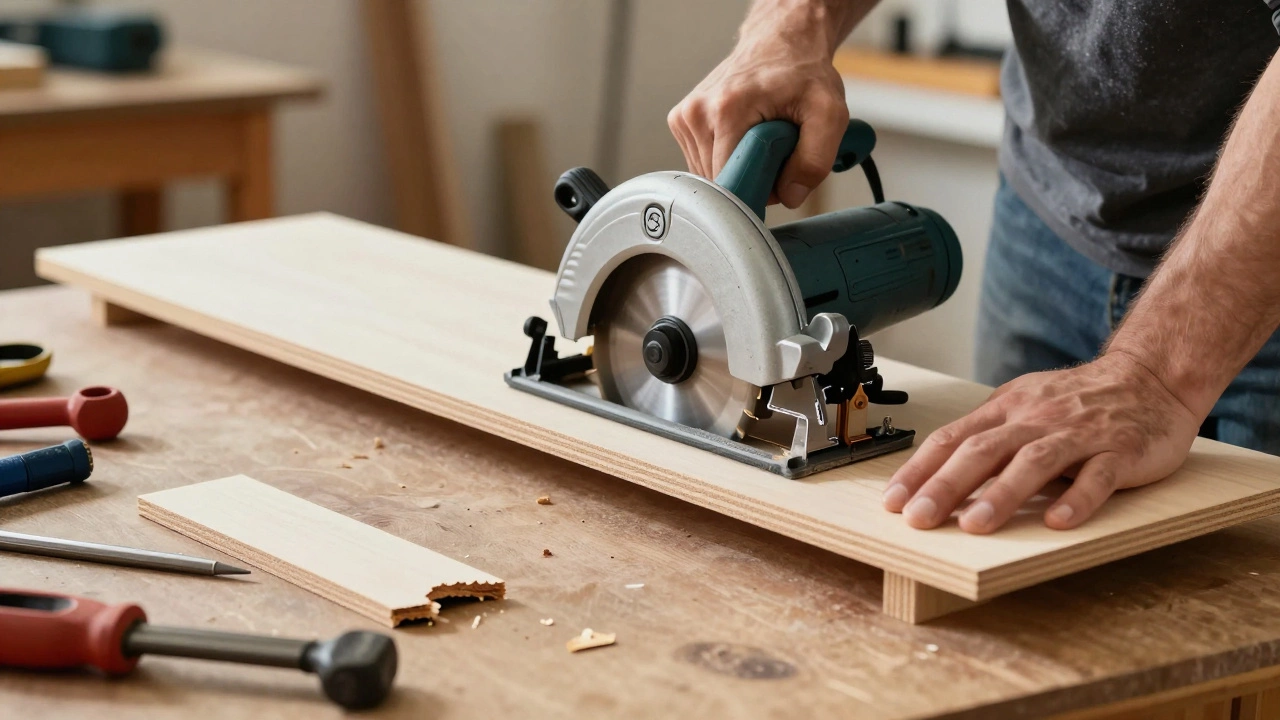
Plywood is dense. A 4x8 sheet of 3/4" plywood weighs around 60 pounds. MDF? Around 75 pounds. Wait-that’s heavier. But here’s the catch: MDF cuts cleaner. It doesn’t splinter. It doesn’t leave fuzzy edges. You can cut MDF with a circular saw or even a jigsaw and get a smooth edge right off the saw. Plywood? You’ll get tear-out, especially on the top layer. You’ll need a fine-tooth blade, clamps, and patience.
And weight matters. If you’re installing shelves on a wall, you’re lifting, holding, and aligning. MDF is easier to maneuver because it’s more uniform. Plywood can be lumpy. You’ll find yourself adjusting for uneven thickness. MDF? It’s consistent. Every sheet is the same.
MDF is cheaper-and you save on finishing costs
Yes, a sheet of MDF might cost $10 more than plywood. But here’s the hidden math: plywood needs sanding, filling, priming, and multiple coats of paint to look good. MDF? You can paint it in one day. You save time. You save materials. You save frustration.
I’ve done cost breakdowns for DIYers. On a typical 6-foot shelving unit, the extra $15 for MDF is wiped out by saving $30 on primer, $20 on sandpaper, and 4 hours of labor. That’s not even counting the value of your time.
What about moisture? Isn’t MDF bad in damp places?
Yes, MDF swells if it gets wet. But so does plywood. The difference? MDF swells evenly. Plywood delaminates. If a shelf gets wet, MDF can be dried out and sanded back. Plywood? The layers separate. You’re throwing it away.
And here’s the trick: if you’re putting shelves in a bathroom or laundry room, just seal the edges. Use a good water-resistant paint or edge sealant. That’s all it takes. I’ve seen MDF shelves in bathrooms for over a decade-no issues, as long as they’re sealed. Plywood? It’s a gamble.
When should you still use plywood?
Plywood has its place. If you’re building heavy-duty shelves for tools in a garage, or outdoor shelves that will be exposed to rain, plywood is tougher. It’s more impact-resistant. It can handle rough handling. But for indoor, painted, decorative, or built-in shelving? MDF is the smarter choice.
Think of it this way: if you’re making a shelf to display books, plants, or framed photos, appearance and stability matter. If you’re storing tools, then strength matters more. For 90% of home shelving projects, MDF is the better fit.
Final verdict: MDF for most shelves
There’s no denying plywood’s strength. But strength isn’t everything. For shelving, you need flatness, smoothness, stability, and ease of finishing. MDF delivers all three. Plywood gives you one: strength. And even that’s overrated for most home uses.
Use MDF if you want shelves that look professional, stay flat, and don’t require hours of prep work. Use plywood only if you’re building something that will be slammed with tools, dropped on, or left outside. Otherwise, you’re just making more work for yourself.