Sofa Cushion Styling Calculator
Find the perfect balance for your living room. Enter your sofa details below to get a customized styling recommendation.
Recommended Count:
Layering Guide
- Base:
- Middle:
- Accent:
Pro Tip
You walk into a room and immediately feel something is off. Maybe the sofa looks too bare, like it’s waiting for guests who never arrived. Or maybe it looks like a cluttered storage unit where someone dumped every spare pillow they owned. Finding the right number of sofa cushions is less about strict math and more about visual balance. It’s that sweet spot where your living space feels inviting but not chaotic.
Most people guess wrong. They either stick to the two pillows that came with the couch or overload a three-seater with seven mismatched squares. Both approaches miss the mark. The truth is, the perfect cushion count depends entirely on your specific sofa size, its style, and how you actually use the room. Are you here to lounge with a laptop, or are you hosting formal dinner parties? That context changes everything.
The Golden Rule: Odd Numbers Work Better
Start with this simple heuristic: odd numbers look better than even ones. Why? Because our brains find symmetry predictable and slightly boring. An arrangement of three or five cushions creates asymmetry, which feels more dynamic and natural. Even numbers can look rigid, like you’re setting up for a chess match rather than relaxing after work.
This doesn’t mean you can never use two cushions. If you have a small loveseat, two matching pillows might be all you need. But for standard sofas, aim for three, five, or seven. This rule applies whether you’re buying new decorative throw pillows or rearranging what you already own. It’s the quickest way to make a dated setup look intentional.
Sizing Up Your Sofa: A Quick Reference Guide
Your sofa’s width dictates the maximum number of cushions before it starts looking cramped. Measure the seating area between the armrests. Here’s a practical breakdown based on common Canadian home standards:
| Sofa Type | Approximate Width | Ideal Cushion Count | Best Arrangement Strategy |
|---|---|---|---|
| Loveseat | 48-60 inches | 2 | Two matching large pillows at each end. |
| Standard Two-Seater | 60-72 inches | 3 | One center accent, two side anchors. |
| Three-Seater | 72-90 inches | 5 | Two large outer, two medium inner, one small lumbar. |
| Large Three-Seater / Small Sectional | 90+ inches | 5-7 | Mix sizes; keep corners filled, center open for sitting. |
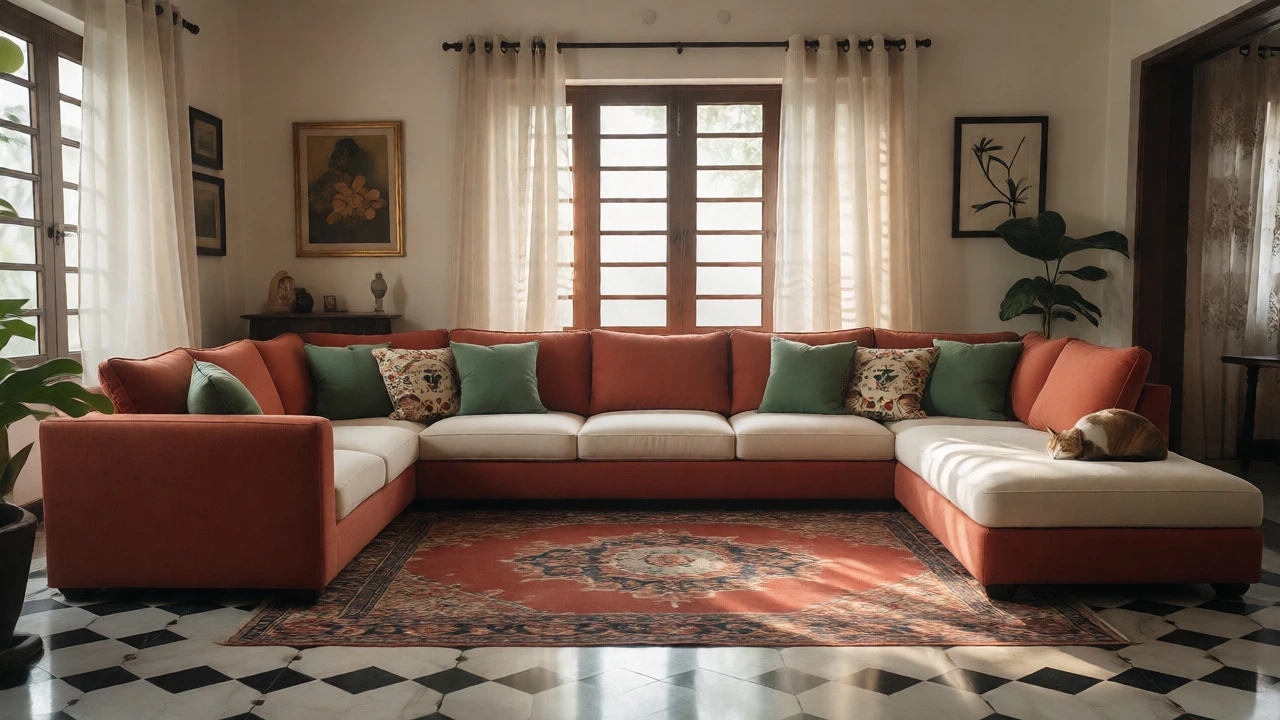
| Sectional (L-Shape) | Variable | 6-9+ | Treat each section separately; anchor the corner. |
Notice the progression? As the sofa gets wider, you don’t just add more pillows of the same size. You introduce variety in scale. A single giant pillow on a wide sofa looks lonely. Five identical small pillows look like a hotel lobby. The magic happens when you mix dimensions.
Mastering the Layering Technique
Think of your sofa cushions like layers in an outfit. You wouldn’t wear a t-shirt under a suit jacket without a dress shirt, right? Same logic applies here. You need a base layer, a middle layer, and an accent layer.
- The Base Layer: These are the largest cushions, usually 20x20 or 22x22 inches. They sit against the backrest and provide structural support. Use matching covers for these to create a clean foundation.
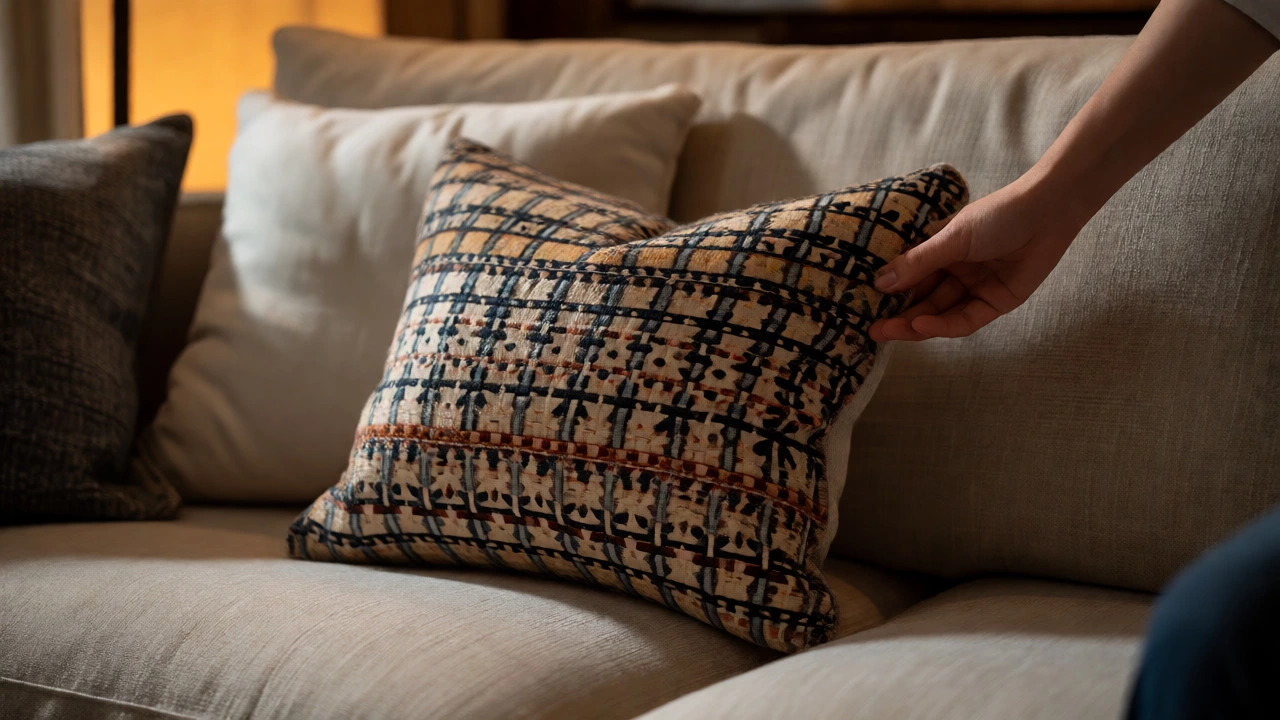
- The Middle Layer: Slightly smaller, perhaps 18x18 or rectangular lumbar pillows. These add texture and break up the monotony of the base layer. Mix patterns or fabrics here-velvet against linen, or stripes against solids.
- The Accent Layer: The smallest pieces, often 12x12 or decorative shapes. These are the jewelry of your sofa. Place them in front of the larger pillows to draw the eye.
If you only have two large pillows, your sofa will look flat. Adding just one smaller textured pillow in the center instantly adds depth. It’s a low-effort upgrade that makes expensive furniture look custom-styled.
Style Matters: Modern vs. Traditional
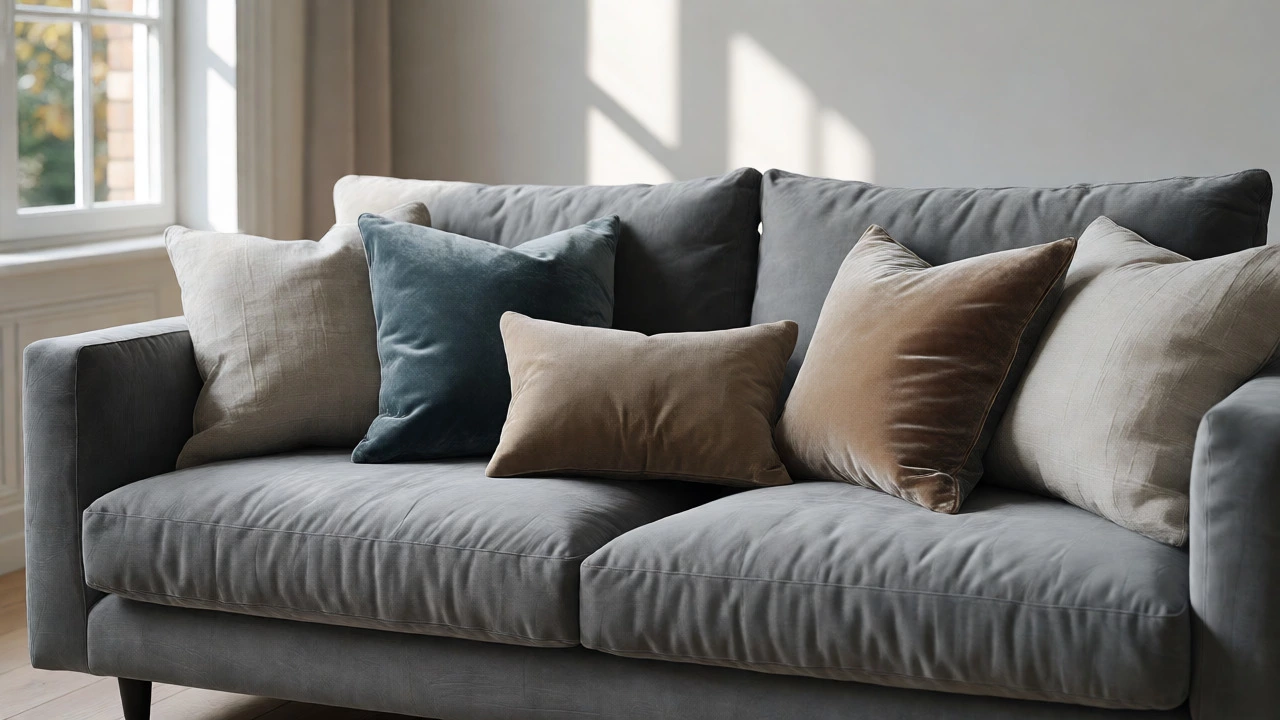
Your home’s aesthetic heavily influences how many cushions you should display. A minimalist Scandinavian apartment thrives on restraint. In this context, fewer is more. Two high-quality, neutral-toned cushions on a grey fabric sofa look sophisticated. Adding a third colorful pillow might clash with the serene vibe.
Conversely, traditional or bohemian styles embrace abundance. If you love maximalism, piling on six or seven cushions in rich jewel tones and mixed patterns is perfectly acceptable. The key is cohesion. Ensure the colors share a palette, even if the patterns differ. Otherwise, you risk looking like a thrift store explosion rather than a curated collection.
Consider the material too. Leather sofas handle fewer cushions because the sleek surface needs breathing room. Fabric sofas absorb light and texture better, allowing for denser arrangements without feeling overwhelming. If your sofa is dark leather, try lighter-colored cushions to create contrast. If it’s a busy floral print, stick to solid colors to avoid visual noise.
Functionality Over Form: Do You Actually Sit There?
Here’s a question most stylists ignore: Do you actually use the space where those cushions are? If you watch TV on your sofa every night, filling the entire backrest with pillows means you’ll spend ten minutes removing them every evening. That friction kills the joy of having nice decor.
For high-traffic family rooms, prioritize functionality. Keep the center clear for sitting and place cushions primarily at the ends. This keeps the sofa usable while still framing it nicely. For formal living rooms used mostly for conversation, you can afford to fill the backrest completely since no one is sprawling out there anyway.
Also, consider pet owners. If you have cats or dogs, delicate silk or velvet cushions might get ruined quickly. Stick to durable cotton blends or outdoor fabrics. You might choose fewer cushions to make washing easier. Rotating two sets of covers is smarter than owning ten difficult-to-clean pillows.
Common Mistakes to Avoid
Even with the right count, execution errors can ruin the look. First, don’t use cushions that are too big for the sofa. A 24-inch pillow on a compact apartment sofa eats up all the seating space. Measure your seat depth-if it’s shallow, opt for smaller profiles.
Second, avoid the "matching set" trap. Buying a pack of four identical pillows straight from the store rarely looks good once placed. They tend to bunch together or look uniform. Break up the set by mixing in a lumbar pillow or swapping one cover for a contrasting color.
Third, forget fluffiness. Old, flattened cushions make even a well-styled sofa look sad. Invest in high-quality down-alternative inserts. They cost more upfront but maintain their shape for years. Replace inserts every two years if they lose loft. No amount of arranging saves a deflated pillow.
Pro Tips for Instant Improvement
If you’re unsure where to start, try the "three-point method." Place one large cushion on each end and one smaller accent in the center. Step back. Does it feel balanced? If yes, stop there. If it feels empty, add a fourth cushion next to one of the large ones, creating an asymmetric cluster of two on one side and one on the other. This breaks symmetry intentionally.
Another trick: use vertical lines. Rectangular lumbar pillows standing upright against the armrest elongate the look of the sofa. This works particularly well in narrow rooms where you want to maximize perceived space. Pair them with square cushions behind them for stability.
Finally, rotate your arrangement seasonally. Swap heavy velvet for light linen in summer. Change colors to match seasonal decor. This keeps your living room feeling fresh without buying new furniture. A few new covers can transform your space faster than any renovation.
Is it okay to use an even number of cushions?
Yes, but it requires careful styling. Even numbers can look symmetrical and formal, which works for traditional setups or very small sofas. However, odd numbers generally appear more relaxed and visually interesting to the human eye.
What size cushions fit best on a standard sofa?
For most standard sofas, 20x20 inch or 22x22 inch cushions are ideal for the base layer. Lumbar pillows around 12x20 inches work well as accents. Always measure your sofa's seat depth to ensure the pillows don't consume all the sitting space.
How do I keep my cushions fluffy?
Use high-quality down or down-alternative inserts rather than cheap foam. Fluff them daily by punching them gently. Rotate them regularly so one side doesn't compress permanently. Replace inserts every 1-2 years if they lose their shape.
Can I mix different patterns on my sofa?
Absolutely, but keep the color palette consistent. Mix scales too-pair a large geometric print with a small floral or a solid texture. This prevents the patterns from competing for attention and creates a cohesive, layered look.
Do I need cushions on a sectional sofa?
Yes, but treat each section independently. Anchor the corner with a large bolster or square pillow, then distribute smaller accents along the arms and backrests. Avoid overcrowding the chaise lounge area if you lie down there frequently.