Small Factory Startup Cost Calculator
Calculate Your Startup Costs
Estimate your small factory startup costs based on your specific product type, location, and equipment choices. Based on data from real small manufacturing operations.
Estimated Startup Costs
Note: These estimates are based on the article's real-world examples and include equipment, space, permits, staff, materials, and hidden costs. Actual costs may vary based on your specific circumstances.
Setting up a small factory isn’t just about buying machines and hiring workers. It’s about understanding exactly where your money goes - and where you can save it. Many people think they need $500,000 or more to start, but that’s not always true. A well-planned small factory can launch for as little as $50,000 - or it can easily cost $1 million if you’re not careful. The difference? Planning, location, and what you’re actually making.
What kind of factory are you building?
The biggest factor in cost isn’t the size of the building - it’s the type of production. Making plastic toys is very different from assembling electronics or bottling food. Each has its own equipment, safety rules, and space needs.
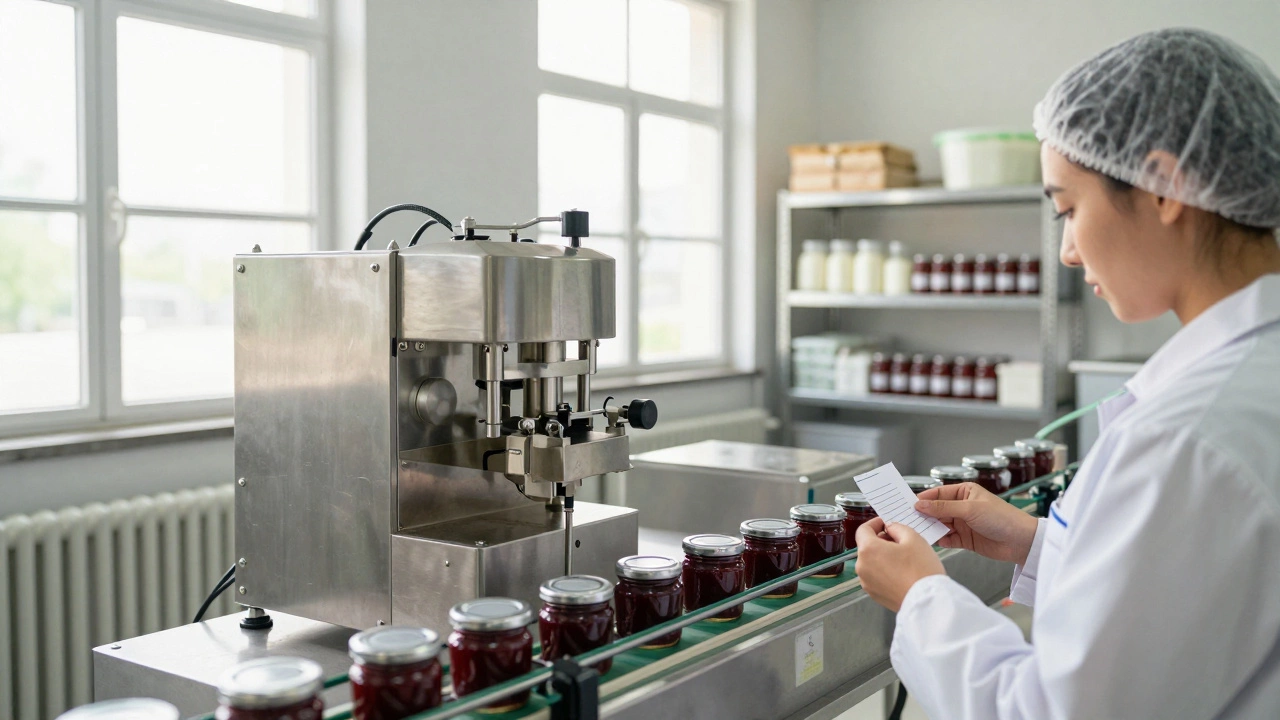
For example, a small food processing unit that packages jams or pickles might only need a pasteurizer, filling machine, sealing unit, and basic packaging line. Total equipment cost? Around $30,000 to $80,000. Add a 1,500 sq ft rented space, utilities, and permits, and you’re looking at $70,000 to $120,000 to get going.
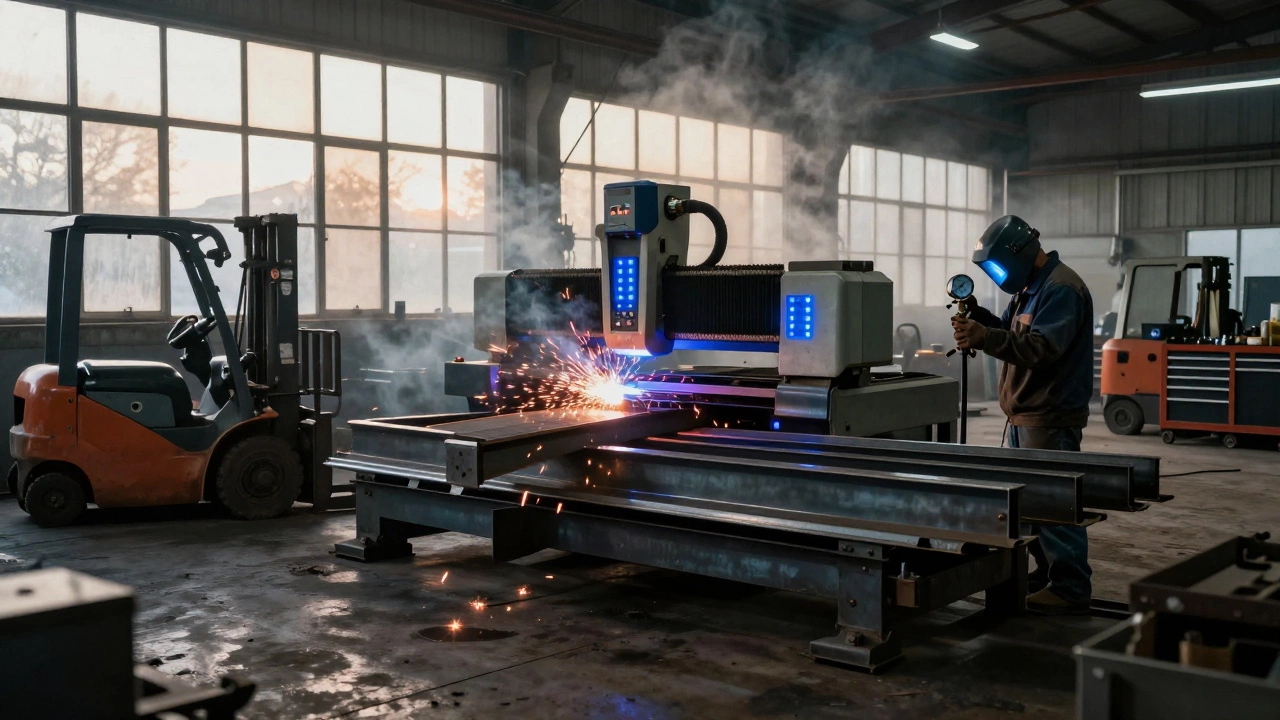
On the other hand, a small metal fabrication shop with a CNC machine, welding stations, and a powder coating line? That CNC machine alone can cost $60,000 to $150,000. Add ventilation systems, safety gear, and a 3,000 sq ft industrial unit, and you’re easily over $250,000 before you even make your first part.
Textile manufacturing? You’ll need sewing machines, cutting tables, ironing stations, and fabric handling systems. A basic setup for making custom uniforms or bags can start at $40,000. But if you want automated cutting and embroidery machines, you’re adding $100,000+ right away.
Location matters more than you think
Where you put your factory changes everything. Rent in a city center? You might pay $5 to $8 per sq ft per month. In a rural industrial zone? Maybe $1 to $2. That’s a $3,000 to $12,000 difference every year just on rent.
But it’s not just rent. Utilities cost more in some areas. Water, electricity, and waste disposal fees vary wildly. In some states, you’ll pay extra for industrial water usage. In others, you get tax breaks for hiring locally or using renewable energy.
Then there’s zoning. Some towns won’t let you operate a factory at all unless you’re in a designated industrial park. Others require noise permits, emissions testing, or even neighbor approval. Skipping this step means you could be shut down after spending $100,000.
Equipment: The biggest expense
You can’t avoid equipment - but you don’t have to buy everything new. Many small manufacturers start with used or refurbished machines. A used CNC router in good condition can cost $20,000 instead of $80,000. A second-hand injection molding machine? $35,000 instead of $120,000.
Here’s what most small factories need, and what it typically costs:
- Basic machinery: $20,000-$100,000 (depends on type)
- Power backup (generator): $5,000-$15,000
- Material handling (forklifts, carts): $3,000-$10,000
- Quality control tools (calipers, gauges, testers): $2,000-$8,000
- Computer systems (inventory, production tracking): $3,000-$10,000
Don’t forget installation. Moving a heavy machine into place, wiring it, and calibrating it? That’s often $5,000 to $15,000 extra - and it’s not included in the price tag of the machine.
Licensing, permits, and compliance
This is where many small factory owners get blindsided. You can’t just turn on the machines. You need:
- Business license
- Environmental compliance certificate
- Fire safety inspection
- Occupational safety (OSHA or local equivalent)
- Product certification (if selling to consumers)
These aren’t optional. In the U.S., a food processing plant needs FDA registration and HACCP certification. In the EU, CE marking is mandatory for most products. In India, you need Udyam registration for MSME status to qualify for subsidies.
Cost? $2,000 to $15,000, depending on your industry and location. Some permits take months. Plan ahead - delays mean you’re paying rent without earning income.
Staffing: People are your hidden cost
You might think you can run everything yourself. Maybe for the first month. But by month three, you’ll be exhausted. You need at least one skilled operator and one helper. Maybe two.
Wages vary by region. In the U.S., a machine operator earns $18-$25/hour. In Mexico or Vietnam, that might be $5-$8/hour. But cheaper labor doesn’t mean cheaper overall. If your workers aren’t trained, you’ll waste materials, break machines, and lose quality.
Don’t forget payroll taxes, insurance, and benefits. In the U.S., adding 20% to your base wage covers FICA, unemployment, and workers’ comp. That’s $22/hour becomes $26.40/hour. For two full-time workers, that’s $90,000+ a year just in labor cost.
Materials, inventory, and working capital
Before you sell your first product, you need raw materials. A small furniture maker needs wood, glue, screws, and finish. A battery assembler needs lithium cells, circuit boards, and casing. You can’t wait until you have orders to buy these.
Most experts recommend having 3 to 6 months of material inventory on hand. For a $50,000 monthly production run, that’s $150,000 to $300,000 tied up in stock. That’s not profit - that’s cash you can’t touch.
And what about customers who pay late? Or returns? You need working capital to cover those gaps. A good rule: keep at least 20% of your total startup budget as emergency cash.
Hidden costs that break budgets
Here’s what most first-time factory owners forget:
- Insurance: Property, liability, product - $5,000 to $20,000/year
- Maintenance contracts: $3,000 to $10,000/year for machines
- Training: $2,000 to $10,000 to get staff up to speed
- Marketing and branding: $5,000 to $15,000 to get your first clients
- Shipping and logistics: $10,000+ just to get products to customers
- Software subscriptions: ERP, accounting, inventory - $500 to $2,000/month
One manufacturer in Ohio thought he only needed $100,000. He spent $85,000 on machines. Then he realized he didn’t have money for insurance, training, or even cleaning supplies. He ran out of cash in month four.
How to start small - and stay alive
You don’t need a giant factory to make money. Many successful small manufacturers start in a garage or rented warehouse. They use contract manufacturers for parts they can’t make yet. They focus on one product. One customer. One market.
Here’s a realistic path:
- Start with a prototype - make 10 units by hand.
- Sell them online or locally. Prove there’s demand.
- Use that income to buy one key machine - not five.
- Outsource what you can’t do yet.
- Reinvest every dollar until you’re profitable.
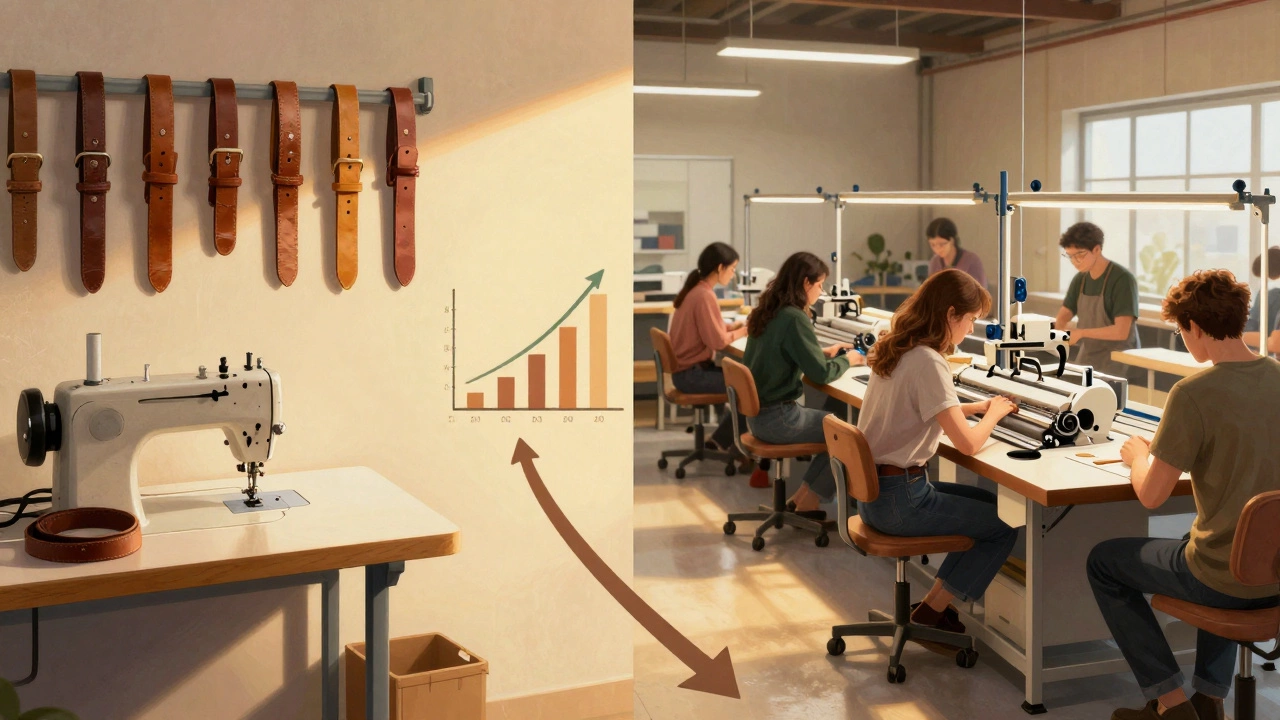
One woman in Tennessee started making custom leather belts in her garage. She bought a used sewing machine for $1,200. Sold 50 belts on Etsy. Used the profit to buy a laser cutter. Then rented a 1,000 sq ft space. Two years later, she’s making $300,000 a year with six employees - and not a single loan.
Government grants and subsidies
Don’t assume you have to pay everything out of pocket. Many governments offer grants for small manufacturers - especially in rural areas or for hiring veterans, disabled workers, or using green tech.
In the U.S., the SBA has small business loans with low interest. Some states offer tax credits for buying new equipment. In India, the PMEGP scheme gives up to ₹50 lakh ($6,000) in subsidies for small manufacturing units. In Germany, KfW offers low-interest loans for energy-efficient machinery.
Check your local economic development office. They often have free consultants who can help you find funding you didn’t even know existed.
Final cost breakdown: Real examples
Here’s what three real small factories actually spent to launch:
| Category | Food Packaging Unit | Metal Fabrication Shop | Textile Workshop |
|---|---|---|---|
| Equipment | $45,000 | $130,000 | $60,000 |
| Rent (first 6 months) | $9,000 | $18,000 | $6,000 |
| Permits & Licensing | $7,000 | $5,000 | $3,000 |
| Staff (3 months) | $12,000 | $18,000 | $10,000 |
| Materials & Inventory | $20,000 | $25,000 | $15,000 |
| Marketing & Branding | $4,000 | $6,000 | $5,000 |
| Insurance & Misc. | $5,000 | $8,000 | $4,000 |
| Total | $102,000 | $210,000 | $103,000 |
Notice how the metal shop cost more than double the others - not because it’s bigger, but because of the equipment. That’s the lesson: your product defines your budget.
Can you start with less than $50,000?
Yes - but only if you’re smart.
One man in Kentucky started a small battery charger assembly line with $38,000. He bought used testing equipment, rented a 600 sq ft space, and hired one part-time technician. He didn’t buy a warehouse. He didn’t buy a forklift. He used a hand truck. He sold directly to electric bike shops. Within 10 months, he was profitable. He’s now at $1.2 million in annual sales.
You don’t need a factory to be a manufacturer. You need a plan, a product people want, and the discipline to grow slowly.
What’s the cheapest way to start a small factory?
Start with a single product, use used equipment, rent a small space, and outsource what you can’t do yourself. Many successful small manufacturers begin in garages or shared industrial spaces. Focus on one customer, perfect your process, and reinvest profits - don’t borrow money you can’t repay.
Do I need a business loan to start a small factory?
Not necessarily. Many start with personal savings, sales from prototypes, or crowdfunding. Loans can help, but they also create pressure to grow fast. If you can bootstrap - even slowly - you’ll have more control and less risk. Only take a loan if you have a clear plan to repay it within 12-18 months.
How long does it take to break even after setting up a small factory?
Most small factories take 12 to 24 months to break even. If you’re making high-margin products (like custom electronics or specialty food), you might hit profitability in 6-9 months. Low-margin, high-volume goods (like basic packaging or simple assemblies) can take longer. Track your cash flow weekly - delays in payments or slow sales can sink you faster than you think.
Can I run a small factory alone?
You can start alone, but you won’t stay alone for long. Running a machine, handling orders, managing inventory, and doing quality checks is a 60-80 hour workweek. Most people burn out in 3-4 months. Hiring even one part-time helper after you hit $10,000 in monthly sales is a smart move - it’s not an expense, it’s an investment in growth.
What’s the biggest mistake people make when starting a small factory?
Buying too much equipment too soon. Many people think they need the latest, biggest machines to compete. But over-investing in machinery ties up cash and creates maintenance nightmares. Start with what you need to make your first 100 units. Scale only after you’ve proven you can sell them.