US Manufacturing Health Simulator
Configure Analysis Parameters
Employment Trend
Output Volume
Productivity Index
Key Drivers & Challenges
- Primary Driver:
- Reshoring Potential:
- Labor Challenge:
Headlines scream about factories closing and jobs vanishing. You see charts showing a dip in production indexes, and it’s easy to panic. Is the American industrial base crumbling? The short answer is no. The longer answer is that the US manufacturing sector is undergoing a massive structural shift, not a collapse. While traditional metrics like employment numbers have been flat or declining for decades, output remains near record highs. The real story isn’t about volume; it’s about efficiency, automation, and where the value is being created.
To understand what is happening, we have to look past the noise of political rhetoric and examine the actual data from 2024 through mid-2026. We need to separate the myth of 'deindustrialization' from the reality of 're-industrialization.' This involves looking at productivity gains, the impact of major legislative acts, and the strategic pivot toward high-value sectors like semiconductors and green energy.
The Productivity Paradox: Fewer Workers, More Output
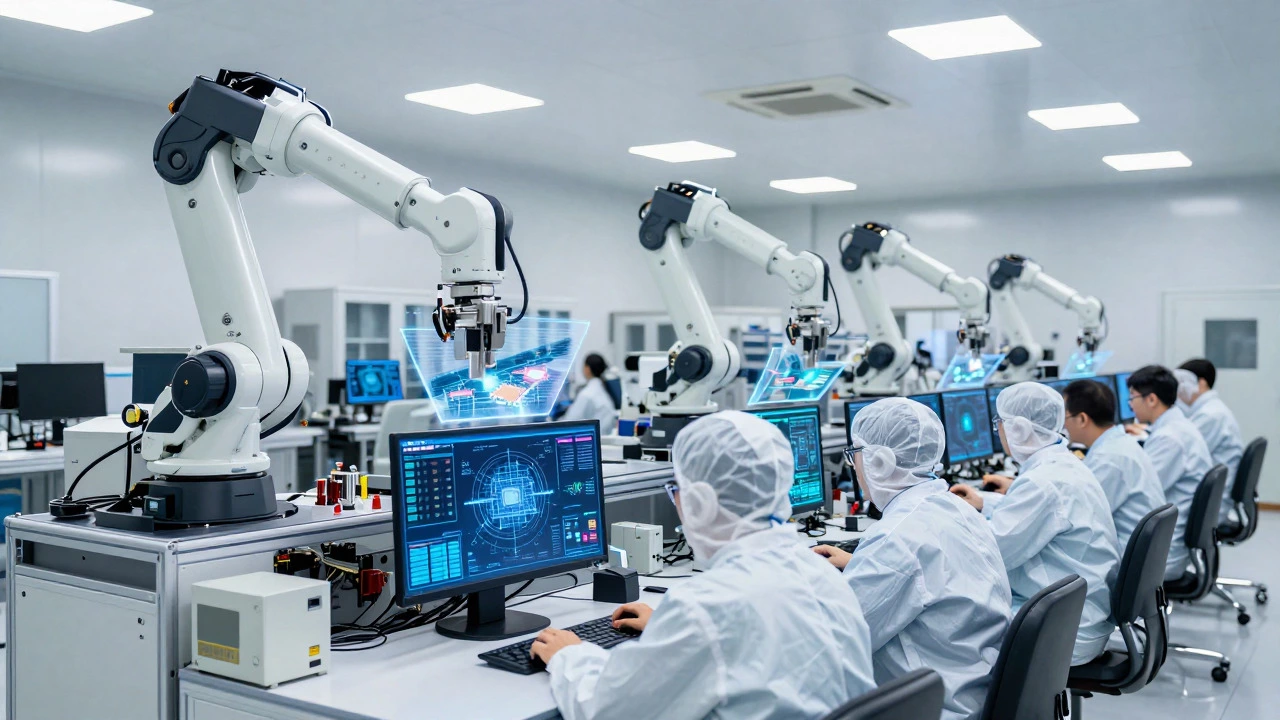
If you judge manufacturing health solely by job counts, yes, it looks bad. In 1979, manufacturing employed nearly 19 million Americans. Today, that number hovers around 13 million. But here is the catch: those 13 million workers produce significantly more than their predecessors did. This is the productivity paradox.
Manufacturing Productivity is the measure of output per hour worked in the industrial sector. According to Bureau of Labor Statistics (BLS) data leading into 2026, manufacturing productivity has grown steadily, driven by widespread adoption of robotics and AI-driven process optimization. A factory that once required fifty assembly line workers now might require ten technicians and four robotic arms. The output doubles, but the headcount drops by eighty percent.
This shift explains why GDP contribution from manufacturing remains robust even as employment shrinks. The US is not making fewer things; it is making them faster, cheaper, and with higher precision. When you hear 'manufacturing is down,' ask yourself: are they talking about jobs or output? Usually, it's the former masking the latter.
The Impact of Government Schemes on Reshoring
You mentioned government schemes, and this is where the narrative changes dramatically for 2025 and 2026. For years, critics argued that free trade agreements hollowed out the US industrial base. Now, federal policy is actively reversing that trend through targeted subsidies and tax incentives. These aren't just vague promises; they are billions of dollars flowing into specific sectors.
Two primary pieces of legislation drive this current wave:
- The CHIPS and Science Act: Aimed at revitalizing domestic semiconductor production. By 2026, major fabrication plants ('fabs') in Arizona, Ohio, and New York are coming online. This brings back high-skill engineering jobs and secures a critical supply chain link.
- The Inflation Reduction Act (IRA): Focused on clean energy manufacturing. It provides tax credits for producing batteries, solar panels, and electric vehicle components domestically. Companies like Tesla, Ford, and Panasonic have announced multi-billion dollar investments directly tied to these provisions.
These schemes create a 'pull factor' for companies that had offshored production to Asia. The cost advantage of cheap labor overseas is being offset by tariffs, shipping costs, and the new availability of domestic capital. We are seeing a tangible trend of 'friend-shoring' or 'near-shoring,' where production moves closer to home or to allied nations to reduce geopolitical risk.
| Metric | Traditional View (Pre-2020) | Current Reality (2026) |
|---|---|---|
| Employment Trend | Steady Decline | Stabilized in High-Skill Roles |
| Output Volume | Flat/Declining | Near Record Highs |
| Primary Driver | Labor Cost Arbitrage | Automation & Proximity |
| Key Sectors | Textiles, Basic Metals | Semiconductors, EV Batteries, Aerospace |
| Government Role | Laissez-Faire / Deregulation | Active Industrial Policy (Subsidies/Tariffs) |
Sector-Specific Analysis: Winners and Losers
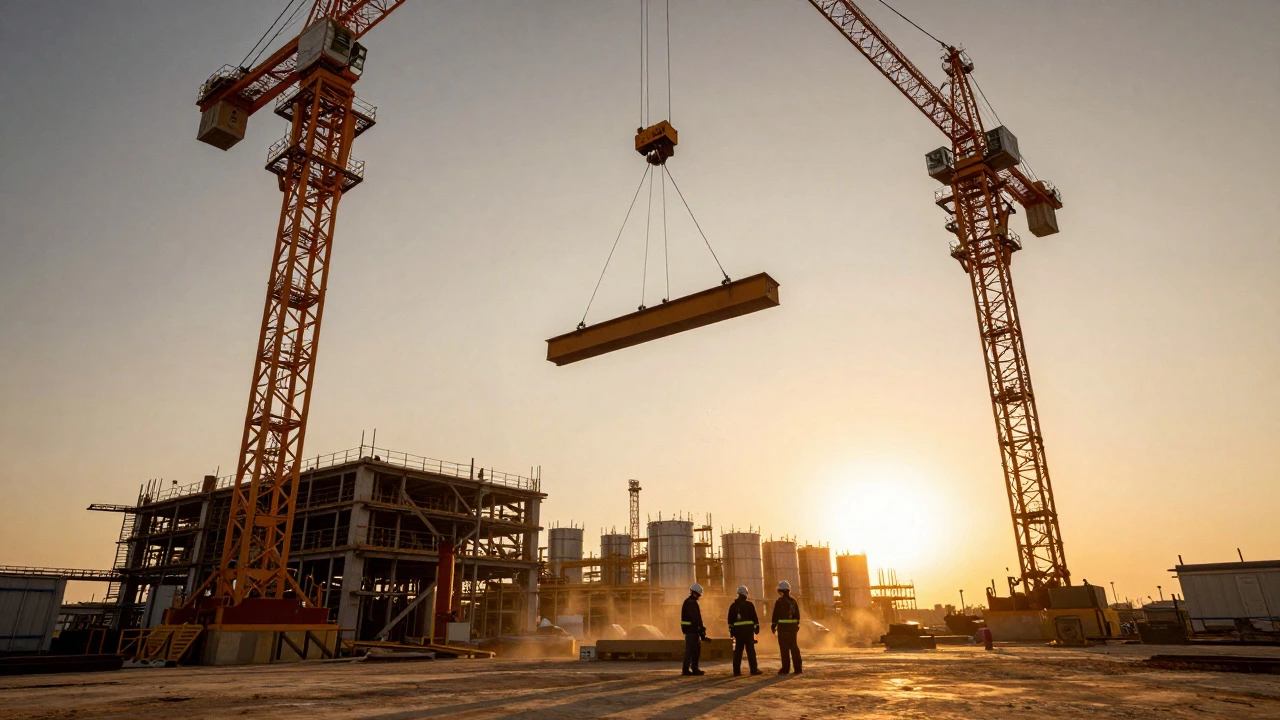
Not all manufacturing is created equal. If you look at low-margin, high-volume goods like basic apparel or simple plastic toys, the US still struggles to compete with Vietnam or Bangladesh. Labor costs simply cannot match. However, in complex, capital-intensive industries, the US is regaining dominance.
Semiconductors: This is the crown jewel of modern industry. The global shortage of chips during the pandemic exposed how fragile our reliance on Taiwan and South Korea was. With the CHIPS Act, the US is building a resilient domestic ecosystem. Intel, TSMC, and Samsung are investing over $100 billion combined in US fabs. This isn't just about making chips; it's about securing national security.
Clean Energy Components: The IRA has triggered a boom in battery gigafactories. States like Georgia, Tennessee, and Kentucky are becoming hubs for electric vehicle battery production. This sector is creating thousands of construction and engineering jobs, even if the final assembly lines are highly automated.
Aerospace and Defense: Boeing and its suppliers continue to be major employers, though plagued by quality control issues. Despite recent setbacks, the demand for commercial aircraft post-pandemic recovery ensures this sector remains a pillar of US manufacturing strength.
Food and Beverage Processing: Often overlooked, this is actually one of the largest manufacturing segments in the US. It is less susceptible to offshoring because perishability and local taste preferences keep production domestic. This sector provides stability when high-tech sectors face volatility.
Challenges Remaining: Labor and Infrastructure
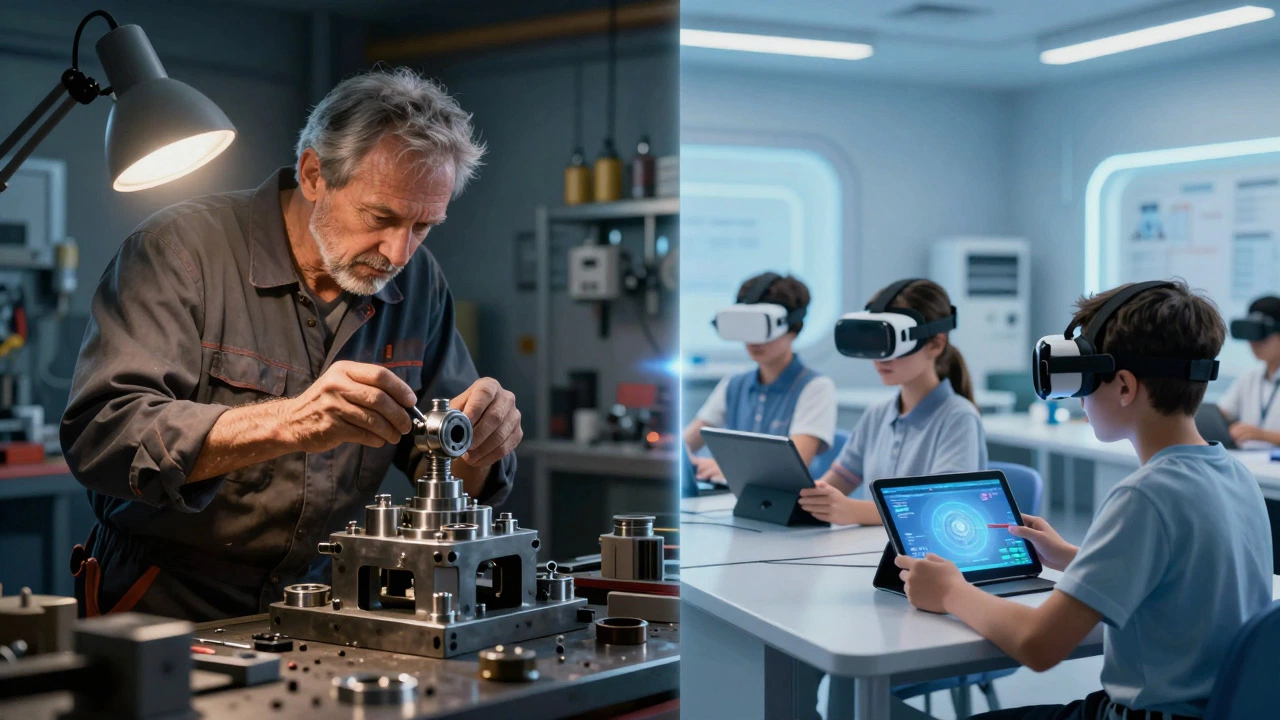
Even with government support, significant hurdles remain. The biggest issue is the skilled labor gap. We have the machines and the money, but do we have the people to run them? Vocational training programs are expanding, but there is a cultural stigma against trade work that persists in many communities. Employers report difficulty finding welders, CNC machinists, and electrical technicians.
Infrastructure is another bottleneck. Aging ports, congested highways, and an unreliable power grid in some regions can delay production. While the Bipartisan Infrastructure Law aims to fix this, the benefits will take years to fully materialize. Until then, manufacturers face logistical friction that increases costs.
Additionally, inflationary pressures on raw materials and energy costs can erode the competitive advantage gained from reshoring. If steel prices spike or electricity rates rise due to grid instability, the math for bringing production back to the US becomes less attractive.
What This Means for the Future
So, is manufacturing down in the US? No. It is transforming. The era of mass employment in low-skill factory jobs is over, replaced by an era of high-value, automated production supported by aggressive government industrial policy. The 'downward' trend you see in headlines refers to legacy metrics that no longer capture the full picture.
For investors, this means focusing on companies involved in automation, semiconductor equipment, and clean energy infrastructure. For workers, it highlights the urgent need for upskilling in digital literacy and technical trades. For policymakers, the challenge is ensuring that the benefits of this renaissance are distributed broadly, not just concentrated in tech hubs.
The US is not losing its manufacturing capability; it is upgrading it. The question is no longer whether we can make things, but whether we can make the *right* things efficiently enough to maintain global leadership in the next decade.
Has US manufacturing employment declined since 2000?
Yes, total manufacturing employment has declined significantly since 2000, dropping from approximately 17 million to around 13 million today. However, this decline is largely due to automation and increased productivity rather than a loss of output capacity.
What are the main government schemes supporting manufacturing in 2026?
The two primary initiatives are the CHIPS and Science Act, which subsidizes semiconductor fabrication, and the Inflation Reduction Act (IRA), which offers tax credits for clean energy manufacturing such as EV batteries and solar panels.
Is reshoring actually happening in the US?
Yes, reshoring is accelerating, particularly in high-value sectors like semiconductors, pharmaceuticals, and electric vehicles. Companies are moving production back to the US to mitigate supply chain risks and take advantage of federal subsidies.
Which manufacturing sectors are growing fastest?
Semiconductor manufacturing, battery production for electric vehicles, and aerospace components are currently the fastest-growing sectors. Food processing also remains stable and large due to domestic consumption needs.
Why is there a labor shortage in US manufacturing?
The shortage stems from an aging workforce retiring without sufficient replacements, a cultural preference for college degrees over vocational training, and a mismatch between existing skills and the demands of modern, automated factories.



Dec 19 2025