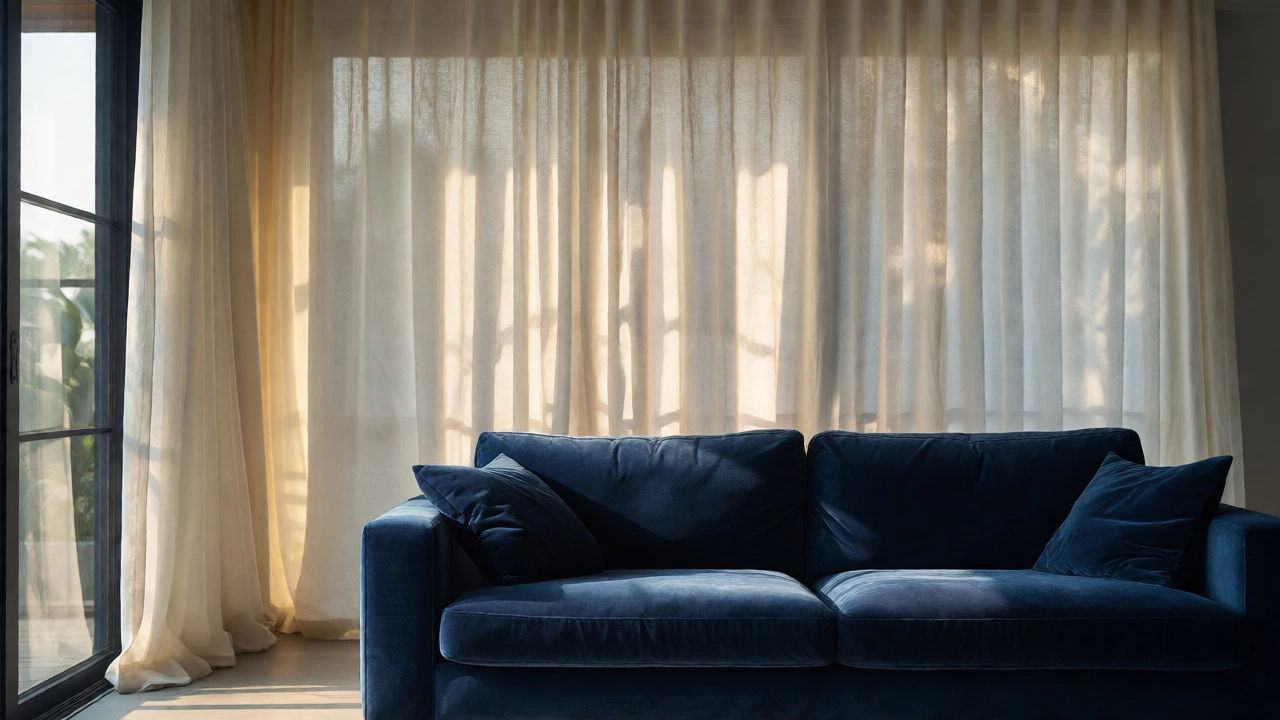
Curtain & Sofa Balance Guide
Select your sofa details and room conditions below to get personalized recommendations for curtain tone, texture, and hardware.
Step 1: Describe Your Setup
You’re standing in the middle of your living room, staring at that beautiful new velvet sofa. It’s perfect. But now you’re stuck on the windows. Should the curtains match it exactly? Go lighter to brighten things up? Or go darker for drama? There is no single "right" answer, but there are definitely wrong ones. The mistake most people make is treating the couch and curtains as separate decisions. They aren’t. They are part of a visual conversation in your room.
The core principle here isn't about matching colors; it's about managing visual weight. In interior design, every object has a perceived heaviness. A dark, heavy linen curtain feels heavier than a sheer white one, even if they weigh the same physically. Your couch, especially if it's large and upholstered, carries significant visual weight. If you hang curtains that are drastically lighter or darker without considering the rest of the room, you can accidentally unbalance the space. Let’s break down how to get this right based on your specific situation.
Understanding Visual Weight and Balance
Think of your living room like a seesaw. On one side sits your sofa. On the other side, you have the walls, the floor, and yes, the windows. If you put a massive, dark charcoal sectional on the left, and then hang whisper-thin, pale yellow sheers on the right, the room feels lopsided. The eye gets pulled to the dark mass of the sofa and ignores the windows entirely. Conversely, if you have a delicate, light-colored loveseat and you hang floor-to-ceiling black velvet drapes, the windows might overpower the seating area, making the sofa look small and insignificant.
The goal is harmony. You want the eye to travel smoothly across the room. Generally, curtains should complement the overall tonal value of the room rather than just the couch. However, since the couch is usually the largest furniture piece, it acts as an anchor. If your couch is dark, you often need something substantial at the windows to balance it out-but not necessarily dark curtains. Sometimes, texture does the heavy lifting instead of color.
When to Choose Lighter Curtains
Lighter curtains are the safest bet for most modern homes, and here’s why: they reflect light. If you have a dark couch, say navy blue or forest green, hanging white or cream linen curtains creates a crisp contrast. This keeps the room from feeling cave-like. It’s a classic move because it works. The lightness of the fabric counteracts the heaviness of the upholstery.
- Small Rooms: If your living room is under 150 square feet, lighter curtains will make it feel airier. Dark curtains absorb light, shrinking the space further.
- Low Ceilings: Pale fabrics draw the eye upward more effectively than dark ones, which tend to ground the view.
- Natural Light Deficits: If your windows face north or are shaded by trees, don’t add darkness to the mix. Stick to whites, creams, or very soft pastels.
But here’s a pro tip: don’t just pick "white." Pick a white with warmth. A stark, cool-toned optic white against a warm brown leather couch can look clinical and cold. Try a creamy off-white or a beige-linen blend. It bridges the gap between the lightness needed for the room and the warmth of the furniture.
When to Choose Darker Curtains
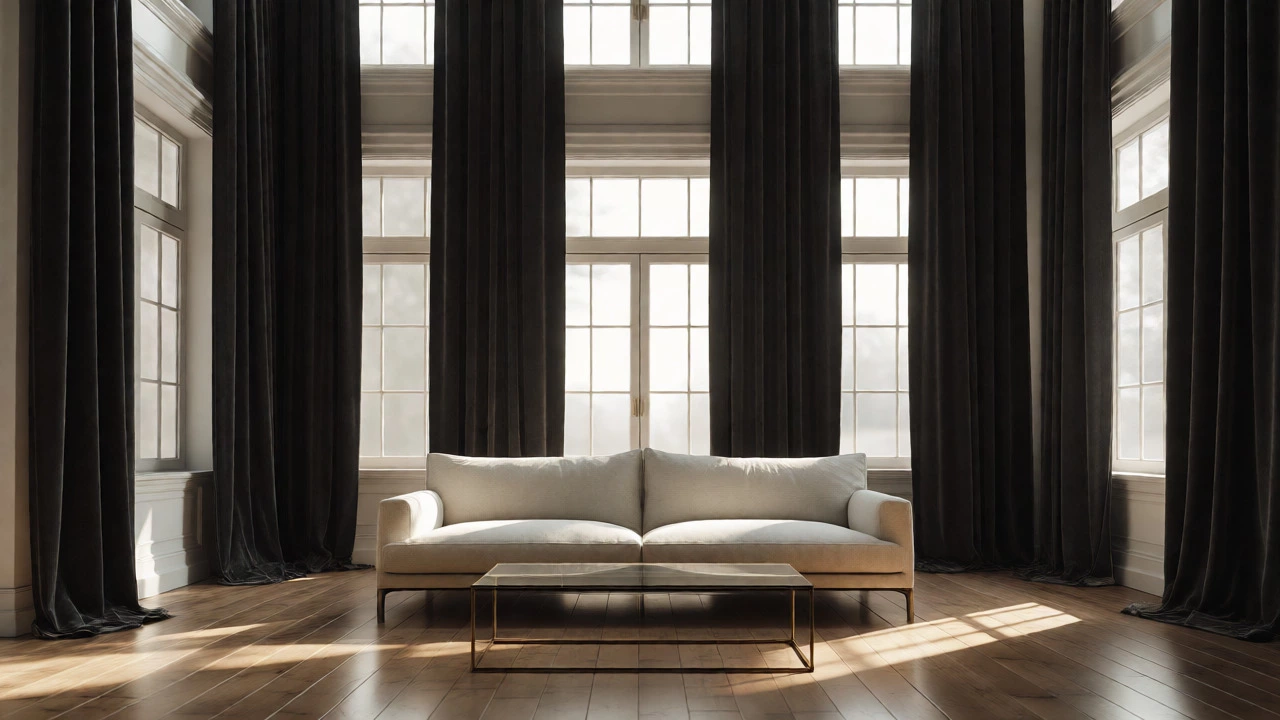
Darker curtains aren’t dead; they’re dramatic. But they require confidence and the right conditions. You’d choose curtains darker than your couch when you want to create intimacy or hide less-than-perfect window frames. If you have a light grey or beige sofa, and you hang deep charcoal or espresso drapes, you frame the window like a piece of art. It adds depth.
This approach works best in rooms with high ceilings (9 feet or higher) and ample natural light. Why? Because dark fabrics eat up daylight. If you cover south-facing windows with black velvet, you’ll be turning lights on at 2 PM. But if you have huge windows and a light sofa, the dark curtains provide necessary contrast so the room doesn’t look washed out.
Also, consider the function. Is this a media room? Do you watch TV during the day? Darker curtains block glare better. In this case, practicality trumps pure aesthetics. Just ensure the rest of the room has enough reflective surfaces-mirrors, glass tables, metallic accents-to keep it from feeling gloomy.
The Middle Ground: Matching Tones
What if you want them to match? That’s fine, but avoid identical shades. If your couch is sage green and you buy sage green curtains, the result often looks flat, like a hotel lobby from 1995. Instead, aim for a tonal shift. If the couch is medium sage, go for a slightly lighter mint or a deeper olive. This is called "tone-on-tone," and it’s sophisticated.
Use the 60-30-10 rule. Your walls and large rugs take up 60% of the visual field. Your couch takes up 30%. Your curtains should fall into that 30% category, either blending in or providing the 10% accent. If you match too closely, you lose dimension. If you contrast too wildly, you lose cohesion. Aim for a difference of two to three steps on the paint chip scale. That’s subtle enough to look intentional but distinct enough to show layering.
Texture Matters More Than Color
Here is the secret designers rarely tell beginners: texture changes how we perceive color. A rough, nubby bouclé curtain in a dark color reflects less light than a smooth silk curtain in the same dark color. So, if you have a sleek, shiny leather couch, pairing it with matte, textured cotton curtains prevents the room from looking like a showroom. The textures interact.
If your couch is fabric-heavy (like chenille or velvet), try smoother curtains like linen or cotton blends. If your couch is smooth (leather or vinyl), try textured curtains like wool or heavy linen. This tactile contrast makes the space feel curated and expensive. Don’t worry so much about whether the curtain is "lighter" or "darker" in terms of hue. Worry about whether it complements the surface finish of your sofa.
| Sofa Characteristic | Recommended Curtain Tone | Why It Works |
|---|---|---|
| Dark Velvet / Heavy Fabric | Lighter (Cream, Linen White) | Balances visual weight; prevents room from feeling too heavy. |
| Light Beige / Neutral Fabric | Darker (Charcoal, Navy) or Textured | Adds definition; prevents room from looking washed out. |
| Patterned Sofa | Solid Color from Pattern | Calmness; avoids visual chaos while tying elements together. |
| Leather (Smooth/Shiny) | Matte Texture (Linen/Cotton) | Tactile contrast; reduces glare reflection. |
| Modern Minimalist | Sheer or Very Light Solid | Maintains clean lines; focuses on architecture over decoration. |

Practical Mistakes to Avoid
First, never hang curtains that are too short. Even if the color is perfect, a curtain that ends six inches above the sill looks cheap. Hang them close to the ceiling and let them puddle slightly on the floor. This elongates the wall and makes the color choice seem more deliberate.
Second, ignore the swatch trap. Lighting changes everything. A curtain that looks grey in the store might look blue in your living room due to north-facing light. Always bring a sample home. Tape it next to your couch cushion. Look at it in the morning, noon, and night. If it clashes with the couch under artificial light, it’s the wrong choice, regardless of what the tag says.
Third, don’t forget the hardware. Black rods with white curtains and a dark couch can tie the room together beautifully. Brass rods with a mid-century modern sofa and light curtains add warmth. The rod is the bridge between the window and the room. Choose it with the same care as the fabric.
Final Verdict: Trust Your Eye, Not the Rulebook
So, should curtains be lighter or darker than the couch? Usually, lighter curtains are safer and brighter. Darker curtains are moodier and better for large, well-lit spaces. But the real answer depends on your room’s existing palette. Step back. Squint at the room. Does the window area disappear? Add contrast. Does it scream for attention? Soften it. Design isn’t math. It’s about feeling balanced. Start with neutrals if you’re nervous-they work with almost any couch-and adjust the tone once you see how the light hits the fabric.
Do curtains have to match the couch exactly?
No, and they shouldn't. Exact matches often look flat and dated. Aim for complementary tones or contrasting textures. If your couch is dark, go lighter with the curtains. If your couch is light, you can go darker or use a bold pattern to add interest.
Can I have dark curtains with a dark couch?
Yes, but only if you have plenty of natural light and high ceilings. Otherwise, the room may feel small and gloomy. To make it work, introduce lighter elements elsewhere, such as light-colored rugs, white walls, or metallic accents, to prevent the space from becoming visually heavy.
What if my couch has a pattern?
Pick a solid color for your curtains that appears in the couch's pattern. For example, if your floral sofa has hints of teal, choose solid teal curtains. This ties the room together without competing for attention. Avoid pattern-on-pattern unless you are experienced with mixing scales.
Are sheer curtains a good idea with a dark sofa?
Absolutely. Sheer curtains soften the harshness of a dark sofa and allow natural light to filter through, preventing the room from feeling too heavy. They also add a layer of privacy during the day while maintaining an airy feel.
How do I choose curtain length?
Hang curtains as high as possible, ideally within an inch of the ceiling, to make windows look taller. For length, let them touch the floor or puddle slightly (about 1-2 inches). Never end them mid-wall or just above the sill, as this cuts off the vertical line and looks unfinished.


Mar 8 2025


Dec 26 2025