Bandhani Fabric: Traditional Tie-Dye Art from India
When you think of Bandhani fabric, a traditional Indian textile made by tying tiny sections of cloth before dyeing to create intricate dot patterns. Also known as bandhej, it's one of the oldest handcraft techniques still alive in rural India, especially in Rajasthan and Gujarat. Unlike mass-produced prints, each Bandhani piece is tied by hand—sometimes thousands of times—using a needle and thread. The result? A one-of-a-kind fabric with a texture you can feel and a story you can see.
Bandhani fabric isn’t just decoration. It’s worn during weddings, festivals, and daily life across India. The patterns aren’t random—each has meaning. A bandhani with small dots might be for everyday use, while large, bold circles called leheriya, a wave-like tie-dye pattern often found in Bandhani textiles, especially in Rajasthan are worn during monsoons. The colors tell stories too: red for marriage, yellow for birth, and green for harvest. These fabrics are tied to seasons, rituals, and generations of women who’ve passed down the skill.
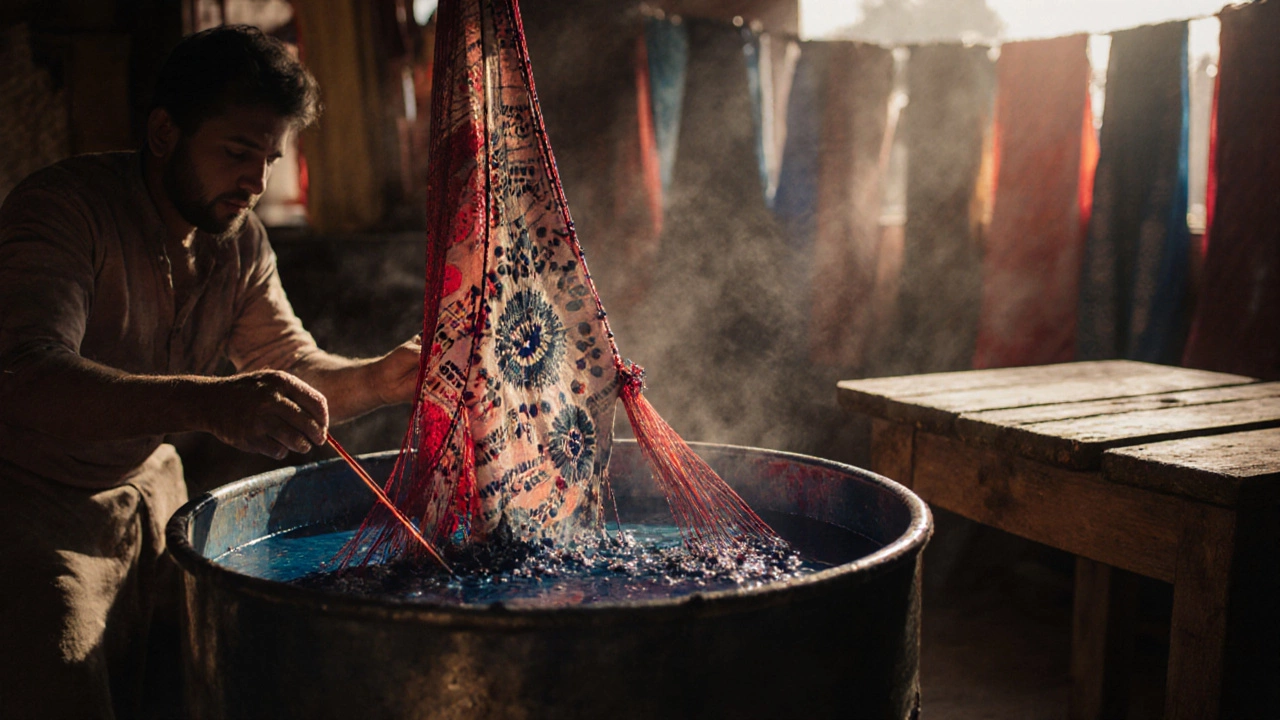
What makes Bandhani special isn’t just how it looks, but how it’s made. No machines. No shortcuts. Artisans tie each dot by hand, dip the fabric in natural dyes, and repeat the process to layer colors. It can take days to finish one sari. This slow, careful work means Bandhani fabrics last longer than printed ones—and they age beautifully. You’ll find them in sarees, dupattas, turbans, and even home textiles like cushion covers and table runners.
While modern factories try to copy the look with heat transfers and screen printing, nothing beats the real thing. The slight unevenness in the dots? That’s not a flaw—it’s proof of human hands. And the scent of natural indigo or turmeric dye? That’s the smell of tradition. If you’ve ever wondered why some fabrics feel different, look closer. The ones with tiny, perfect dots? Chances are, they’re Bandhani.
What you’ll find in the posts below isn’t a list of Bandhani products. It’s a collection of stories that connect to this craft—how textiles are made in India, why handmade matters, and how local traditions survive in a world of mass production. You’ll see links to other fabrics like Paithani and Khadi, learn about the people who keep these skills alive, and understand why Indian-made textiles are more than just material—they’re heritage.
What Is Gujarat Famous Cloth? Top Traditional Textiles from India's Weaving Heartland
Gujarat is famous for its handwoven textiles like Bandhani, Patola silk, and Kutch embroidery. These fabrics are made using centuries-old techniques, with each piece reflecting deep cultural roots and artisan skill.
View More