Choose Mirror: What Really Matters in a Bathroom Mirror
When you choose mirror, you’re not just picking a reflective surface—you’re choosing a piece that affects how you start your day, how your bathroom looks, and even how much your home is worth. A mirror isn’t optional in a bathroom; it’s one of the five essential fixtures, along with the toilet, sink, shower or tub, and towel rack. Without it, the space just doesn’t work the way it should. This isn’t about decoration—it’s about basic function, safety, and hygiene.
Not all mirrors are built the same. Some fog up instantly. Others are too small to see your whole face. A few look cheap because the frame warps or the glass isn’t properly sealed. The best bathroom mirrors are made to handle humidity, last for years, and match your lighting and tile. In places like Gujarat, where chemical manufacturing is huge, you’ll find high-quality glass coatings that resist moisture and corrosion—same technology used in premium bathroom mirrors. You don’t need to pay luxury prices, but you do need to know what makes a mirror durable.
Lighting matters just as much as the mirror itself. A mirror above a dark sink is useless. A mirror next to a window might give you glare. The sweet spot is even, soft light on both sides of the mirror, not just above it. That’s why many modern bathrooms use LED strips on the sides or behind the mirror. It’s not a trend—it’s a practical fix for bad lighting that’s been around for decades. And if you’re thinking about resale value, soft blue or warm greige walls paired with a clean, frameless mirror consistently rank higher in home appraisals than ornate, dated designs.
Some people think a bigger mirror makes a small bathroom feel larger. That’s true—but only if it’s mounted right. Mounting it too high or too low ruins the effect. The center of the mirror should line up with eye level for the average user. If you’re sharing the bathroom with kids or someone in a wheelchair, adjust accordingly. And don’t forget the depth. A mirror that sticks out too far can get knocked into, especially in tight spaces. Thin, wall-mounted mirrors with a slight recess are safer and cleaner-looking.
There’s a reason you see the same mirror styles in homes across India—from Mumbai’s textile districts to Gujarat’s industrial zones. Simple, frameless, anti-fog mirrors work everywhere. They’re low maintenance, easy to clean, and blend with any tile or fixture color. You don’t need a gold-plated frame or a built-in Bluetooth speaker. What you need is clarity, durability, and proper placement.
When you choose mirror, you’re also choosing the rest of your bathroom’s vibe. A mirror reflects everything—not just your face, but the sink, the towels, the soap dispenser. That’s why coordinating colors and materials matters. If your faucet is brushed nickel, your mirror frame should match. If your tiles are matte white, avoid a glossy frame that clashes. It’s not about matching everything perfectly—it’s about creating a calm, cohesive look that feels intentional.
Below, you’ll find real advice from people who’ve done this before—what works, what doesn’t, and what’s often overlooked. Whether you’re fixing up an old bathroom or building new, these posts give you the facts without the fluff. No guesswork. No hype. Just what actually makes a bathroom feel finished, functional, and worth coming back to every day.
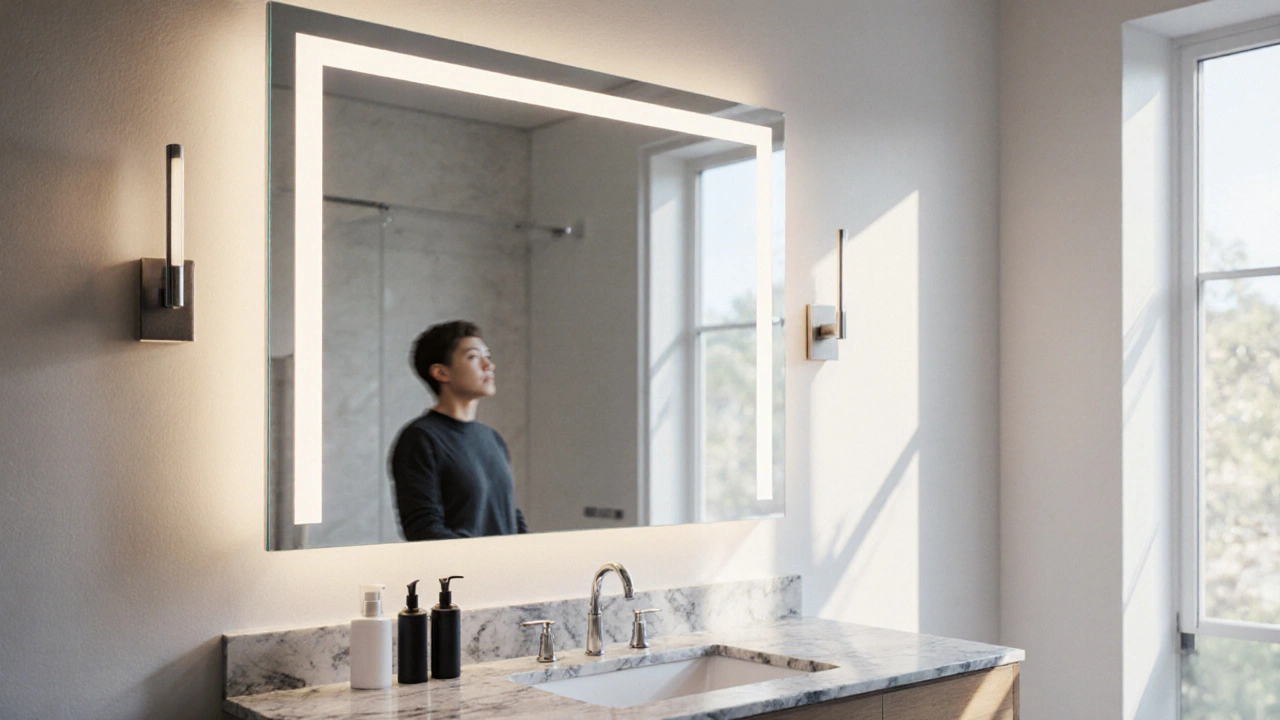
How to Choose the Right Mirror for Your Space
Learn how to choose the right mirror for any room by focusing on size, placement, lighting, and frame style. Avoid common mistakes and find the mirror that truly enhances your space.
View More
Dec 19 2025