Dining Utensil Terms Comparison Tool
Term Inclusion Results
When you sit down for a meal, you reach for the fork, knife, and spoon. But what do you call all of them together? It’s not as simple as it seems. Many people say "silverware," others say "flatware," and some just call them "utensils." The truth is, there’s one clear, widely accepted term that covers all of them - and it’s not what you might think.
The Real Generic Term: Cutlery
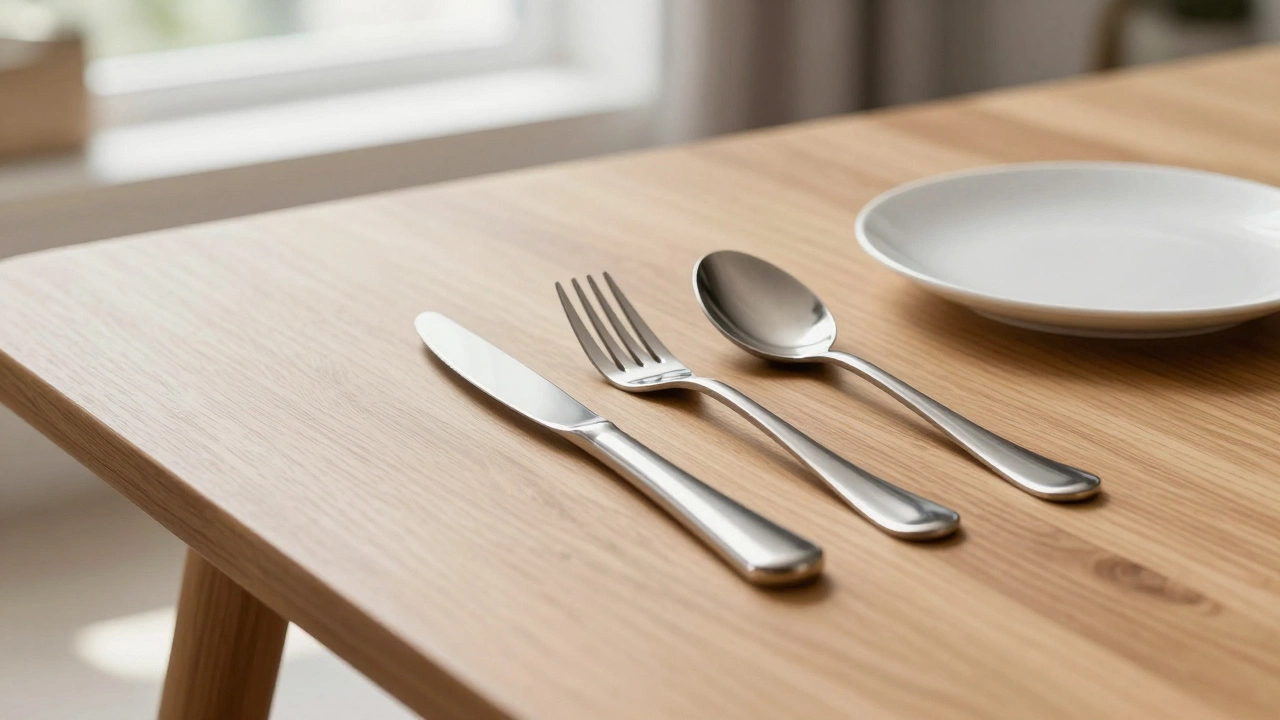
The correct generic term for dining utensils is cutlery. This word includes knives, forks, and spoons - the three core tools used for eating at a table. It doesn’t matter if they’re made of stainless steel, plastic, or even bamboo. If it’s used to eat food directly, it’s cutlery.
Originating from the Old French word couteau, meaning "knife," cutlery historically referred only to cutting tools. Over time, as dining customs evolved, forks and spoons were added to the category. Today, cutlery is the standard term used in restaurants, hotels, and manufacturing across North America, the UK, Australia, and much of Europe.
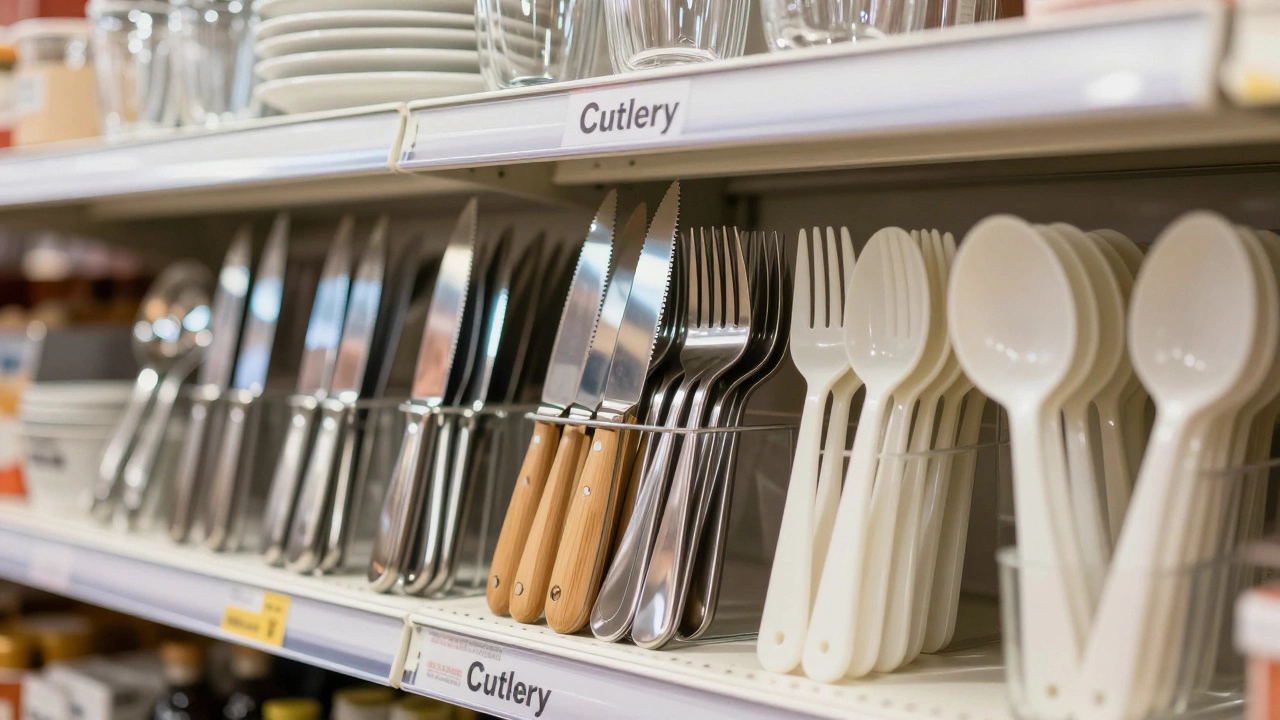
Think of it this way: if you walk into a kitchen supply store and ask for "cutlery," you’ll be shown trays of knives, forks, and spoons. Not plates. Not glasses. Just the tools you hold in your hand to eat.
Why People Get Confused: Silverware, Flatware, and Utensils
Confusion comes from overlapping terms that sound similar but mean different things.
Silverware is a common mistake. Many Americans use it to mean any eating utensils, but technically, it refers only to items made of silver or silver-plated metal. You can have stainless steel cutlery, but calling it "silverware" is like calling a plastic chair "mahogany furniture." It’s a material label, not a functional one.
Flatware is another term used mostly in the U.S. It’s a bit more accurate than silverware - it describes utensils that are flat or have a flat profile, like forks and spoons. But knives? They’re not flat. So flatware doesn’t cover everything. In fact, many high-end restaurants list "flatware and cutlery" separately because knives are excluded from flatware in technical terms.
Utensils is the broadest term. It can mean anything used in the kitchen or at the table - spatulas, ladles, tongs, whisks, even can openers. So while "utensils" technically includes cutlery, it’s too wide to be the specific term you’re looking for. If you say, "I need new utensils," someone might bring you a wooden spoon and a whisk. You wanted a fork.
What Else Belongs in the Dining Set?
Cutlery is just one part of what’s called tableware. Tableware includes everything on the table during a meal:
- Cutlery: knives, forks, spoons
- China: plates, bowls, serving dishes
- Glassware: cups, glasses, wine glasses
- Linen: napkins, tablecloths
So if someone asks, "What do you need for dinner?" you might say, "I need cutlery, plates, and glasses." That’s the full set. But if they ask, "What are the tools you hold to eat?" - the answer is always cutlery.
How Manufacturers and Retailers Define It
Look at any major kitchenware brand - IKEA, Williams Sonoma, Target, or even Amazon Basics. Their product categories always label knives, forks, and spoons under "cutlery." Product descriptions say things like: "16-piece stainless steel cutlery set with 4 dinner knives, 4 dinner forks, 4 dinner spoons, and 4 teaspoons."
Even in international standards like ISO 7016, which defines tableware terminology, cutlery is the official term for eating implements held in the hand. In Canada, where I live, the Canadian Food Inspection Agency uses "cutlery" in its labeling guidelines for restaurant equipment.
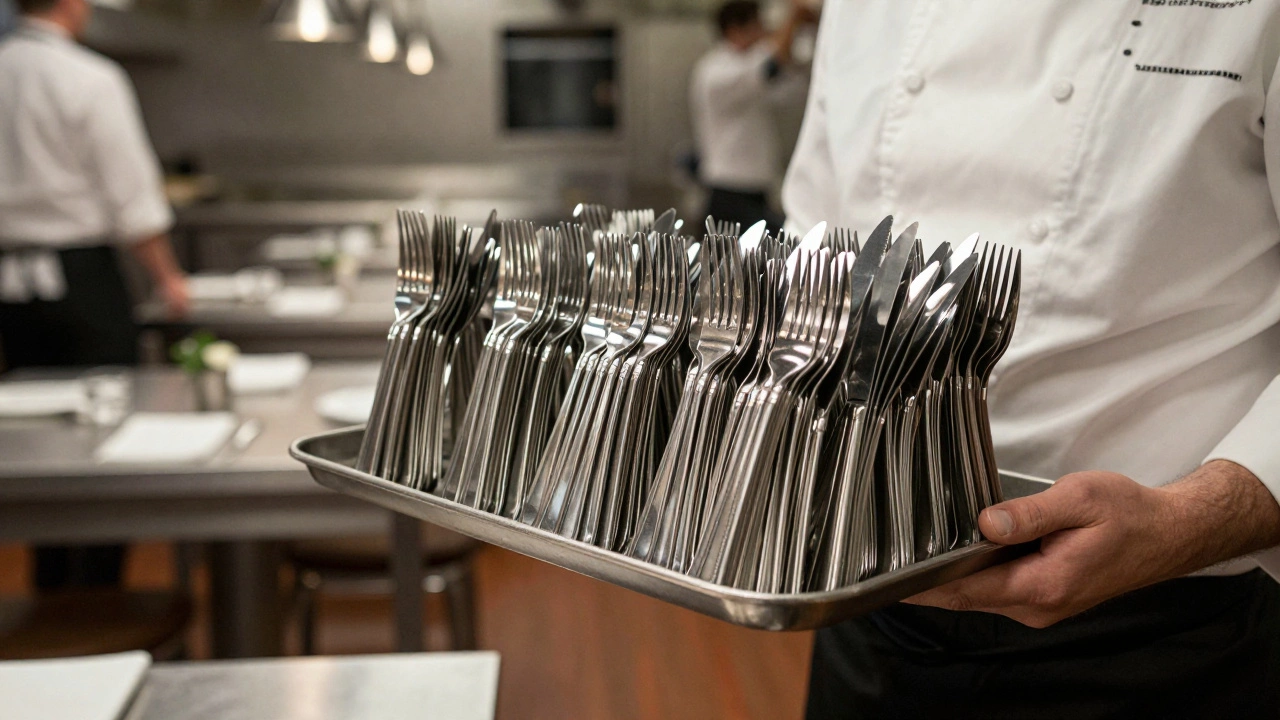
There’s no ambiguity in professional settings. If you’re ordering for a hotel or catering company, you don’t ask for "silverware" - you order "cutlery" by piece count: 200 dinner forks, 200 dinner knives, etc.
Why This Matters
Getting the term right isn’t just about being precise. It helps you shop smarter, communicate clearly, and avoid misunderstandings.
Imagine you’re buying a new set for your home. If you search for "silverware," you might end up with expensive, outdated pieces made of real silver - which require polishing and special care. But if you search for "stainless steel cutlery," you’ll find affordable, durable, dishwasher-safe options that most people actually use today.
Or think about giving a gift. If you say, "I got you a set of cutlery," people know exactly what you mean. Say "silverware," and someone might assume you spent a fortune - or worse, they might think you gave them a tea service.
What About Other Tools? Are They Cutlery?
No. Tools like salad servers, tongs, ladles, and pastry forks are not cutlery. They’re called serving utensils. They’re used to move food from a serving dish to a plate - not to eat directly.
Same goes for chopsticks. In cultures where chopsticks are the primary eating tool, they’re considered cutlery - but only in that context. In Western terminology, chopsticks are a separate category. They’re not called cutlery because they don’t follow the knife-fork-spoon model.
Sporks? Spoons with fork tines? They’re still cutlery. They’re just hybrid designs. As long as they’re used for eating, they fall under the cutlery umbrella.
Bottom Line
When you need the single, correct, generic term for knives, forks, and spoons - it’s cutlery. Not silverware. Not flatware. Not utensils. Cutlery.
It’s the term used by manufacturers, retailers, and professionals. It’s the term that avoids confusion. And it’s the term that actually means what you think it does.
Next time you’re setting the table, remember: you’re not arranging silverware. You’re arranging cutlery.

Mar 8 2025

Mar 7 2025

Mar 13 2025