Historical Wealth Calculator
Calculate the modern equivalent value of historical dollar amounts using U.S. inflation data. Andrew Carnegie's steel empire built the foundation of modern America, and understanding his wealth in today's terms helps us grasp the scale of his impact.
$
$
Examples from the article:
$480 million
Carnegie's steel sale to J.P. Morgan
= $17 billion today
$375 million
Carnegie's peak wealth
= $10.9 billion today
When you think of the steel industry, you probably picture smokestacks, blast furnaces, and trains rolling across the country. But behind every ton of steel produced in the late 1800s was one man who controlled more of it than anyone else. Andrew Carnegie didn’t just make steel-he built the system that made steel the backbone of modern America.
How Andrew Carnegie Built a Steel Empire
Andrew Carnegie wasn’t born rich. He came to the U.S. from Scotland as a boy in 1848, his family poor, his father a weaver out of work because of industrial change. By age 13, he was working as a bobbin boy in a cotton factory, earning $1.20 a week. But Carnegie had something most didn’t: an obsession with efficiency and a hunger to own the means of production.
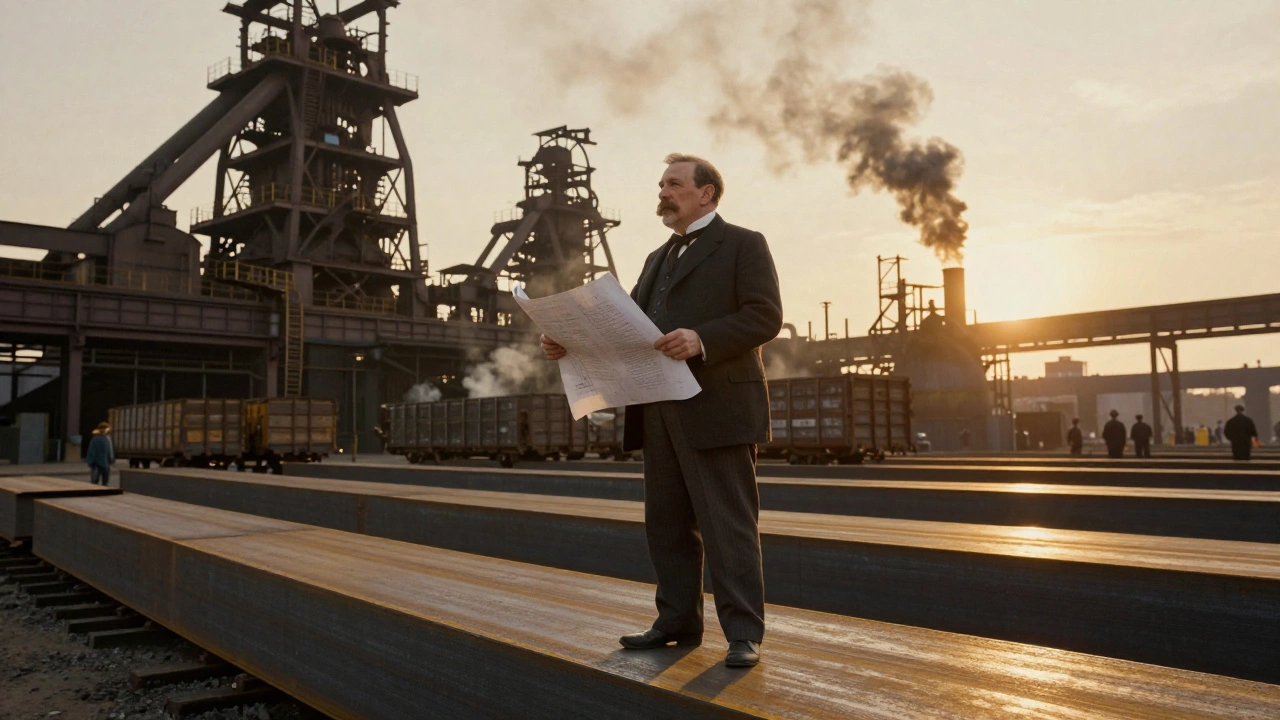
He started in railroads, then moved into iron bridges, then into steel. He didn’t wait for others to innovate-he bought the patents, hired the engineers, and built his own mills. By the 1870s, he was using the Bessemer process to make steel faster and cheaper than anyone else. While competitors stuck with old methods, Carnegie invested in vertical integration: he owned the iron mines, the coal fields, the railroads, the ships, and even the warehouses. He didn’t just make steel-he controlled every step from raw ore to finished beam.
The Numbers Behind the Empire
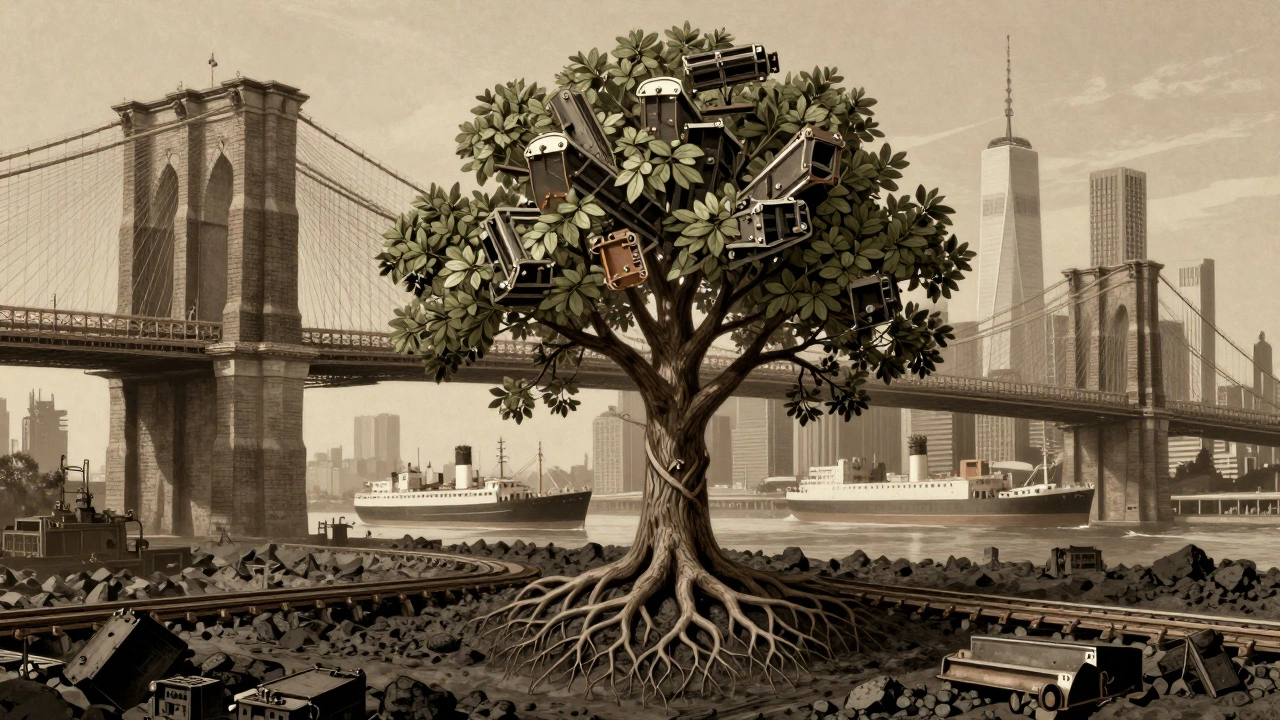
In 1901, Carnegie sold his steel company to J.P. Morgan for $480 million. That’s about $17 billion today, adjusted for inflation. But that sale wasn’t just a business deal-it was the moment the American steel industry became a single, dominant force. His company, Carnegie Steel, produced more steel than all of Great Britain. At its peak, it supplied 25% of the entire U.S. steel output. The steel from his mills built the Brooklyn Bridge, the first skyscrapers in Chicago, and the railroads that linked the country.
By 1900, Carnegie was worth more than $375 million-roughly 1.5% of the entire U.S. economy. No one else in the steel industry came close. John D. Rockefeller had oil. J.P. Morgan had finance. But Carnegie had the material that built everything else. His mills turned iron into steel, and steel built the nation.
Why He Was the Richest-and How He Gave It Away
Carnegie didn’t just accumulate wealth. He believed wealth was a trust. In his 1889 essay The Gospel of Wealth, he argued that the rich had a moral duty to use their money to benefit society. He didn’t leave his fortune to heirs. He gave it away.
He funded over 2,500 public libraries across the U.S., Canada, and the British Isles. He created the Carnegie Corporation, which still gives grants today. He paid for the Carnegie Hall in New York. He founded the Carnegie Institute of Technology (now part of Carnegie Mellon University). He even tried to fund world peace, offering money to build a palace for international arbitration in The Hague.
By the time he died in 1919, he had given away over $350 million-more than 90% of his fortune. He died with only $30 million left, mostly in trusts. That’s not just generosity-it’s a radical idea: that the richest man in steel didn’t see his wealth as his own.

Who Came Close? No One Did
Other industrialists made fortunes in steel. Henry Clay Frick was his partner and ran operations. Charles Schwab led Carnegie Steel after the sale. But none of them owned the entire system. Frick controlled coke and labor-he didn’t own the mines or the railroads. Schwab was a brilliant manager, but he worked for Carnegie’s empire, not his own.
Even later steel giants like U.S. Steel, which Morgan formed by buying Carnegie’s company, never matched Carnegie’s personal control. U.S. Steel became a corporation. Carnegie was a man who owned the whole thing. He didn’t just have the most money-he had the most power.
The Legacy of Steel and the Man Who Made It
Today, you won’t find a single steel mill bearing Carnegie’s name. But walk into any public library, university, or concert hall in North America, and you’ll find his legacy. He didn’t just build a company-he built the infrastructure of modern America, from the bridges we cross to the education we receive.
He was the richest man in steel not because he was the loudest or the most aggressive, but because he understood that the real value wasn’t in the steel itself-it was in controlling how it was made, how it was moved, and how it was used. And when he had it all, he gave it away.
That’s why Andrew Carnegie remains the only answer to the question: Who was the richest man in the steel industry? No one else even came close.