Rug Layering: How to Layer Rugs for Style, Comfort, and Depth
When you place one rug, a floor covering made of woven or tufted fibers, often used to define spaces and add comfort. Also known as area rug, it on top of another—especially over carpet—it’s not a mistake. It’s a design choice that adds depth, softness, and visual interest. Many people think putting a rug over carpet looks messy, but that’s only true if it’s done wrong. Done right, rug layering turns a plain room into something layered, lived-in, and intentional.
This technique works because rugs aren’t just for covering floors—they’re tools for shaping how a space feels. A small, low-pile rug over a thick carpet can create a defined seating area without needing to move furniture. A bold, patterned rug layered over neutral carpet adds energy to a dull room. And if you’ve ever walked barefoot on cold carpet in winter, you know how much a soft rug on top changes the experience. It’s not about hiding the carpet—it’s about enhancing it. Related to this are carpet, a floor covering made of dense fibers, often installed permanently in homes. Also known as wall-to-wall carpeting, it and area rug, a portable floor covering, typically smaller than carpet, used to define zones or add decoration. Also known as throw rug, it. These two elements work together like a base and a highlight. The carpet is the foundation; the rug is the accent.
What makes rug layering different from just throwing down any rug? It’s about balance. Size matters—too small and it looks lost; too big and it overwhelms. The bottom rug should be neutral and slightly larger than the top one. The top rug can be bold, textured, or colorful. Materials matter too. A flat-weave rug works better over carpet than a shaggy one—it won’t bunch or slide. And don’t forget the pad. A non-slip pad between the two rugs keeps everything in place and adds extra cushion. This isn’t just about looks. It’s about comfort, safety, and practicality. You’re not decorating for a magazine—you’re making your home feel better every day.
People in India are catching on to this trend, especially in cities where homes are getting smaller and every inch counts. A rug over carpet saves money—you don’t need to replace the whole floor. It’s also reversible. Change the top rug with the seasons, or when your style shifts. No renovation needed. And since many Indian homes already use rugs for cultural reasons—like prayer mats or decorative dhurries—layering feels natural, not foreign.
What you’ll find below are real, tested ways to layer rugs without the guesswork. From choosing the right sizes to avoiding common mistakes, these posts give you the exact details you need. No fluff. No theory. Just what works in actual homes.
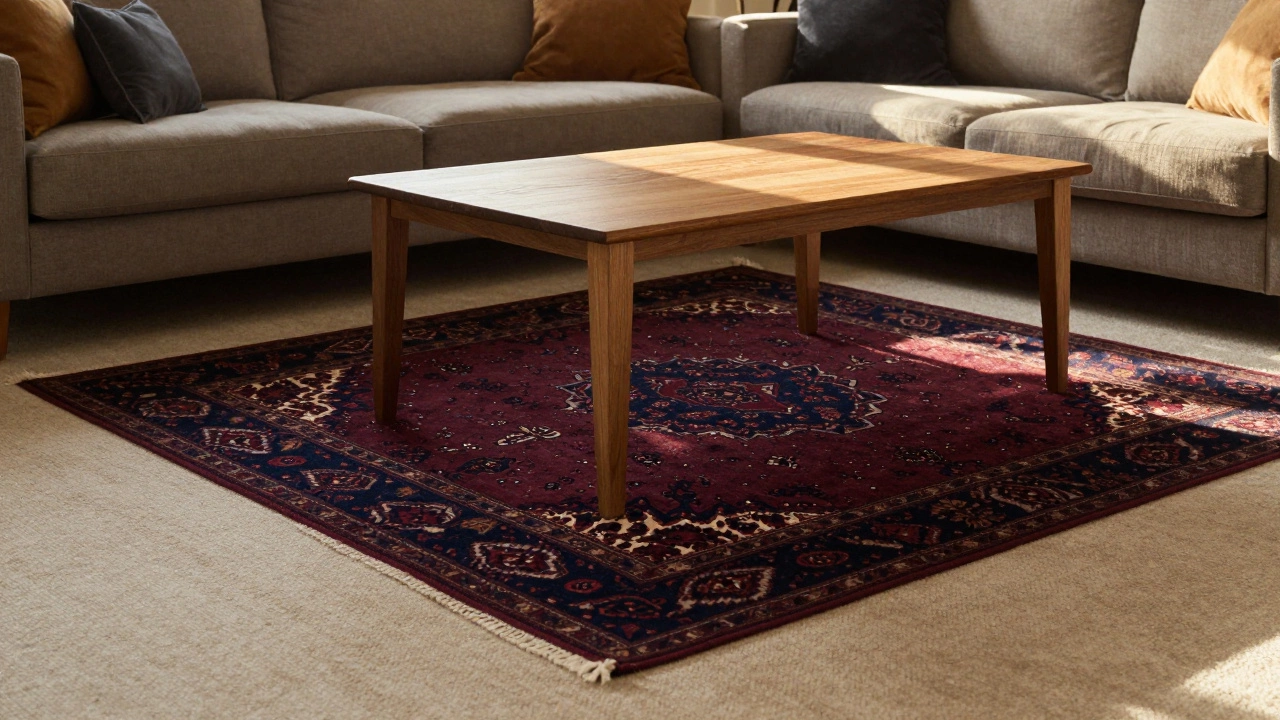
Should Rug Be Darker Than Carpet? Practical Tips for Layering Floor Textures
Should your rug be darker than your carpet? Learn how to layer rugs over carpet for better balance, depth, and comfort in your home. No rules-just practical tips that work.
View More